MOVING TIPS & ADVICE
A Minimalist Moving Plan for One-Person Moves in Hong Kong
Key answers
A solo move works best when you reduce first, sort second, and pack last. Separate essentials, items to decide later, and an overnight bag, then confirm building access and moving details in advance.
Take stock first, then decide what to keep
The first step in a one-person move is not buying boxes, but laying everything out and reviewing it category by category: clothes, books, small appliances, kitchenware, documents, and loose items. For each piece, ask whether you still use it regularly. If it has been idle for a long time, overlaps with something else, or may not suit the new home, move it to a decide-later pile instead of carrying it along by habit.
Living space in Hong Kong is often limited, so a solo move is a good time to cut down. Keep a small set of durable, frequently used items, and sort the rest for donation, transfer, recycling, or disposal. For electrical appliances, sharp objects, or bulky furniture, check building rules and disposal arrangements first; do not rush into unsafe handling just because the move date is close.
Use three packing groups: keep, store, and decide later
A minimalist move does not mean putting everything into the same set of boxes. A more practical method is to divide items into three groups: things you need immediately in the new home, things you will keep but do not need right away, and items you still need to decide on. Once these groups are separated, it becomes much easier to prioritise packing and keep the number and size of boxes under control.
For a solo household, immediate-use items usually include clothes, bedding, a small amount of kitchenware, documents, and daily cleaning supplies. Seasonal or low-frequency items can go into boxes that are marked for later unpacking. Items that are still undecided should not be mixed into the main moving boxes, otherwise you will end up searching for them again after arrival; if you are unsure, take photos and make the final decision before moving day.
Use labels and internal grouping to reduce unpacking chaos
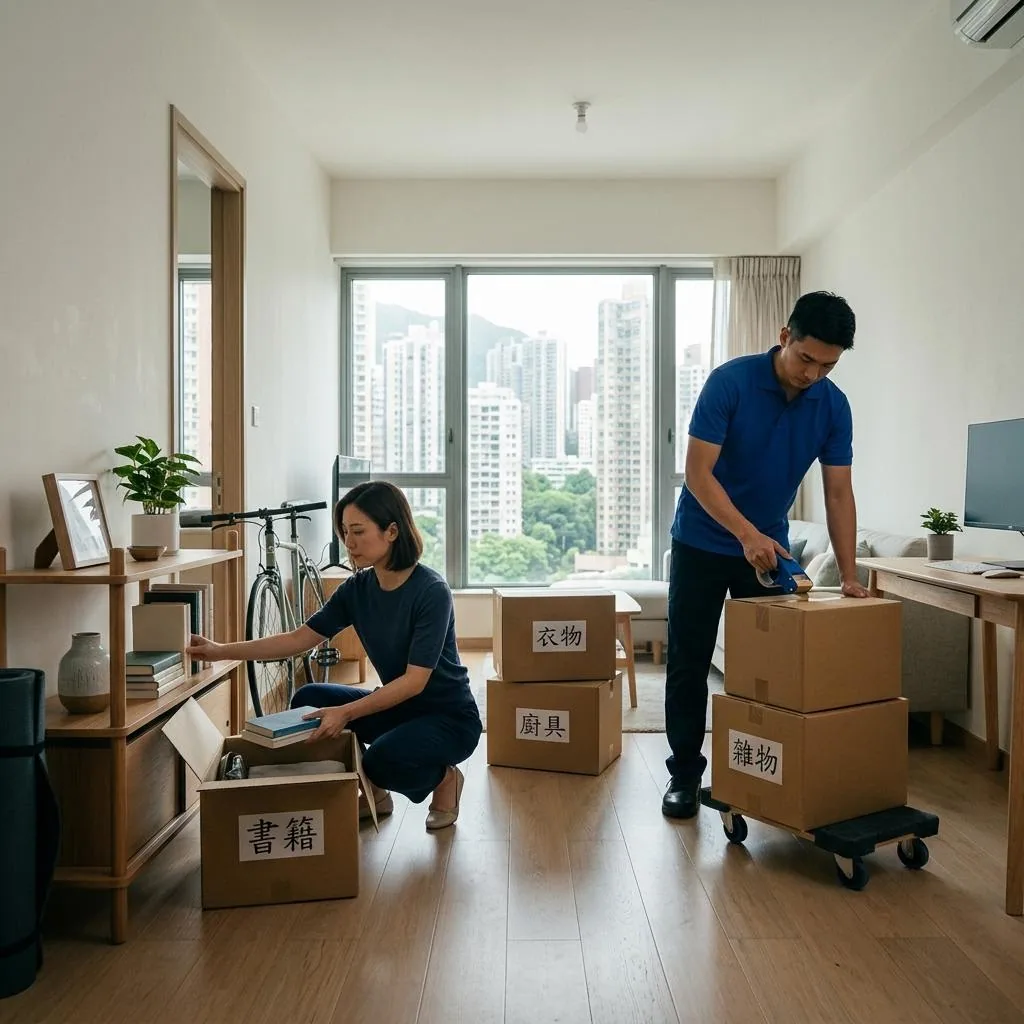
When packing, use sturdy boxes of similar size and avoid mixing very heavy and very light items in the same box. The basic rule is heavy items on the bottom and light items on top, but the more important habit is to keep each box to one category only. For example, one box for kitchen items and another for winter clothes. Write the room, contents, and whether the box is fragile on the outside so that moving and unpacking stay organised.
For small loose items such as cables, accessories, or miscellaneous daily items, sort them first with clear bags or small dividers before placing them into a larger box. On the night before the move, take a photo of each box or make a simple list. This makes it easier to unpack in order at the new home instead of turning the entire place upside down to find one small item.
Prepare an overnight bag and keep the first two days separate
A common problem in solo moves is arriving at the new place and finding that toothbrushes, chargers, documents, medicines, or a change of clothes are buried in different boxes. Prepare a separate overnight bag or small suitcase for the essentials you will need in the first one to two days, such as identification, keys, some cash, a phone charger, toiletries, simple tableware, sleepwear, and a change of clothes. Carry this bag yourself on moving day.
If you need certain items on the first night, such as contact lens supplies, regular medication, work ID, or building access cards, keep them in a separate place as well. The point is not to carry more for the sake of it, but to avoid arriving tired and unable to find basic necessities, which can affect your rest and the next day’s schedule.
Confirm building access, parking, and timing early
In Hong Kong, whether a move goes smoothly often depends on building details. Before moving day, confirm lift access, entrances, security check-in, any required booking time, and whether there is a temporary loading or parking area. If you live in a walk-up, village house, or a home with narrow access, measure stairs, door frames, and corners in advance so you do not discover too late that a box or piece of furniture cannot pass through.
Timing also matters. Leave enough buffer and do not cram moving, handover, cleaning, and settling in too tightly. If you must move during busy hours, in rain, or around holidays, plan the route and moving order earlier. The day before the move, check the address, contact numbers, keys, management requirements, and appointment time again to avoid delays caused by simple oversights.
When to ask for moving help, and what to confirm first
Even in a one-person move, it is worth asking for moving help when there are heavy items, many stairs, a long carrying distance, or more belongings than expected. The key is not to minimise manpower at all costs, but to decide based on volume, building conditions, and your own ability which parts you can handle and which parts should be handled by movers. That way, you reduce the risk of injury from lifting too much on your own.
If you hire movers, ask for written confirmation of the scope of work, charging method, stair or lift arrangements, whether disassembly is included, any conditions that may trigger extra charges, and how delays or rescheduling are handled. Also state clearly which items you will not move yourself and which ones need special care. If the job involves electrical hookup, gas, structural fixing, or other specialised work, leave it to qualified professionals and do not attempt risky on-the-spot fixes on moving day.
Frequently Asked Questions
What should I sort first in a solo move?
Start with items that are easiest to judge, such as clothes, books, and duplicate small items. Separating keep, store, and decide-later items first is usually faster than packing while deciding at the same time.
How can I reduce the number of boxes in a one-person move?
Reduce items first, then pack by use. Put items from the same room or function into the same box, and keep undecided items out of the main moving boxes. This usually cuts down duplicate packing and unpacking.
What belongs in an overnight bag?
Put in the essentials for the first one to two days: ID, keys, cash, chargers, toiletries, sleepwear, a change of clothes, and regular medication. Do not send these items with the main truck load.
Should I notify building management before moving day?
Yes, it is best to check the building rules first, including moving time slots, lift use, parking, and check-in procedures. For walk-ups, village houses, or narrow access points, measure the route and restrictions in advance.
When should I consider hiring movers?
If there are heavy items, many stairs, a long carry, tight timing, or you cannot move safely on your own, consider professional help. Before booking, confirm the scope and fees in writing and list any special items clearly.


