MOVING TIPS & ADVICE
Moving Out Alone: A Practical Guide for Solo Moves
Key answers
Moving on your own is easier when you plan the packing order, choose the right boxes, protect fragile items, check access at the new place, and keep the move safe and manageable from start to finish.
Set the scope before you start packing
The hardest part of moving alone is often not the lifting, but the feeling that everything has to be done at once. Start with a moving list and sort your belongings into clear groups: clothes, books, kitchen items, documents, daily essentials, and cable or appliance accessories. Decide what must move, what can be given away, and what should be discarded before you begin packing.
If the new home is smaller, a pre-move declutter is even more important. Items you can deal with in the old place should not be delayed until after the move. Seasonal items, duplicate tools, and expired clutter are easier to remove now, reducing the load you need to carry later. If you are unsure whether something is worth moving, take a photo first and judge it by actual use rather than habit.
Choose the right boxes and packing materials
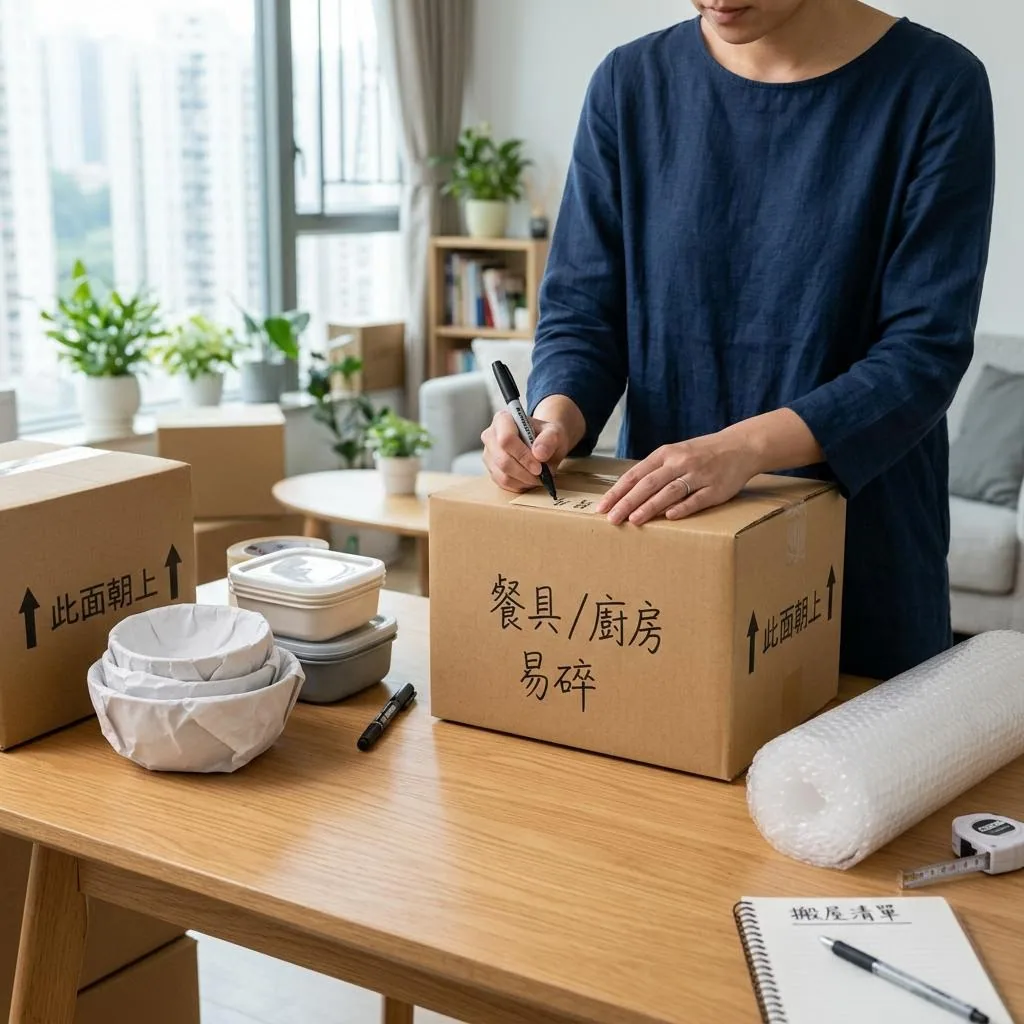
For a solo move, bigger is not better. Medium or small sturdy boxes are usually safer and easier to carry, especially for books, files, and pantry goods. Before packing day, prepare packing tape, a marker, bubble wrap, paper padding, and a few soft items such as towels so you do not have to search for materials at the last minute.
Do not overfill a box or mix very heavy and very light items in a way that makes the load uneven. Fill empty gaps with soft materials so the contents do not shift. Label each box with the room, contents, and whether it is fragile, and mark the top side clearly. That makes unpacking far easier when you are handling everything yourself.
Keep fragile items, valuables, and documents separate
Glassware, dishes, perfume bottles, cosmetics, and frames should be wrapped individually and placed in a box with enough cushioning. Add a soft layer at the bottom, leave a small buffer between items, and fill the remaining gaps with paper or towels to reduce impact during transport. If an item is especially valuable or difficult to replace, split it across several boxes instead of forcing everything into one.
Identity documents, contracts, bank papers, tenancy records, seals, cash, and regular medication should stay with you, not in the main shipment. Prepare a separate day bag for essentials, such as important documents, chargers, tissues, and drinking water. If the move is delayed, you will still have the items you need within reach.
Check the new home first, then plan the unloading order
If possible, confirm the floor level, lift location, corridor width, staircase turns, and main door size before moving day. This helps you judge whether furniture should be dismantled and which boxes should go in first. If the building has move-in time limits, security registration, or parking restrictions, clarify them early so there is no last-minute route change.
Once you arrive, place the boxes in their intended rooms and check for missing items or damage. Set up the bed, basic lighting, and daily essentials first, then handle decor and non-urgent items later. When you are moving alone, it is better to finish the main furniture placement before opening every box, otherwise the new home becomes cluttered very quickly.
Put safety and energy management first
Do not force a heavy lift when you are moving alone. Stand firmly, brace your core, bend your knees, and avoid pulling with your back. If an item is too tall, too heavy, or awkward to hold, split the task into smaller loads or ask for help. When stairs are involved, carry fewer items at a time so you do not lose balance or twist your body.
Plan rest breaks and drink water during the move, especially in hot weather. If a large piece of furniture, an appliance, or a valuable device is beyond your ability, arrange help from a qualified moving team in advance. Any electrical, gas, structural, or other specialist technical work should be handled by the proper licensed professional rather than attempted on your own.
When to consider hiring movers
If you have too many items, live on a high floor, face a complicated access route, or simply cannot finish within the time available, hiring movers can be the more practical choice. Sort your items first, then explain the large furniture, fragile boxes, stair access, and whether anything needs dismantling. Ask for a clear written scope before the quote is confirmed so there is no misunderstanding later.
When comparing moving services, ask about crew size, estimated moving time, packing help, lift or stair restrictions, and how they handle parking limits, rain, or building controls. Keep the agreement in writing, and after unloading, check the number of boxes, furniture condition, and any missing items right away. If anything is unclear, request written confirmation and follow the actual situation accordingly.
Frequently Asked Questions
What should I do first when moving alone?
Start with a moving list and sort items into must-take, donate, and discard groups. Then pack by room or category so you are not forced to rush on moving day.
What kind of boxes are best for a solo move?
Medium or small sturdy boxes are usually best because they are easier to lift and control. Very large boxes become hard to handle once they are filled with books or other heavy items.
How should I handle important documents and medication?
Keep them with you at all times instead of putting them into the main shipment. A separate day bag with essential items will save trouble if the move runs late.
What should I do first after arriving at the new place?
Place the boxes in the right rooms, check for missing or damaged items, then set up the bed, lighting, and daily essentials before unpacking the rest.
When should I hire movers instead of doing it alone?
If you have many items, heavy furniture, stairs, or limited time, hiring movers is usually more practical. Ask for the scope in writing before confirming anything.


