MOVING TIPS & ADVICE
How to Prioritise Moving Items When Packing for a Move
Key answers
Sort items by what you will need on moving day and during the first few days, then pack by usage, season, and access so you can avoid missing essentials and unpack more smoothly.
Start with four priority levels
The most practical way to pack for a move is not to box everything room by room at random. First split your belongings into four levels: essentials for moving day, items needed in the first three days, things not needed immediately, and items that can be handled later. Once the urgent items are separated, the rest becomes much easier to sort.
Important items such as ID documents, tenancy copies, cash, phone chargers, keys, regular medicine, toiletries, and a change of clothes should go into a separate bag or a clearly marked box. Keep these with you rather than mixing them into general boxes.
Pack according to daily use
Daily essentials should always be decided first before you deal with less-used items. In the kitchen, pack spare bowls, plates, dry goods, and a small amount of seasoning first, while keeping the tools needed for your last meal aside. In the bedroom, seasonal clothes, stored bedding, and non-essential items can go earlier, while sheets, pillowcases, and sleepwear for the first night should stay accessible.
If you have children or older family members, set aside formula, diapers, walking aids, regular medicine, and spare clothes in a separate box with a clear label. Opening these boxes first after arrival helps you avoid a rushed first night.
Match the packing order to the moving schedule
The best time to set priorities is one or two weeks before moving day. If your schedule is tight, pack books, decorations, spare household items, and seasonal goods first. If the new home still needs cleaning or furniture delivery, keep cleaning supplies, rubbish bags, tissues, and a few basic tools in one separate box so you can deal with the space first.
Some items should not be left until the last minute, such as food in the fridge, fragile glassware, long cable runs, and document folders. Food should be used up or cleared early, while documents should stay together in one place. If electrical work, gas work, or plumbing adjustments are needed, leave those tasks to qualified professionals rather than attempting them yourself.
Use labels and lists to prevent mistakes
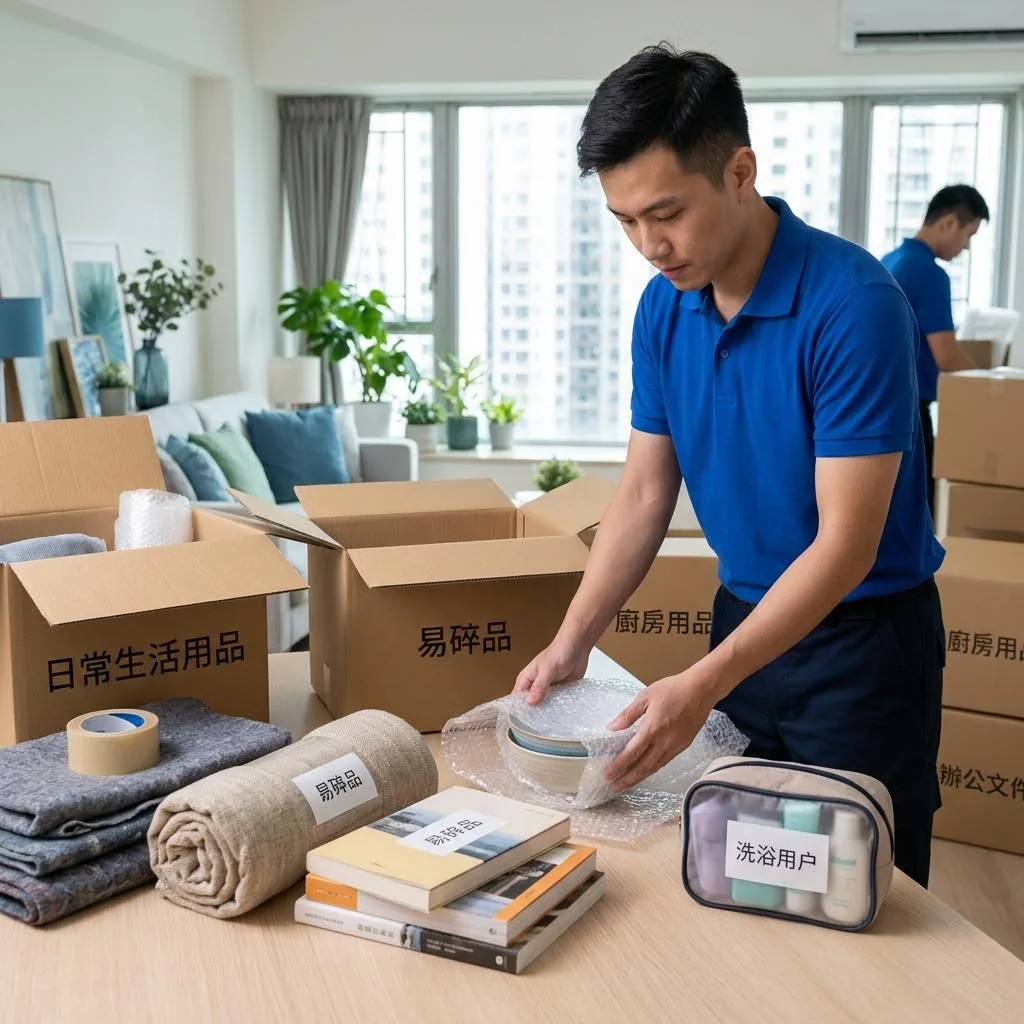
Every box should show a number, room name, content type, and whether it is fragile. It also helps to write a note such as 'open first' or 'open later'. Items from the same room do not have to stay in one box, but related things should be grouped so it is easier to unpack and check whether anything is missing.
A list does not need to be complicated, but it should be clear. You can record box numbers, contents, and final placement on your phone. Comparing the list before and after the move helps you catch missing documents, chargers, or medicine early. If you want more structure, refer to packing guidance and a moving checklist.
Avoid common packing mistakes
A common mistake is treating everything as equally urgent, which leaves the items you need most buried at the bottom of a box. Another problem is overfilling boxes, which makes them uneven and harder to carry, and can also damage the contents. Heavy items such as books and files should be boxed separately, while light but fragile items need extra padding.
Some people also save time by stuffing loose items into one large box, only to find the contents are badly mixed after arrival. A better method is to keep one 'first-day box' for bedding, cleaning items, simple tableware, and basic personal items, so you can settle in before dealing with the rest.
When to ask a moving team for help
If you have many items, limited building access, a strict lift schedule, or a very short moving window, a moving team can help you control the pace. Tell them in advance which boxes must be moved first, which items should go straight into each room, and which boxes need to stay upright. You should also ask them to confirm the route, waiting arrangement, and arrival order before the quotation is finalised.
When choosing a mover, do not ask only whether they can handle everything. Ask whether they can follow your priority list, accept your own packing list, separate fragile or large items, and explain how special restrictions will be handled. Pricing, terms, and booking details should be confirmed in writing to avoid misunderstandings on the day.
Frequently Asked Questions
What should I pack first for a move?
Start with items needed on moving day and during the first three days, such as ID, chargers, medicine, toiletries, spare clothes, bedding, and basic tableware, and keep them in a separate, easy-to-reach bag or box.
How do I decide which items should be packed earlier?
Use frequency of use and urgency after arrival as your guide. Items that are used less often, out of season, or not needed for the first night should be packed earlier, while documents, medicine, and daily essentials should be left for last.
Why should every box be labelled?
Labels help you quickly identify what is inside, which room it belongs to, whether it is fragile, and whether it should be opened first, so you do not have to search through every box after arrival.
What should I do if the moving schedule is very tight?
Pack the most important boxes first, group the essentials together, and prepare a first-day box so you still have the basic items you need when you arrive.
When should I ask the moving company to help with priority planning?
Ask for help when you have many items, little time, restricted access, or are unsure how to separate large and fragile items. Give them your priority list and request written confirmation of the plan.


