MOVING TIPS & ADVICE
What to eat for your first meal after moving in Hong Kong
Key answers
Your first meal in a new home does not need to be elaborate. Focus on safe cooking, simple setup, and easy-to-share dishes, then add traditional opening-the-stove customs only as far as they fit your schedule and family habits.
Why the first meal matters
For many Hong Kong households, the first meal in a new home is more than just food. It marks the first proper moment of settling in, after the keys are collected and the boxes are finally inside. People often want the new place to feel lived in, not just emptied and cleaned.
The practical rule is simple: make sure the kitchen is usable, the basic tableware is ready, and the space is clean before you think about menu ideas. If moving day is already hectic, a straightforward meal is better than an elaborate spread that adds stress or delays the rest of the move-in process.
How to choose symbolic dishes
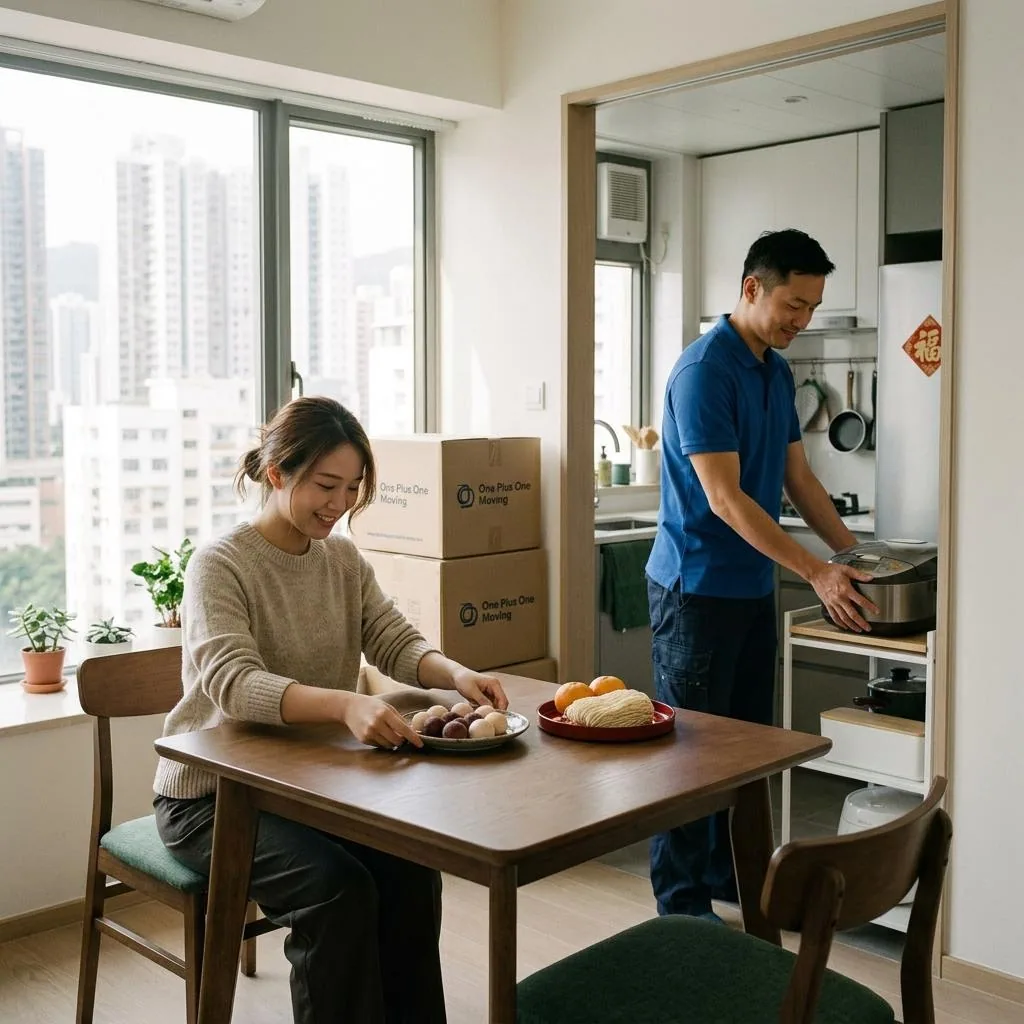
Traditional choices often include glutinous rice balls, longevity noodles, lettuce, chicken, fish, and pork knuckle. These dishes are usually chosen for their symbolic meaning, such as family unity, smooth progress, abundance, and good fortune.
In real life, you do not need to prepare every item. Choose food that your family can enjoy easily and that fits your schedule. If you are moving with only a few people, one noodle dish and one shared main dish may be enough. For a larger family, add one or two extra dishes that are easy to serve.
Opening the stove and starting the home
Many families like to “open the stove” or boil water on move-in day. The idea is to begin normal home life with a simple cooking action, such as boiling water, making noodles, or preparing soup. It is the routine itself that gives the move-in moment its sense of start and continuity.
If the kitchen is not fully ready, or if appliances, gas, or electrical supply have not been checked, do not force the issue. Electrical, gas, hot-water, ventilation, and similar safety-related work should be checked by qualified professionals before cooking begins.
What to prepare before and after arrival
To keep the first meal smooth, separate the essentials the day before: bowls, chopsticks, cups, paper towels, trash bags, simple seasonings, drinking water, and basic cleaning items. If you will cook in the new home, keep the pot, pan, utensils, and cloths easy to reach.
Once you arrive, check whether the kitchen, table, fridge, and sink are usable before setting up the meal area. Leave clear walking space if large furniture has not yet arrived. Moving day becomes much easier when items are sorted in advance, labeled clearly, and separated into “needed first” and “unpack later” boxes.
Common mistakes and superstitions to avoid
A common mistake is focusing so much on “doing everything properly” that practical hygiene and safety are forgotten. Cooking on a dirty stove, using unwashed tableware, or eating amid unpacked clutter can make the first meal feel rushed and uncomfortable.
As for customs such as not entering empty-handed, keeping lights on overnight, or staying quiet on the first night, these can be simplified to suit the family. The key point is that everyone feels settled. If you have religious practices, ancestral offerings, or personal taboos, confirm them with family members before arranging the day.
When to ask movers to take over
You can arrange the first meal yourself, but heavy lifting, stair carries, tight corners, and large furniture positioning are not things to leave to untrained help. In Hong Kong, many buildings have small lifts or narrow corridors, so poor planning can easily damage walls, door frames, or furniture.
If you want to handle unpacking and the first meal at the same time, separate the moving, assembly, placement, and cleaning steps in advance. For special items, electrical connections, structural changes, or other specialist tasks, use qualified professionals. For moving scope and handling details, ask the mover in advance and request written confirmation where needed.
Frequently Asked Questions
Does the first meal have to be cooked in the new home to count as auspicious?
Traditionally, many families prefer to cook in the new home, but if the kitchen is not ready or time is tight, a simple heated meal is fine. Safety, cleanliness, and eating together matter most.
What if I do not know how to cook?
Choose something simple, such as noodles, glutinous rice balls, ready-made food, or ingredients that only need reheating. You do not need a big feast, just a safe kitchen and basic tableware.
Can I skip cooking and only do the move-in ritual?
Yes, but many families still boil water or prepare something simple as the first everyday action in the home. If you skip cooking, it is still a good idea to arrange a proper meal so everyone can rest.
Do I really need to keep all the lights on overnight?
This is a common custom, but it can be simplified. If you want to follow tradition, keep the main living areas lit. If you prefer to save energy, make sure the rooms in use are well lit.
What should I ask the mover before move-in day?
Ask about the moving scope, stairs or lift access, whether disassembly is needed, whether tight spaces are passable, and how special items will be handled. For electrical, gas, structural, or other specialist work, use qualified professionals separately.


