MOVING TIPS & ADVICE
What should you check after moving in: air conditioning and utilities?
Key answers
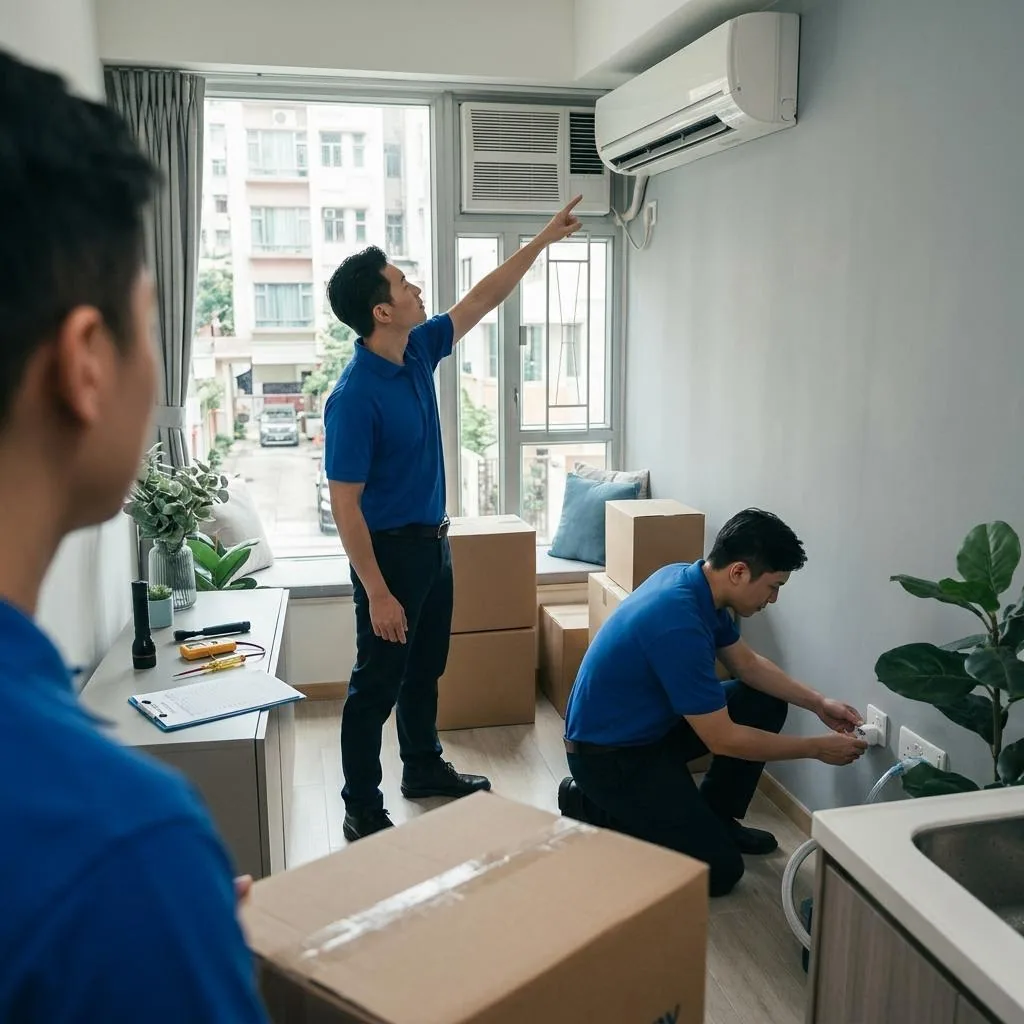
After moving into a new home, check the air conditioner, sockets, main switch, water lines, and drains early so you can spot leaks, overloads, or poor cooling before they become bigger problems.
Start with a basic move-in inspection
Do not rush to run the air conditioner for long periods or switch on every high-load appliance at once. Start by observing whether there are strange smells, water marks, tripping breakers, loose sockets, or unusual noise when a unit is switched on. This first pass is only for spotting warning signs, not for opening up equipment.
If the flat is old, has been vacant for a while, or the previous occupant already mentioned maintenance issues, pay extra attention to damp patches on walls, ceilings, window edges, and around the bathroom. If anything looks abnormal, stop using the suspect item and arrange follow-up with a qualified technician rather than opening switches, removing AC parts, or altering pipework yourself.
Check the air conditioner from the outside first
Begin with the casing, filter, vents, and drainage point. Look for dust buildup, mould spots, oil stains, or visible damage, then run the unit briefly to check airflow, temperature response, and operating noise. Weak airflow, dripping water, heavy vibration, or a burning smell are reasons to stop using it.
Hong Kong's humid climate makes neglected AC units more likely to collect dust and mould, which can affect comfort and indoor air quality. However, internal cleaning, refrigerant handling, compressor faults, and electrical diagnosis should be left to qualified AC technicians. As a resident, your role is to inspect, clean removable filters, and record any issues clearly.
Inspect water lines, drainage, and leak points one by one
Open the taps in the kitchen, bathroom, laundry area, and any outdoor or balcony water point to check whether water pressure is stable and whether hot and cold water switch normally. Look at pipe joints, valves, drain points, and wall edges for stains, rust, mould, or active seepage. Swollen skirting, lifting floorboards, and ceiling stains are common early warnings.
For drainage, run a small amount of water and see whether it clears smoothly or backs up. If you notice persistent dripping, weak pressure, rusty pipes, loose fittings, or slow drainage, ask a plumbing professional to inspect the system. Do not strike, cut, or alter main water lines or any structural area on your own.
Check the electrical system on the surface, then ask for clarification
For electricity, you can start with basic checks: sockets that feel loose or hot, black marks, unstable switches, a breaker that trips whenever one appliance is used, and unclear labels in the distribution box. If there are sparks, a burning smell, ongoing heat, or repeated tripping, stop using that circuit immediately.
Residual current devices, aged wiring, internal socket connections, and the condition of the main switchboard should be assessed by a registered electrician. Older flats or renovated units need extra caution because the outside may look normal while the actual load capacity is no longer adequate. Keep a simple record of the unit's condition after moving in so that you can compare notes with the landlord, management office, or technician later.
Prepare the right records right after move-in
Take photos of the AC units, electrical points, water points, and any leak marks, and note the date, location, and symptoms. Ask the landlord, agent, or management office for any available maintenance history, the location of the main breaker, the main water shutoff, and whether the air conditioners have been serviced before. These records may not solve the fault immediately, but they help you understand responsibility and the likely repair path.
If you need to arrange inspections, give clear details in advance: the building age, number of AC units, whether there is a concealed ceiling unit, any history of leakage, and whether breakers have tripped before. That helps the technician prepare the right tools. After moving in, the goal is to eliminate risk first, then decide whether cleaning, repair, or replacement is needed. Do not ignore small issues just because you are busy settling in.
Questions to ask the technician before booking
Before arranging a visit, ask exactly what will be checked, whether any unit needs to be opened, whether basic testing will be done on site first, and whether you will receive written findings if a fault is found. If the work involves electricity or the inside of an air conditioner, ask for the scope to be stated clearly so that surface treatment is not mistaken for a full repair.
You can also ask what to monitor after the visit, such as when to recheck for dripping, how long to observe the unit before using it normally, and where to follow up if the problem returns. For price, warranty, or responsibility arrangements, rely on the written quote, receipt, or terms. If there is any disagreement, keep your records and resolve it through the documented details rather than verbal promises.
Frequently Asked Questions
What should I check first after moving in?
Start with the air conditioner, sockets, main switch, water lines, and drains. Look for smell, dripping, heat, tripping, or unusual noise.
Can I clean the air conditioner myself?
Only basic steps such as checking the exterior and cleaning removable filters. Internal cleaning, refrigerant work, and electrical faults should be handled by qualified technicians.
How can I tell if a plumbing issue is serious?
Persistent dripping, weak pressure, bubbling walls, wet floor marks, or ceiling stains are signs that you should book a professional inspection soon.
Is there any simple electrical check I can do myself?
You can look for loose, hot, or blackened sockets, burning smells, and repeated tripping. If anything seems abnormal, stop using that circuit and call a registered electrician.
What information should I give the technician?
Share the building age, number of AC units, leakage history, tripping history, and the locations of the main breaker and main water shutoff. This helps them assess the issue faster.


