MOVING TIPS & ADVICE
First-Time Moving Checklist: What to Prepare Before Moving Into a New Home
Key answers
Prepare early with decluttering, packing, labeling, cleaning, address updates, and handover checks to reduce mistakes and make your move into a new home much smoother.
Declutter before you start packing
The most useful step before a move is not sealing boxes quickly, but sorting everything into four groups: keep, give away, recycle, and discard. Do not carry along items that are broken, unused for years, or simply duplicated, because they only increase moving volume and storage pressure.
Work room by room. Start with seasonal clothing, then documents, books, and kitchen items. If you plan to donate usable belongings, confirm the recipient can take them promptly. For bulky waste or electrical items, follow the building or district disposal arrangement instead of leaving them anywhere unsuitable.
Pack by category and room, with clear labels
A practical rule is to keep similar items together or pack by room. Separate daily essentials, kitchenware, books, clothes, and bedding so unpacking is easier later. Put heavy items in smaller boxes to avoid overloading, and do not overfill large boxes just because there is space left.
Label every box with at least three details: contents, destination room, and whether it is fragile. If some boxes must be opened first, mark them as first-day essentials. That can include chargers, toiletries, basic tableware, regular medicine, and a change of clothes.
Prepare the right packing materials and protection
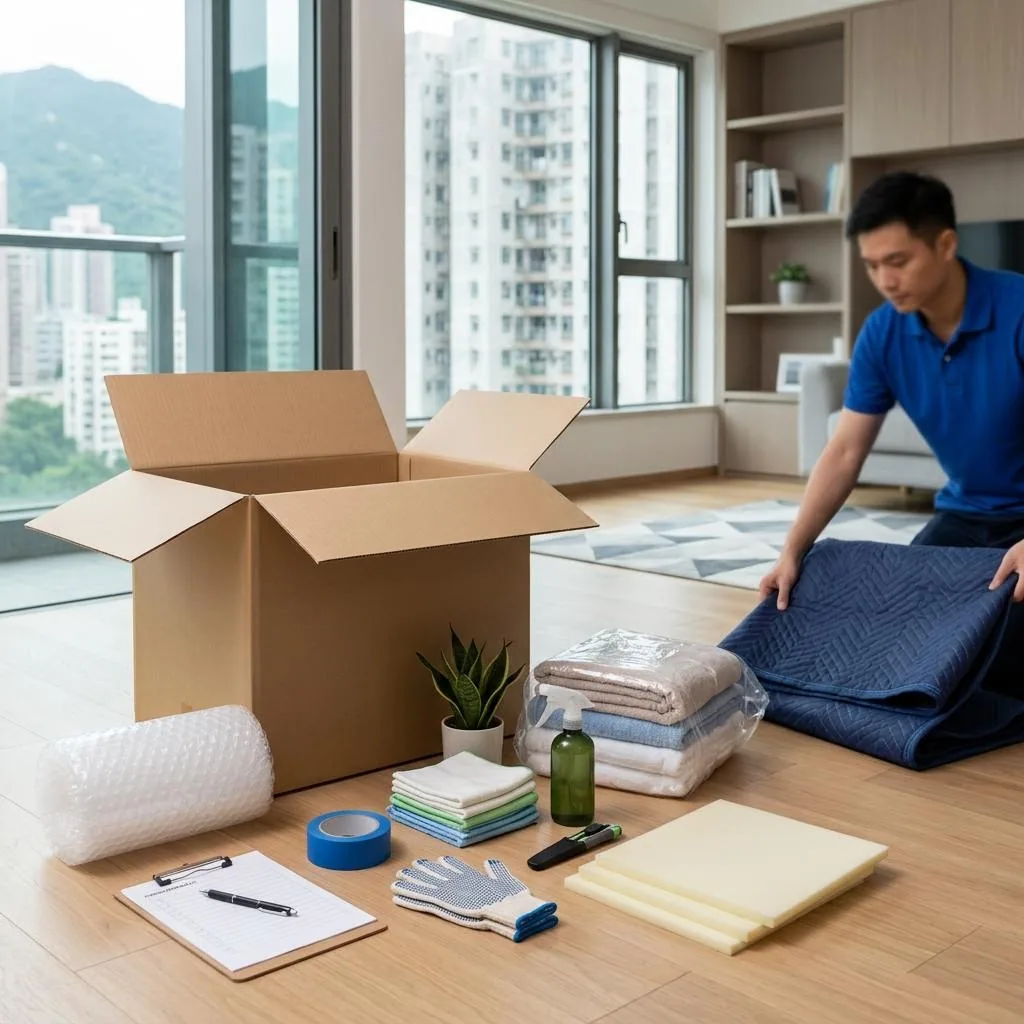
Before moving day, prepare boxes, tape, bubble wrap, packing paper, stretch wrap, and reusable bags. Wrap glass, ceramics, frames, and loose electronic accessories individually before placing them in a box, then fill gaps with soft paper or cushioning material so items do not shift around.
Seal the bottom, corners, and any handle area carefully. One strip of tape is usually not enough. If your furniture or appliances are large or awkwardly shaped, measure the doorway, lift, corridor, and stair space in advance. If anything needs dismantling, ask the mover in advance whether extra time is needed and keep all screws and small parts together.
Check the new home before furniture goes in
An empty home is the best time for basic inspection and cleaning. Before move-in, check walls, floors, windows, cabinets, door locks, water points, sockets, and lighting. Take photos of any issues so you can follow up with the landlord or management office more easily. For electrical, gas, water-heater, leakage, or structural problems, use qualified professionals rather than trying to fix them yourself.
For cleaning, work from top to bottom and from inside to outside. Pay attention to cabinet interiors, window tracks, skirting boards, bathroom corners, and the kitchen. If you want deep cleaning before move-in, do it before the furniture arrives so you avoid moving items twice. For odor treatment, pest control, or special cleaning, make sure the method suits the materials and the home layout.
Update your address and arrange mail forwarding early
Address updates are often forgotten after a move. Notify your bank, insurer, employer, school, government departments, subscriptions, and other regular contacts as early as possible. This helps prevent missing mail, delayed notices, or mismatched records. For bills, ID documents, delivery addresses, and online accounts, check each one carefully.
If you may not receive mail smoothly during the transition, ask postal services about mail forwarding or keep your old mailing arrangement temporarily until everything is updated. It also helps to maintain a moving address checklist so you can tick off tax, insurance, membership, delivery platform, and personal contact updates one by one.
Confirm details with the mover and inspect again at handover
If you are hiring movers, confirm the scope of service, floor level and lift arrangements, loading access, parking restrictions, whether dismantling is required, time limits, and how bulky or fragile items will be handled. For a piano, safe, valuable collections, or extra-protected items, tell the mover early and request written confirmation of the details.
At the new home, place boxes by area according to the labels and inspect them for damage, missing items, or obvious impact marks. Do not rush to open everything at once. Start with first-day essentials, then arrange furniture gradually. If you find damage during delivery or the handover record does not match, take photos immediately and keep the paperwork for follow-up.
Frequently Asked Questions
What should a first-time mover do first?
Start by sorting items into keep, give away, recycle, or discard, then begin packing. This reduces the number of boxes, saves moving time, and makes it easier to plan storage in the new home.
How should I choose box sizes?
Use smaller boxes for heavy items such as books, tools, or documents, and larger boxes for light items such as bedding, towels, or pillows. Do not overpack boxes just to save space, because they become harder and riskier to carry.
What should I check before moving into a new home?
Check the locks, windows, floors, walls, cabinets, sockets, lighting, water points, and whether there are leaks or odd smells. If the issue involves electricity, gas, or structure, use a qualified professional.
Which address updates are easiest to miss after moving?
Banks, insurers, employers, schools, government departments, subscriptions, and online accounts are often missed. Keep a checklist and update each one in turn so important mail does not get delayed.
What should I ask before hiring a mover?
Ask about service scope, floor and lift access, parking restrictions, whether dismantling is included, and how fragile or valuable items are handled. For pianos, safes, or special items, request written confirmation.


