MOVING TIPS & ADVICE
How to Dust-Protect and Move Furniture During Old Estate Repairs
Key answers
During major repairs in an older housing estate, moving vulnerable furniture out can reduce dust, scratches, and moisture damage. Plan what to move, how to wrap it, and how to coordinate access and return.
Decide which furniture should move out first
When an estate is having exterior repairs, pipe replacement, or a mandatory building inspection, the first step is to separate items that should stay from items that should leave temporarily. In general, wooden furniture, leather sofas, glass cabinets, delicate lighting, and collectable pieces are better candidates for removal because they are harder to clean and more likely to be marked by dust or contact.
Do not judge by value alone. Also consider whether the corridor is narrow, whether the item must pass through a lift, and whether moving it once is safer than protecting it on site. For fragile, valuable, or awkward pieces, take photos, record sizes and condition, and ask the mover to confirm the scope and limits in writing before anything is taken out.
Clean and protect before wrapping
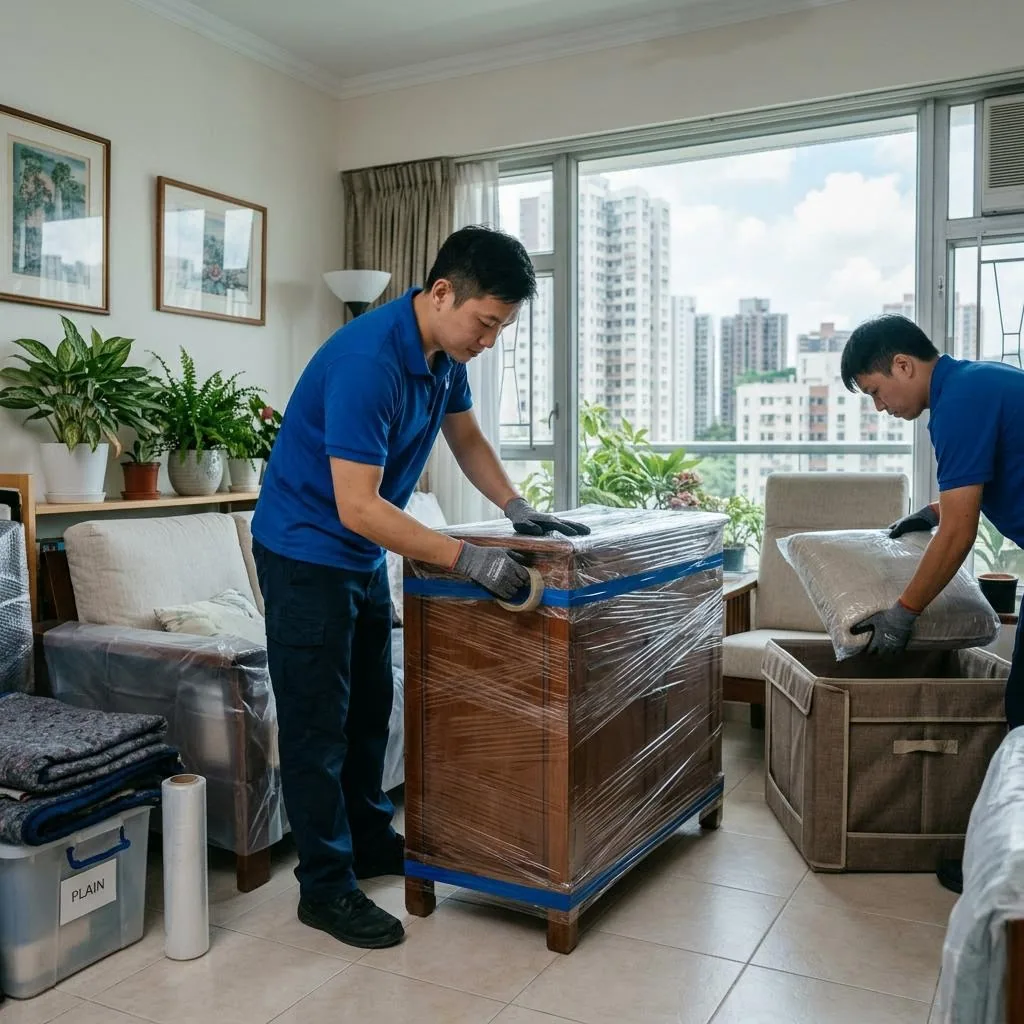
Before removal, empty drawers, shelves, and loose items inside cabinets. Hidden objects often shift during moving and cause internal damage. Wipe dust off the surface first, then wrap with soft cloth, felt, or non-woven material, with extra protection on corners and edges. After that, secure it with stretch wrap or tied packing, but do not seal moisture under plastic wrap.
If some furniture will remain in the unit, do not leave it covered with a thin sheet only. Keep a gap from walls and floors where possible, then seal corners, edges, and nearby openings with proper dust protection. Label each item clearly as to be moved out, to stay, first out, or last out so the plan can be adjusted quickly if the site conditions change.
Plan the moving route and timing
Older estates often have narrow common areas, long lift waits, and temporary closures from repair work, so the move should be scheduled after checking with the building management. Confirm whether the service lift is available, whether there are parking restrictions at the ground level, whether the truck can approach the lobby, and how much time is needed for registration and waiting.
During the move, send heavy items first and smaller pieces later. Protect door frames, corners, and lift interiors with soft padding. If dismantling is needed, confirm which parts can be removed, how screws and fittings should be packed, and who will handle reassembly. Do not try to dismantle electrical, gas, wall-fixed, or load-bearing parts yourself; those tasks should be left to the right qualified professional.
Practical points for storage or temporary holding
If repairs will last a while, not every item needs to be returned immediately. Short-term storage can reduce repeated handling and the wear that comes with moving furniture in and out. When choosing a temporary location, ask not only about space but also about loading access, receiving and collection arrangements, and whether each item can be stored and labelled separately.
Hong Kong humidity is hard on wood, leather, and fabric. Before storage, keep items dry and never seal in anything that is still damp or freshly cleaned but not fully dry. It helps to keep a simple inventory with item names, dimensions, visible condition, and the number of parts, then ask the receiver to check it on intake so that return and collection are easier later.
Check and reset the room after the repairs
When the repair work is finished, do not rush to put everything back in place. First check the floors, walls, door frames, and windows for remaining dust, paint marks, adhesive residue, or dampness. If needed, do a basic clean and ventilate the unit before the furniture comes back in. Once returned, place each item in its planned area and remove the outer protection in stages instead of pulling everything off at once.
When resetting the room, follow your photos or floor plan and check drawers, hinges, glass parts, and feet for missing pieces or instability. Test doors, load-bearing points, and movement, and look for scratches or deformation. If you find a problem, record it immediately and ask the mover or the relevant professional to follow up. Do not force parts into place or attempt an unsafe repair on your own.
What to ask before hiring a mover
Furniture moves during estate repairs depend on route, timing, packing, and return coordination, so do not ask only whether the job can be done. Ask whether the mover knows the building management process, whether the move can be split into stages, and whether they can follow a room-by-room list if items need to be taken out in batches. Also ask which items must be emptied by the customer, which should be dismantled first, and which are not suitable for moving right away.
Ask for the service scope, moving order, pickup and delivery points, and whether packing materials or temporary holding are included. For the latest charges and terms, please refer to Moving house price list and Service terms. If you have large, fragile, walk-up, or access-restricted items, request an on-site assessment and written confirmation before the move to avoid disputes or last-minute extras.
Frequently Asked Questions
Which furniture should be moved out first during old estate repairs?
Usually the items most at risk from dust, scratches, or humidity: wooden furniture, leather sofas, glass cabinets, collectables, and large pieces that are hard to shield properly in place. If the route is tight or the building is busy with repair work, removal is often the safer option.
Do furniture items always need dismantling before removal?
No. It depends on the structure, the route, and the available access. If dismantling is needed, confirm how parts and screws will be packed. Electrical, gas, wall-fixed, or load-bearing work should be left to the proper qualified professional.
If the repair only lasts a few days, do I still need storage?
Not always. Short jobs may only need dust wrapping and temporary repositioning. Storage becomes more useful when the work is extensive, the unit is too tight for safe on-site protection, or the repair period is longer than expected.
What is the most common mistake on moving day?
Common mistakes include not emptying drawers, not allowing enough waiting time, not confirming lift or parking arrangements with management, and not labelling the first and last items to move. These delays also increase the chance of contact damage.
What should I do if I find scratches or wobbling after return?
Take photos and keep the packing list, records, and any moving notes. Report the issue promptly to the mover. If the problem involves structure, installation, or electrical work, do not try to fix it yourself; ask the right professional to inspect it.


