MOVING TIPS & ADVICE
How to Move Wine Safely: Heat, Vibration, and Wine Fridge Moving Tips
Key answers
When moving wine in Hong Kong, the main risks are heat, vibration, and poor packing. Separate valuable bottles, keep them upright, protect labels and gaps, and let them rest after arrival to reduce seepage, oxidation, and sediment disturbance.
Why wine is especially sensitive during a move
The biggest risks during a wine move are not just broken bottles, but heat and vibration control. In Hong Kong's summer heat, a van parked outdoors or repeatedly opened during loading can quickly raise the temperature inside the cargo area, increasing bottle pressure, pushing corks upward, and letting air enter more easily.
At the same time, many wines have fine sediment after long aging. If the bottles are shaken repeatedly, rolled on their sides, or jolted by sudden braking and cornering, the sediment can be stirred back into the liquid. The result can be a rougher texture, muted aroma, and a loss of the wine's original balance.
Sort and prepare the collection before moving day
Start by sorting bottles by value, fragility, and packing method. Keep a separate list for rare bottles, noting vintage, region, quantity, whether there is seepage, and whether the label is loose. That way you can decide which bottles need hand-carrying and which can go into boxes without last-minute confusion. If any bottle already shows leakage, a raised cork, or cracks near the neck, photograph it first and handle it separately.
If you are moving a wine cabinet, empty all bottles before the cabinet is moved. Shelves, doors, and compressor parts should not be strained by the weight of bottles during transport. Measure the route in advance, including doorways, corridors, lifts, and turns. If the cabinet involves electrical, cooling, or built-in installation work, ask a qualified technician first; the moving team should only handle emptying, protection, and relocation.
Packing methods for single bottles and full cases
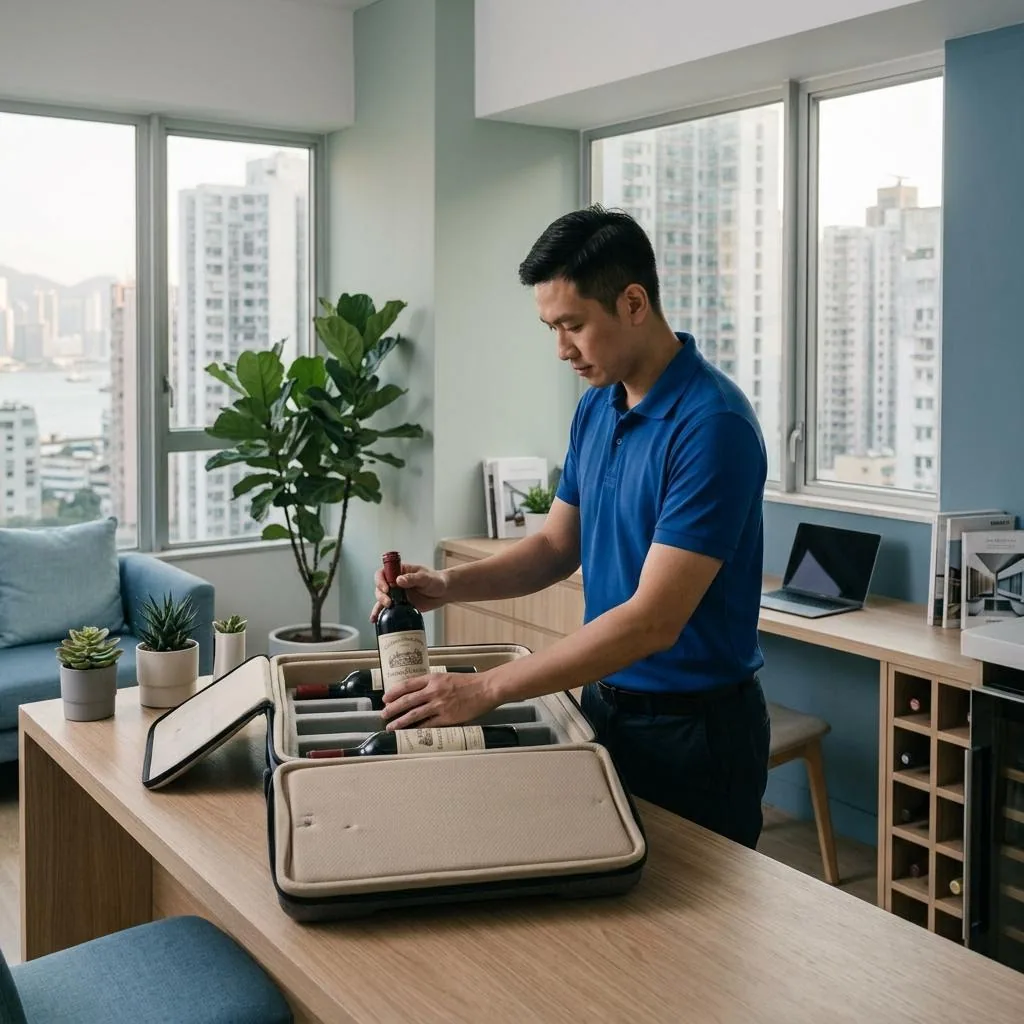
For single bottles, wrap the bottle gently with soft film or acid-free paper, then add air-column sleeves, bubble wrap, or cardboard dividers before placing them into a compartmentalized wine box. The goal is not maximum padding, but stable positioning so bottles do not strike each other. Leave no loose space inside the box, and make sure the neck and label area are protected.
If extra insulation is needed, use a thick insulated box or an added thermal layer. Do not place ice packs or dry ice directly against the bottles, and never freeze wine. Sudden temperature drops can stress the cork and the glass, while condensation can damage labels. For a short Hong Kong move, the priorities are shade, stability, and insulation, not aggressive cooling.
Loading, transport, and arrival checks
On moving day, try to schedule the trip for cooler hours in the morning or evening. During loading, keep wine boxes in a stable part of the vehicle, away from heavy furniture, metal edges, and items that can fall over. Keep the boxes upright whenever possible, and do not place heavy items on top of them. If there are multiple stops, load the most valuable or fragile boxes first and unload them last to minimize heat exposure.
After arrival, check the outer boxes for crushing, moisture, or signs of tipping before opening them one by one. Look at the bottle necks, labels, and closures for leakage or damage. If you notice seepage, a lifted cork, or a cracked bottle, separate it immediately and do not rush to open it. After a rough move, many wines need a resting period before they are ready to drink, but the exact time depends on the wine itself.
Common mistakes Hong Kong movers should avoid
A frequent mistake is using ordinary cartons, old newspapers, or clothing instead of proper dividers, which leaves too much empty space and allows bottles to collide. Another common error is stacking bottles flat without enough control, or placing them where direct sun can reach them during loading or unloading. Even a short exposure to heat can be enough to affect fragile bottles.
Another issue is mixing bottles, the wine cabinet, and other appliances in the same moving plan. The cabinet should be emptied and moved separately, while bottles should be packed according to fragility. If you have a large collection, auction-level bottles, original wooden cases, or a heavy cabinet, tell the mover in advance and request a clear plan for packing, loading order, and on-site checks in writing.
What to inspect on arrival and what to ask the mover
When the bottles arrive, first check the outer boxes for corner damage, dampness, or evidence of being tipped over. Then inspect each bottle for label damage, neck leaks, and seal movement. If any bottle shows seepage or a raised cork, keep it separate in a cool place. For valuable wines, record the condition before opening so you can later tell whether any issue appeared before, during, or after the move.
When speaking to the mover, ask three direct questions: whether the bottles will be transported upright, whether valuable bottles will be packed separately, and how heat exposure and vibration will be minimized during loading and transit. If the mover cannot explain the packing process, loading sequence, or arrival inspection clearly, ask for written confirmation before proceeding. For service details and conditions, see Online Quote and Service terms.
Frequently Asked Questions
Should wine be rested after a move before opening?
Yes. Resting helps sediment settle again and allows the aroma to recover. For short moves, a few days to two weeks in a stable cool place is often sensible. Older or more delicate wines usually need longer.
Should wine bottles be moved upright or on their side?
Upright is usually safer during transport because it reduces rolling and pressure on the cork. Whether to store them on their side after arrival depends on the wine and storage method.
Can I use ice packs to cool wine during a summer move?
Not directly against the bottles. Local overcooling can stress the wine and condensation can damage the label. If insulation is needed, use a barrier layer and focus on shade and stable temperature rather than rapid cooling.
Can a full wine cabinet be moved with the bottles inside?
No. The bottles should be removed first and the cabinet moved empty. Moving it full can damage the shelves, cabinet structure, or cooling parts. If electrical or built-in work is involved, use a qualified technician.
What should I ask the moving company before booking?
Ask how they will pack the bottles, whether they will keep them upright, how they will separate valuable bottles, and what they do to reduce heat and vibration. For complex collections, ask for written confirmation of the plan.


