MOVING TIPS & ADVICE
How to Prevent Fridge and Washing Machine Leaks Before Moving: Clearing, Defrosting, Draining, and Checks
Key answers
Before moving a fridge or washing machine, clear contents, defrost, drain hidden water, and secure loose parts. This guide covers practical steps, common mistakes, arrival checks, and when to ask a mover for written confirmation.
Why fridges and washing machines are the most common leak risks
Fridges and washing machines may work normally at home, but once they are tilted, jolted, or carried for a long time, hidden water, ice, and trapped moisture can escape. A fridge often leaks from melted frost or an overfilled drip tray; a washer can release water from the drain pump, drum base, inlet hose, or drain hose when lifted or turned.
Hong Kong homes often have narrow corridors, small lifts, and tight loading areas, so an unprepared appliance can wet floors, leave smells, and dirty shared spaces. Knowing the source of the leak helps you decide what you can do yourself and what you should confirm with the mover in advance.
How to empty and defrost a fridge properly
Start reducing food two or three days before moving and try to finish or give away perishables. At the latest, unplug the fridge the day before moving and leave the doors open for natural defrosting. Put absorbent towels or cloths at the bottom to catch meltwater, and remove shelves, drawers, and ice trays so they can be washed and dried separately; lightly tape the door shut so it does not swing open in transit.
Check whether the drip tray or bottom water collection area has been emptied, and make sure there is no remaining ice, water droplets, or frozen corners. Do not rush defrosting with hot water, and do not chip ice with hard tools, since that can damage the inner lining or cooling lines. If you notice unusual frost build-up, constant dripping, or a worn door seal, arrange a qualified technician to inspect it.
How to drain a washing machine and secure moving parts
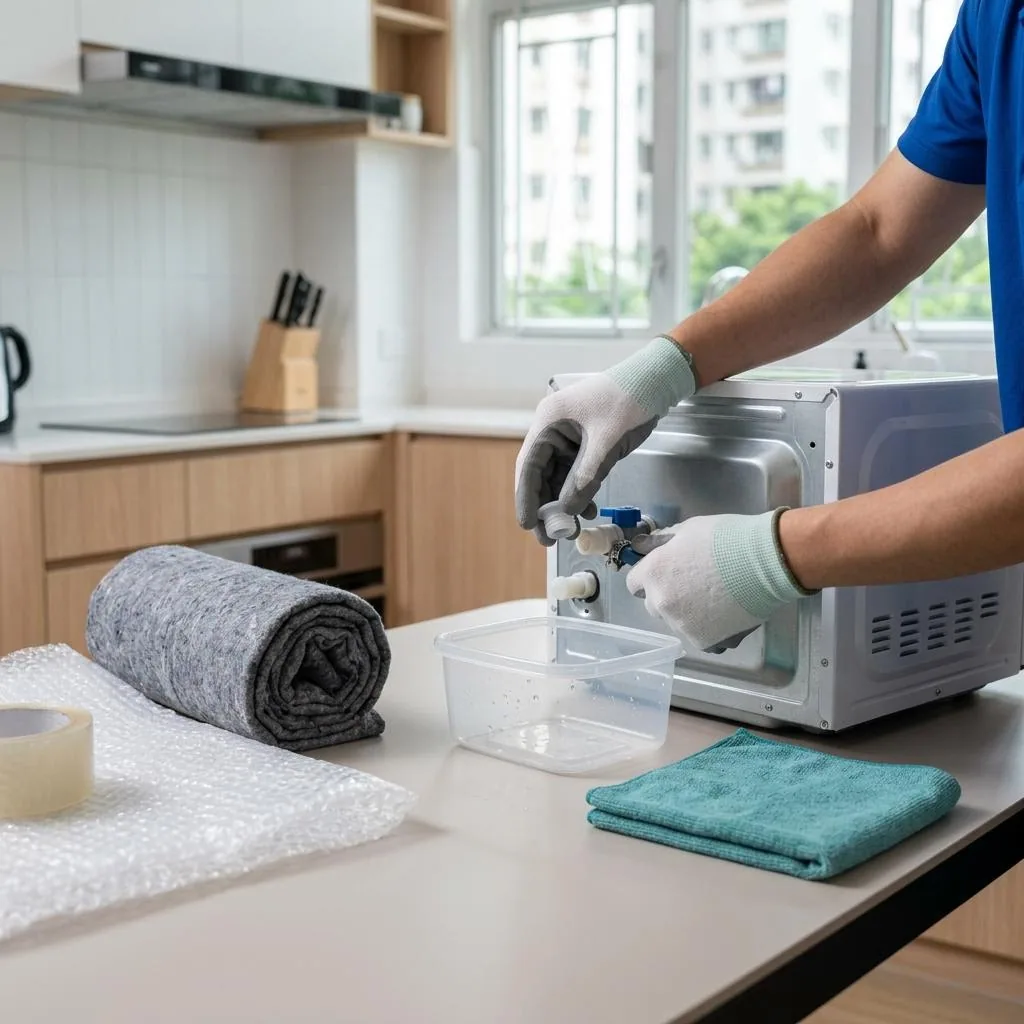
Before moving, run a final wash or rinse cycle, then drain the machine according to its model. For front-loaders or machines with a filter, place a shallow tray underneath and slowly open the bottom drain point to release residual water and debris; then detach the inlet and drain hoses, let them dry, and secure them so they do not leak during transport. If the manual says transport bolts are required, reinstall them exactly as instructed to stabilise the drum.
Do not force parts you are not familiar with, especially if the fittings are rusty, the hose has hardened, or the drain opening is stuck. Wipe the machine dry inside and out, coil the power cord and hoses neatly, and tie them in place. After arrival, check that the machine sits level and the hoses are not stretched before you test it according to the manual.
Packing, carrying, and fitting the move to the building
On moving day, avoid keeping the fridge or washer flat for long or tilting them at a large angle. Measure narrow corridors, lift doors, and turns in advance, and clear rugs, clutter, and doorway obstacles. Use protective padding, blankets, or film on the exterior to reduce scratches to floors, walls, and door frames.
Older Hong Kong buildings often have tight staircases, small lifts, and time limits set by management. Confirm the loading area, parking arrangements, and lift booking with the building office beforehand. If the appliance is oversized, very heavy, or the route includes multiple stair flights, ask the mover in advance to assess manpower and route limits instead of forcing it on the spot.
What to check after delivery
Do not plug in or switch on immediately after arrival. First inspect the cabinet for dents, the door hinge for misalignment, the hoses for bends, and the base for any sign of seepage. A fridge should be left standing level for a while before use; a washer should only be tested after you confirm the hoses, power point, and floor are dry and secure.
If you notice smell, continuous dripping, a door that will not close properly, or unusual vibration, do not try to inspect electrical parts, circuits, gas lines, or refrigerant systems yourself. Hand those issues to a qualified professional. The biggest moving mistake is to ignore a small problem and discover a leak or malfunction only after everything has been installed.
What you can do yourself and what to leave to the movers
Simple preparation, such as emptying food, removing detachable parts, and wiping the interior dry, is something most households can handle. But lifting, turning corners, carrying upstairs, loading, securing in the truck, and positioning at the new home involve strength, spatial judgment, and appliance protection, so it is better to let an experienced moving team take over those steps. Clear division of labour is safer than rushing at the last minute.
If you are not sure whether the fridge needs longer defrosting, whether the washer needs transport bolts, or whether the building passage is wide enough, send photos and measurements in advance and ask the mover for written confirmation on key steps. The real issue is not whether the task is done by you or outsourced, but whether the high-risk parts are left until moving day.
Frequently Asked Questions
How early should I start defrosting a fridge before moving?
As a general rule, unplug it and start natural defrosting at least 24 hours before the move. If the ice layer is thick, the weather is humid, or the fridge is large, allow more time so the interior can dry fully.
Why does a washing machine still have water inside before moving?
Because the drain pump, hoses, and the base of the drum usually retain some water that is not visible during normal use. Once the machine is tilted, that water can flow out, so it must be drained first.
Can I just wipe the appliance dry with towels and move it?
Not recommended. Surface wiping is only the first step. Hidden water, frost, and hose residue still need to be drained or defrosted, otherwise the appliance can leak during loading or transport.
Can I switch on the fridge and washing machine immediately after delivery?
It is better not to do that. Check for dents, leaks, and bent hoses first, then allow the appliance to settle and confirm it is level before testing it according to the model instructions.
What should I do if I do not know how to remove hoses or fit transport bolts?
Do not force the parts. Check the manual first, or send the model photo and dimensions to the mover and ask for written confirmation. If the task involves power, refrigerant, or structural parts, leave it to a qualified person.


