MOVING TIPS & ADVICE
How to Decide What to Keep or Discard Before a Move: A Practical Decluttering Guide for Hong Kong
Key answers
Before moving, sort items by usage, replacement cost, sentimental value, and new-home space. A simple keep-donate-discard system, plus clear labels and a buffer box, helps you decide with less stress.
Why moving uncovers so many forgotten items
When daily life is busy, clutter tends to build up unnoticed. Moving day forces you to open drawers, cabinets, under-bed spaces, and storage corners, and that is often when you realise how many items have not been touched for years. In a compact Hong Kong home, these things may seem harmless until you have to pack, carry, and find space for them again.
That is why moving is not just a transfer of belongings; it is a real chance to review what belongs in your next home. Not every item needs to follow you. If you separate truly useful items from things you have kept only because you could not decide, you avoid bringing old clutter into a new place.
Four practical tests for deciding what stays
First, check usage frequency: if you have not used an item for one or two years, and you do not expect to need it soon, it is worth reassessing. Second, check replacement cost: if the item is inexpensive or easy to replace, and moving it costs more than it is worth, keeping it may not make sense. Third, check sentimental value: you do not need to keep every memory object; one or two representative pieces may be enough, with photos or scans preserving the rest.
Fourth, check space in the new home. An item may have fit before, but if it blocks walkways, storage, or daily movement in the new flat, it may no longer be practical to keep. Using these four tests together is more reliable than relying on feeling alone, especially when you are sorting under time pressure.
How to sort without making the house messier
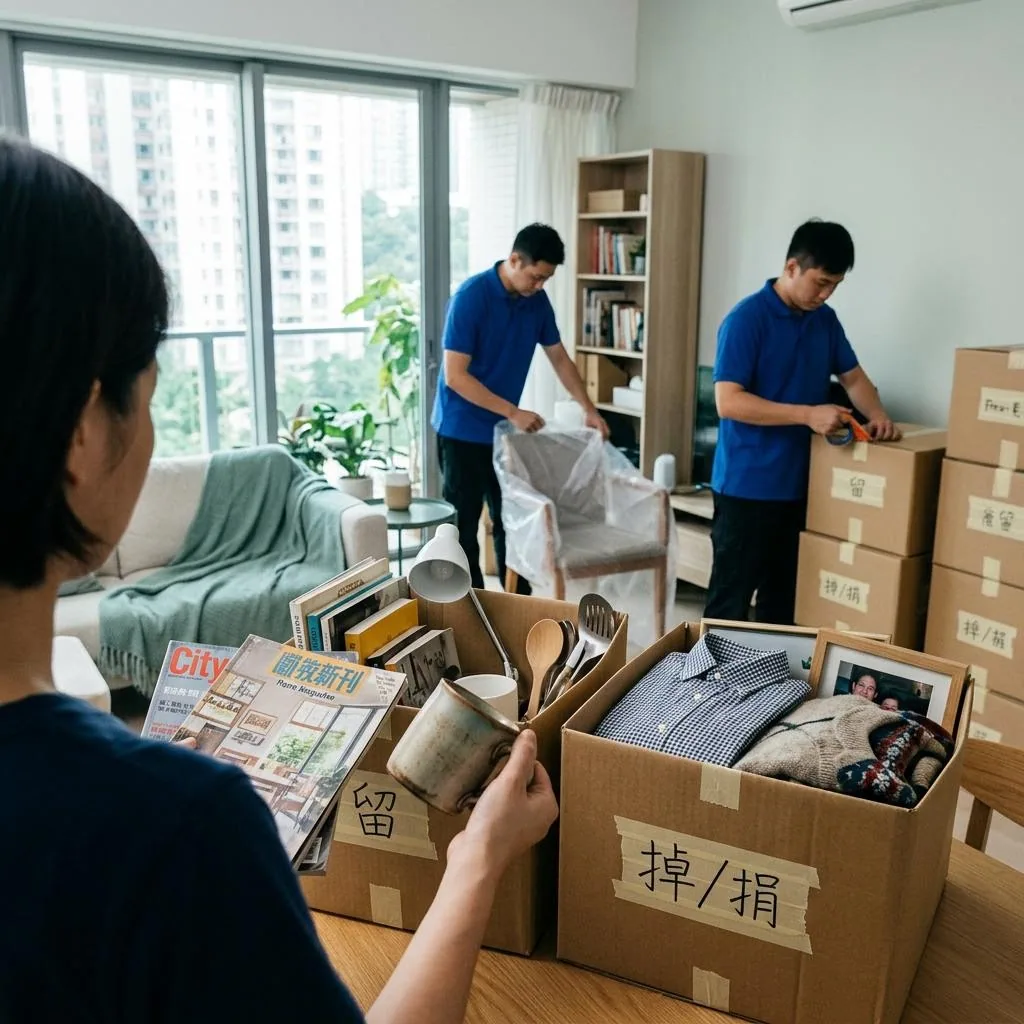
The best approach is to work zone by zone instead of trying to sort the whole home at once. Start with an easier area such as a wardrobe, under-bed storage, a kitchen cabinet, or a desk drawer. Small wins build momentum and make the whole process feel more manageable.
Prepare three boxes or bags labeled Keep, Donate or Recycle, and Discard. For items you cannot decide on immediately, use a buffer box, but write down the date and contents so it does not become a permanent hiding place. If you cannot give a clear reason to keep something, it is usually better to let it go.
What to do with old furniture, second-hand items, and bulky waste
If an item is still usable, consider passing it on, selling it second-hand, or giving it to someone who needs it. If it is damaged, mouldy, unstable, or unsafe to move, do not force it into the new home. For bulky items such as wardrobes, sofas, and bed frames, measure the item first and check whether it can pass through the new home’s entrance, lift, and stair routes.
For disposal, Hong Kong estates often have their own rules for bulky waste, packaging materials, and disposal times, so check with the management office in advance. If you need old furniture or clutter removed on moving day, tell the mover early what needs to go, which floor you are on, the access route, and whether disassembly is needed. Ask for written confirmation of what they can and cannot handle.
What to prepare before and after decluttering
Set a clear timeline before you start. Separate keep, donate, discard, and box-up tasks instead of leaving everything until the last minute. Mark each carton with the room name, item type, and whether it is fragile. Important documents, medicines, chargers, and a small set of daily essentials should be packed separately so they do not disappear into general boxes.
On moving day, recheck that items are sorted correctly, fragile items are adequately packed, and the planned placement in the new home still works. Any specialised task involving electrical work, gas, structural changes, medical devices, or data recovery should be left to qualified professionals. Do not attempt risky DIY work simply to save time.
Common questions about moving and decluttering
The hardest part is usually not lack of boxes, but not knowing where to begin. Start with the least emotional area, build a rhythm, and only then move on to items that carry stronger memories. If you have many things to review, sort them first into keep, donate or recycle, and discard, then check each box again before moving.
If you want to know more about packing, timing, access routes, or more complex moving preparation, review relevant moving guides and decide what help you actually need. The goal is not to move everything by default; it is to move into a cleaner, easier-to-manage home with only the items that still serve a purpose.
Frequently Asked Questions
I have too many items I cannot bear to throw away. How should I start?
Begin with the easiest areas, such as a wardrobe or under-bed storage, and sort items into keep, donate or recycle, and discard. For items you still cannot decide on, place them in a buffer box with a date so the decision does not drag on indefinitely.
How can I tell whether something is truly sentimental or just taking up space?
Ask yourself whether you used it in the past one or two years, whether it can be replaced easily, and whether it affects space in the new home. If you keep it only because it feels hard to let go, but it has no real use, it is worth reconsidering.
What is the safest way to deal with bulky furniture I cannot use in the new flat?
Measure the furniture and the access route first, then check the estate’s bulky-waste rules with the management office. If the item is still in good condition, consider passing it on; if it is damaged or hard to move, arrange disposal early instead of waiting until moving day.
How do I avoid making the house even messier while I sort?
Work one zone at a time and label each box immediately with the room, category, and whether it is fragile. Avoid opening too many boxes at once, or you will end up spreading clutter from one room to another.
Can a mover handle all old items for me?
It depends on the item type and the actual arrangement. Tell the mover the list, floor, access route, and whether any disassembly is needed, and ask for written confirmation of what is included. Electrical, gas, medical, structural, and other specialised tasks should be handled by qualified professionals.


