MOVING TIPS & ADVICE
How to Protect Mirrors and Framed Glass During a Move: Cross Tape, Corner Guards, and Packing Order
Key answers
Mirrors, framed glass, and large picture frames are vulnerable to vibration and edge impact in a move. Cross tape helps contain shards, but proper protection also needs corner guards, rigid backing, and the right loading position.
Why mirrors and framed glass are so easy to damage in a move
Mirrors, glass frames, and full-length mirrors are brittle items. The usual cause of damage is not one single drop, but a mix of vibration, compression, and corner impact during handling. In Hong Kong homes, narrow stair turns and tight lift doors make it easy to bump walls, railings, or other furniture.
If the wrapping is thick but the corners and frame edges are left unsupported, the glass can still crack under local stress. Large, heavy, or slim-framed items concentrate force more easily, so checking size, weight, and the route before the move is more useful than reacting on the day.
What cross tape really does: it reduces shard scatter, not impact damage
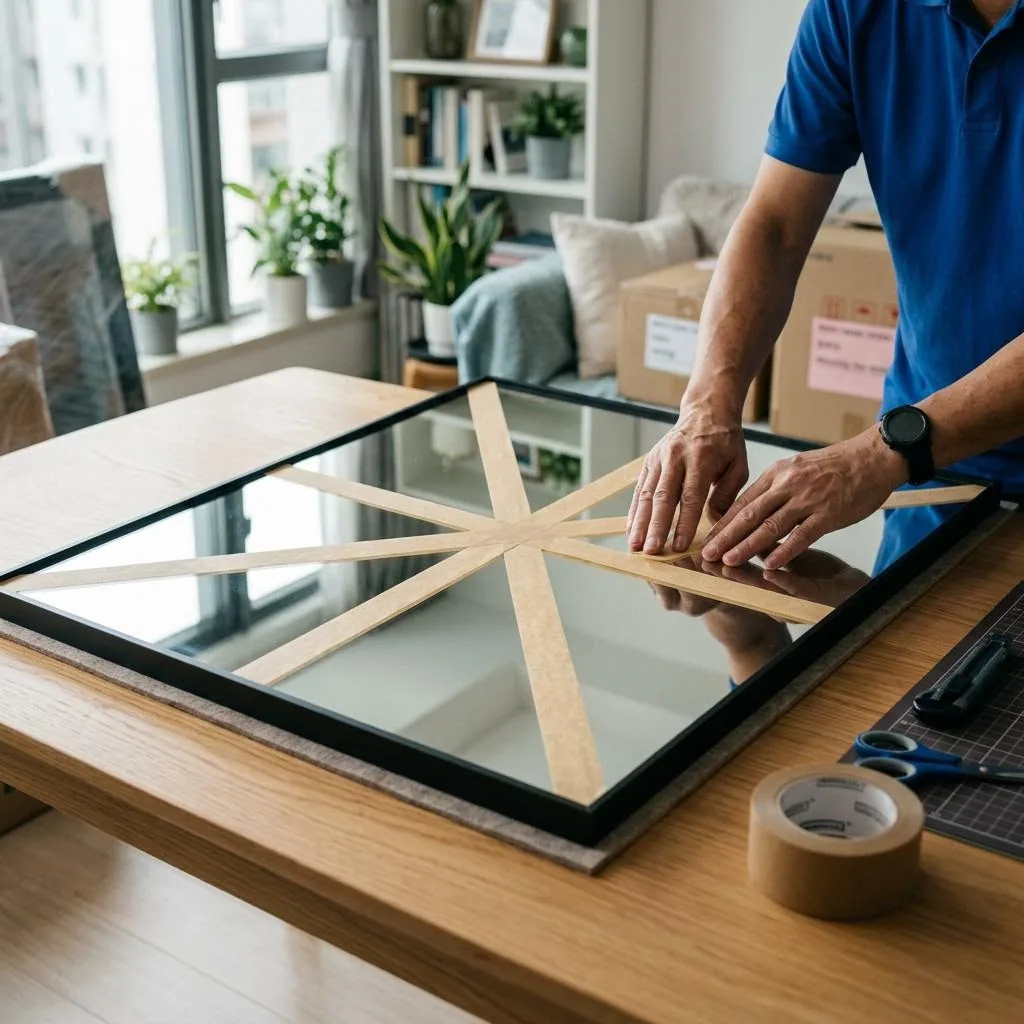
Cross tape is mainly used to hold broken glass together and reduce the chance of shards flying out. It addresses what happens after a crack starts; it does not turn glass into a material that cannot break, so it should never be treated as the only layer of protection.
A low-residue tape with moderate tack is usually more suitable than a very strong adhesive that leaves marks or damages the surface when removed. The key is to cover the centre and the corners, press it flat, and avoid loose tape ends that may rub against the glass inside the wrap.
A safer packing order: corners first, then rigid backing, then outer wrap
A more reliable sequence is to protect all four corners with cardboard or corner guards first, add rigid cardboard or thick board to the front and back, and only then wrap the whole item with bubble wrap or moving blankets. This way, the most fragile points are dealt with first, and the outer layer absorbs the vibration from handling.
Avoid wrapping a mirror in a thin plastic bag alone, because thin film cannot take pressure and may slip during transport. If the frame has raised decoration, gilding, or protruding trim, leave extra clearance outside the item; those raised parts are usually the first to be hit.
How to carry and load it safely
Once loaded, mirrors and framed glass should usually be kept upright against the van wall and secured in place. Flat loading puts weight on the centre of the glass and makes it easier for road vibration to create uneven stress; upright placement transfers load more safely to the frame and support surface.
Keep the item away from hard objects such as metal tools, glass tabletops, or sharp furniture edges. If it must travel with other furniture, leave space and separate items with blankets, cardboard, or soft padding to reduce rubbing. On stairs, work with a helper on the front and back so the item does not swing sideways into walls.
When you should not try to move it by yourself
If the mirror is very large, very heavy, irregular in shape, antique, collectible, frameless, or curved, normal home packing methods may not be enough. These items are not only fragile; their weight and balance can also make manual handling risky.
If the route includes very narrow corridors, tight staircases, or low ceilings, or if wall-mounted fixings need to be removed, make sure any electrical, structural, or installation work is handled by the right qualified professional. If you are unsure whether the item is suitable for self-handling, ask the mover for written confirmation of the packing and moving arrangement.
Arrival checks, cleaning, and common mistakes
After delivery, check the outer wrap for dents, holes, loosened tape, or water exposure before opening it. Remove tape and packing materials step by step. Place the item on a stable floor first, then inspect corners, any fine cracks, loose frames, or shifted backing before hanging it or leaning it in position.
Common mistakes include skipping corner protection, laying the mirror flat under other items in the van, over-taping the surface, and rushing the move without clearing the route. Before moving day, list the mirror size, packing materials, and transport route, and ask the mover to confirm the proposed packing method. For price, scope, and terms, refer to Moving house price list and Service terms.
Frequently Asked Questions
If I put cross tape on the mirror, is it safe to move already?
Not by itself. Cross tape mainly helps keep shards together if the glass breaks. You still need corner protection, rigid backing, and outer wrapping, plus care to avoid pressure and hard impacts.
How many layers of bubble wrap are enough?
It depends on the size and weight. The goal is to prevent direct impact on the surface, with extra protection at the corners. Large or heavy items usually need rigid backing as well.
Can a mirror be laid flat in the van?
It is generally not recommended. Flat loading increases pressure and vibration stress. Upright placement, with soft padding and secure strapping, is usually safer.
How do I remove sticky residue after taking off the tape?
Use a gentle method to soften the residue first, then wipe it with a plastic scraper or soft cloth. Avoid metal tools. If the surface has a special coating, test a small area first.
Which mirrors should be assessed by the mover first?
Large full-length mirrors, antique frames, frameless mirrors, curved mirrors, and items that must pass through narrow stairs or tight access routes should be assessed before the move.


