MOVING TIPS & ADVICE
When Can You Plug In a Fridge After Moving? Standing Time and Pre-Startup Checks
Key answers
Do not plug in a fridge immediately after moving. The right waiting time depends on whether it was kept upright or laid on its side; level it, clean it, leave ventilation space, then power it on after the proper standing period.
Why you should not plug in the fridge right away
Plugging in a fridge immediately after a move does not always mean it will fail, but it can start the compressor before the lubricant has fully settled back into place. If the unit was jolted, tilted, or briefly laid down during transport, the oil may have moved into the pipework, so immediate startup is not a safe assumption.
The correct approach is to return the fridge to an upright position first, then decide the standing time based on how it was moved. If you are not sure whether it was tilted a lot, it is better to wait longer before powering it on. If there is a burnt smell, unusual knocking, or no response after startup, unplug it and have it checked by a qualified technician.
Different moving positions need different waiting times
In general, a fridge that stayed upright throughout transport needs less standing time than one that was heavily tilted. The key is not to focus only on the number of hours. You should also consider whether it was laid flat, how rough the ride was, and whether it stayed on its side for any length of time, because all of these affect how quickly the oil returns.
If the mover used a tail lift, a stable trolley, and enough helpers, the risk of excessive tilt is lower. Even so, the fridge should still be set down properly and levelled before startup. Before moving day ends, ask the mover whether the fridge was ever laid flat and how long they recommend waiting, and request written confirmation if needed.
What to prepare and check before startup
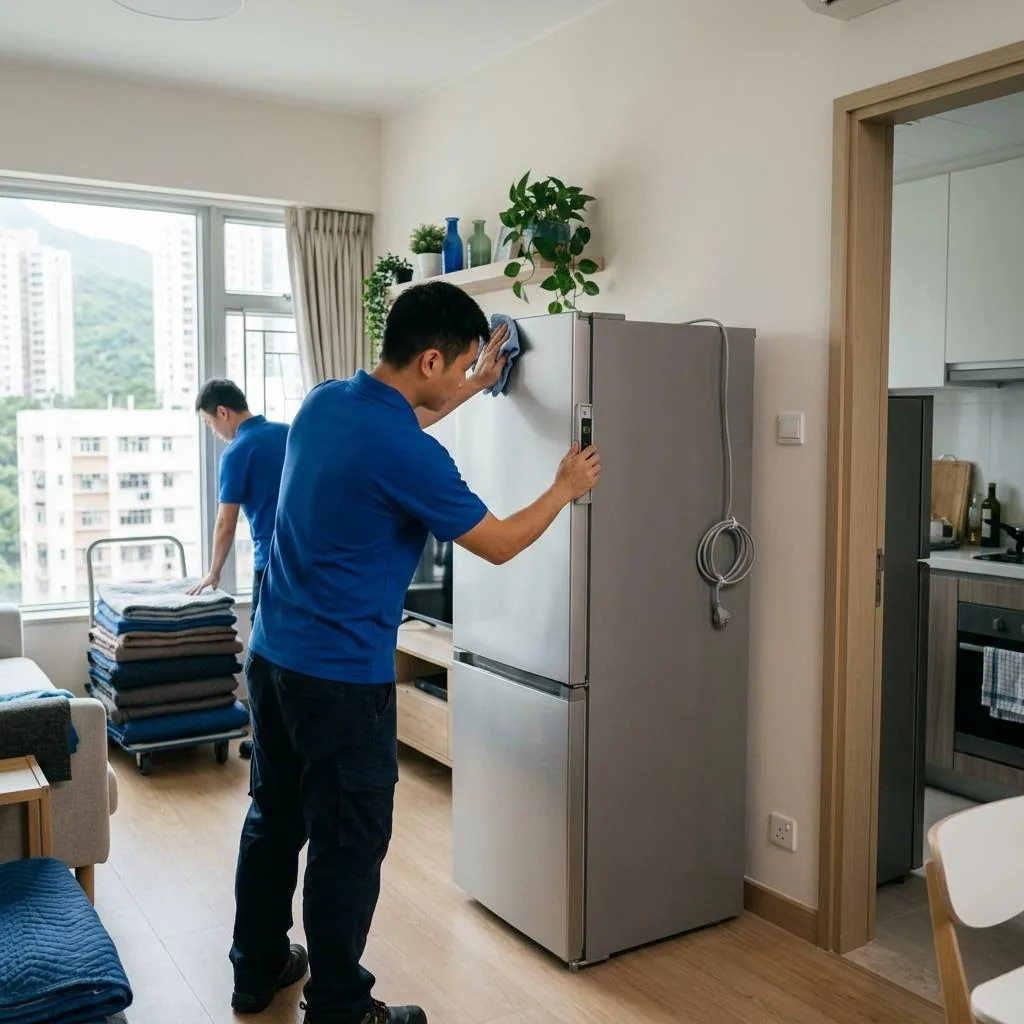
After the fridge is placed in its final position, check whether the floor is level, whether the unit is too close to the wall, and whether the door hinges or seals were pressed during the move. Leave ventilation gaps at the back and sides; otherwise, even after enough standing time, cooling may still be poor because heat cannot escape properly. For built-in spaces, measure carefully first so the cabinet does not squeeze the unit.
Before powering on, clean the inside liner, shelves, and door gasket to remove dust and condensation. If the fridge was kept closed for transport, there may be odour or moisture inside, so air it out first. Do not open the compressor, copper pipes, circuit board, or other sealed parts yourself; these should be handled by a qualified repair professional.
What to watch after plugging in
After the first startup, do not fill the fridge completely at once. Let it run empty for a while and check whether the compressor starts smoothly, whether there is excessive vibration, and whether the sides or back are becoming too hot. Some warmth on the cabinet is normal at startup, but loud metal knocking, continuous humming, frequent tripping, or no cooling at all means it should be stopped first.
Return food in batches, especially meat, dairy, and seafood. If the new home power supply is unstable or the fridge takes time to reach temperature, use an insulated cooler, ice packs, or another suitable temporary method for perishable items until the fridge is stable. This helps avoid overloading the cooling cycle by stuffing it too full at once.
Common moving-day mistakes
One of the most common mistakes is plugging in the fridge before it has been levelled. Another is leaving the door unsecured, failing to remove packing materials, or blocking the ventilation space with boxes or clutter. Some people also treat the fridge like a storage cabinet and pack the area around it before startup, which affects cooling and increases the risk of faults.
Another misunderstanding is that a new fridge can always be used immediately. In reality, new, secondhand, and moved appliances all rely on the same basic principle: transport can shift the balance of oil and refrigerant. If you are not sure whether the unit was ever laid flat, the safest move is to extend the standing time and check the user guide or confirm the recommendation with the supplier.
When to call a mover or a qualified professional
If the fridge is too large, the staircase is narrow, the doorway is tight, or there are multiple turns, lifts, or sloped sections, it is better to use an experienced moving team to avoid damage from forced lifting. Any issue involving electricity, wiring, the compressor, refrigerant, gas, or other specialist systems should not be handled as a DIY job; use the appropriate qualified professional.
Before moving day, ask the mover whether the fridge will stay upright throughout, how they will protect the door and seals, how long they recommend waiting before startup, and what they do if the unit was tilted during transport. These questions are more useful than simply asking whether they can plug it in for you. For quotations, moving arrangements, or terms, check the relevant pages and request written confirmation where needed.
Frequently Asked Questions
How long should I wait before plugging in a fridge after moving?
It depends on whether the fridge was kept upright or tilted heavily. An upright move usually needs less standing time; if it was laid flat or carried on its side for a long period, wait longer before powering it on.
What should I do if I do not know whether the fridge was laid flat?
If you are unsure, take the conservative option and wait longer before startup. You can also ask the mover exactly how it was transported and request confirmation in writing or by message.
Is it normal for the sides of the fridge to feel warm?
Often yes, especially on first startup after a move. Mild warmth can be normal heat release, but if it becomes very hot, smells burnt, vibrates heavily, or does not cool, unplug it and get it checked.
Can I load the fridge with food immediately after plugging it in?
It is better not to. Let the fridge run empty for a while first so the temperature can stabilise, then add food in batches to avoid overloading the compressor and slowing the cooling process.
When should I use a professional mover for a fridge?
Use an experienced team if the route involves stairs, narrow passages, tight turns, heavy doors, or built-in spaces. For electrical or refrigeration faults, contact a qualified repair professional.


