MOVING TIPS & ADVICE
Moving in the Rain: How to Protect Furniture and Boxes in Bad Weather
Key answers
Rainy-day moves need more than extra tape. Learn how to reduce water damage to boxes, wood furniture and appliances, plan the loading route, check items on arrival, and know when rescheduling is the safer choice.
Check the weather first and decide whether to reschedule
Before moving day, check the forecast, traffic conditions, and whether the building entrance is likely to flood. Light rain can often be managed with better packing and a shorter carrying route, but severe rain, a No. 8 signal, or heavy waterlogging is a good reason to ask the mover whether rescheduling is possible.
If you must move on the same day, start earlier so you are not caught by worsening weather in the evening. Tenants and owners should also notify building management in advance to confirm loading access, vehicle parking rules, and whether elevator protection is required.
Packing rules: prevent moisture first, then impact
Boxes fail first when they get soft from water, so the outer layer should be wrapped with waterproof film or stretch wrap, with extra attention to the bottom, top and sealed edges. Inside the box, use enough filler to stop items from shifting and punching through the carton. If a box is already damp, do not stack heavy items on it; replace it with a dry one.
Separate clothing, books and loose household items, and label each box clearly as fragile, keep dry, or load first. A common mistake in rainy weather is to overwrap the outside while leaving empty space inside, which means the contents can still move and get damaged even if the box stays dry.
Treat wood furniture, fabric items and appliances differently
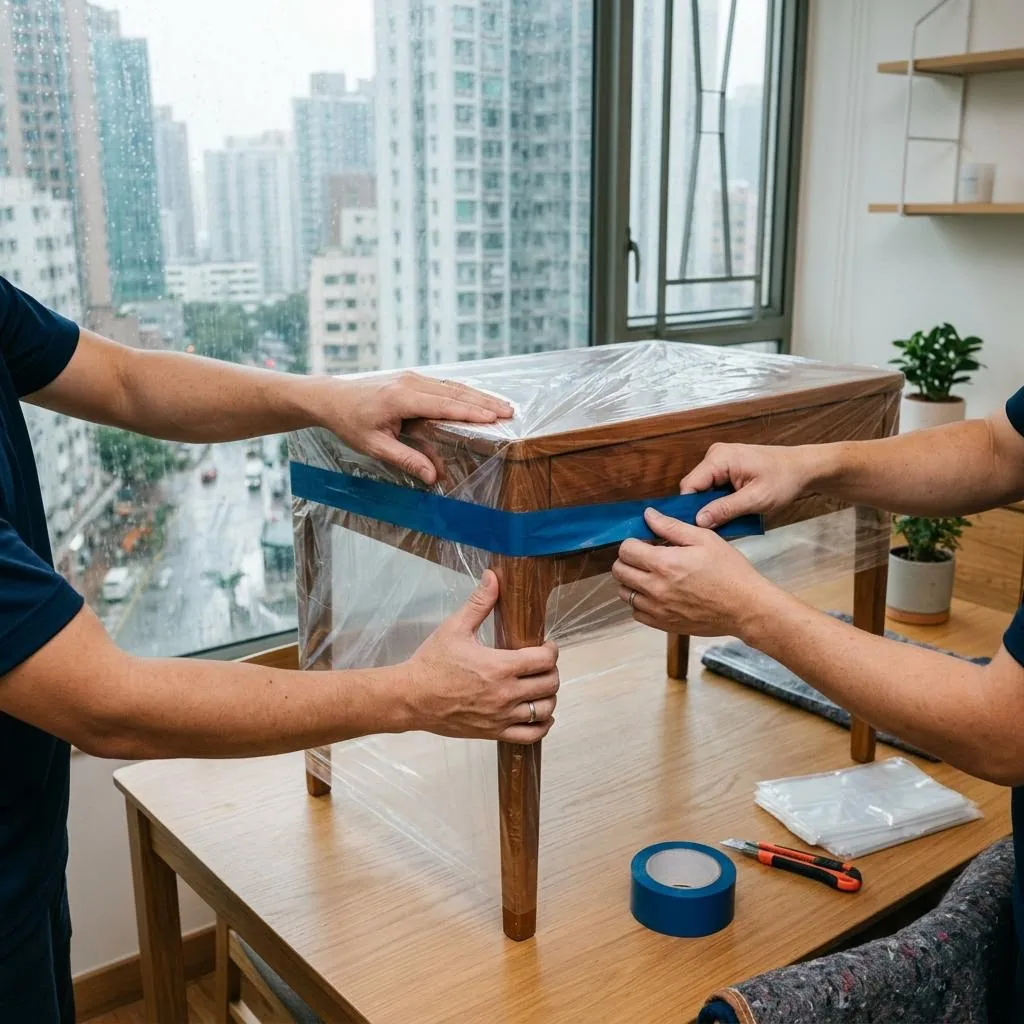
Wood furniture, veneered boards, fabric sofas and mattresses are more sensitive to dampness. Wrap them first with a dust cover or a clean moving blanket, then add a waterproof outer layer. Before moving, remove drawers, loose shelves and detachable parts so the item is easier to carry and exposes less surface to moisture.
For appliances, the key steps are to switch off the power, unplug the cable and tidy loose wires before packing. Use the original box if available, or a suitable protective wrap. Do not seal vents or internal parts in a way that traps heat or creates risk, and do not reconnect a damp appliance yourself; if water ingress is suspected, ask a qualified appliance technician to inspect it.
Plan the route and reduce slipping risks
The most important rainy-day tactic is to keep items outdoors for as little time as possible. Choose a covered loading point if the building has one, and park the truck as close to the entrance as allowed. If there is no covered area, arrange enough people so items can be passed along quickly instead of being left exposed mid-route.
Floor safety matters too. Put down non-slip mats or thick cardboard at the entrance, lift lobby and new-home doorway, and wipe wet soles before carrying heavy items. Do not rush, run, or walk backward on wet surfaces. If there are glass doors, narrow corridors or tight corners, measure them in advance so you do not have to force furniture through while the floor is slippery.
Inspect the new home and dry items properly
When the shipment reaches the new home, do not unwrap everything at once. Check each item for damp patches, water stains, impact damage or warping. If cartons were exposed to rain, open them first for books, documents and electronics. For wooden items, inspect edges, bases and joints for swelling or lifted surfaces.
If the item only has surface moisture, wipe it with a dry cloth and leave it in a ventilated spot to dry naturally. If there is obvious water ingress, odour or mould, isolate it first and seek the right professional advice if needed. Also remove wet cardboard, damaged wrap and standing water quickly so the new home does not stay damp.
Common mistakes in rainy moves and what to ask the mover
Many people think extra wrapping is enough, but the real problems are often the loading route, parking point, slippery doorway and lack of arrival checks. Another common mistake is mixing everything into one box, which makes it hard to sort out items that need urgent drying or inspection.
When booking, ask how loading will be sequenced in wet weather, whether you need to prepare your own waterproof materials, whether rescheduling is possible in bad weather, and how moisture-related issues will be handled on arrival. If you have valuable or delicate items, ask for written confirmation of the handling arrangement and refer to Service terms and Moving house price list for the current service conditions.
Frequently Asked Questions
Do all boxes need waterproof film on a rainy moving day?
Not every box needs heavy wrapping, but cartons, moisture-sensitive items and anything exposed to outdoor carrying should be protected. Focus on the bottom, top and sealed edges, and make sure the contents are packed tightly enough to stay still.
How should wood furniture be prepared before moving in the rain?
Empty drawers and shelves first, protect corners with a moving blanket, then add a waterproof outer layer. If the furniture is already damp, dry it and ventilate it first instead of sealing in moisture for a long time.
Can a damp appliance be plugged in right away to test it?
No. Switch off the power, keep it dry, and if water ingress or a strange smell is suspected, have it checked by a qualified appliance technician before use.
What should be arranged first for a rainy move?
Start with the closest covered loading point, the building access route, and elevator arrangements. Once the route is clear, the items can be moved with less exposure to rain.
What should I do if I discover wet items after moving in?
Take photos first, separate wet items from dry ones, and dry them as soon as possible. If there is clear damage or high-value items are involved, contact the mover in writing and follow the process stated in Service terms.


