MOVING TIPS & ADVICE
How to Move a Large World Cup TV Without Impact Damage
Key answers
Large-screen TVs need careful handling: disconnect and label cables, protect the screen and corners, keep the set upright in transit, and check for damage only after it settles at the new home. These steps matter even more in compact Hong Kong buildings.
Disconnect and record everything first
Before moving a large TV, power it off and unplug it, then let the set cool down before touching any cables. Take photos of the HDMI, antenna, network and audio connections, then bundle and label them so they can be reconnected correctly later.
If the TV is wall-mounted, check the bracket type and fixing method before removal. At least two people should support the set while taking it down. Remove the base, remote control, power cord and accessories, then place them in a separate bag clearly marked for that TV.
Protect the screen and corners properly
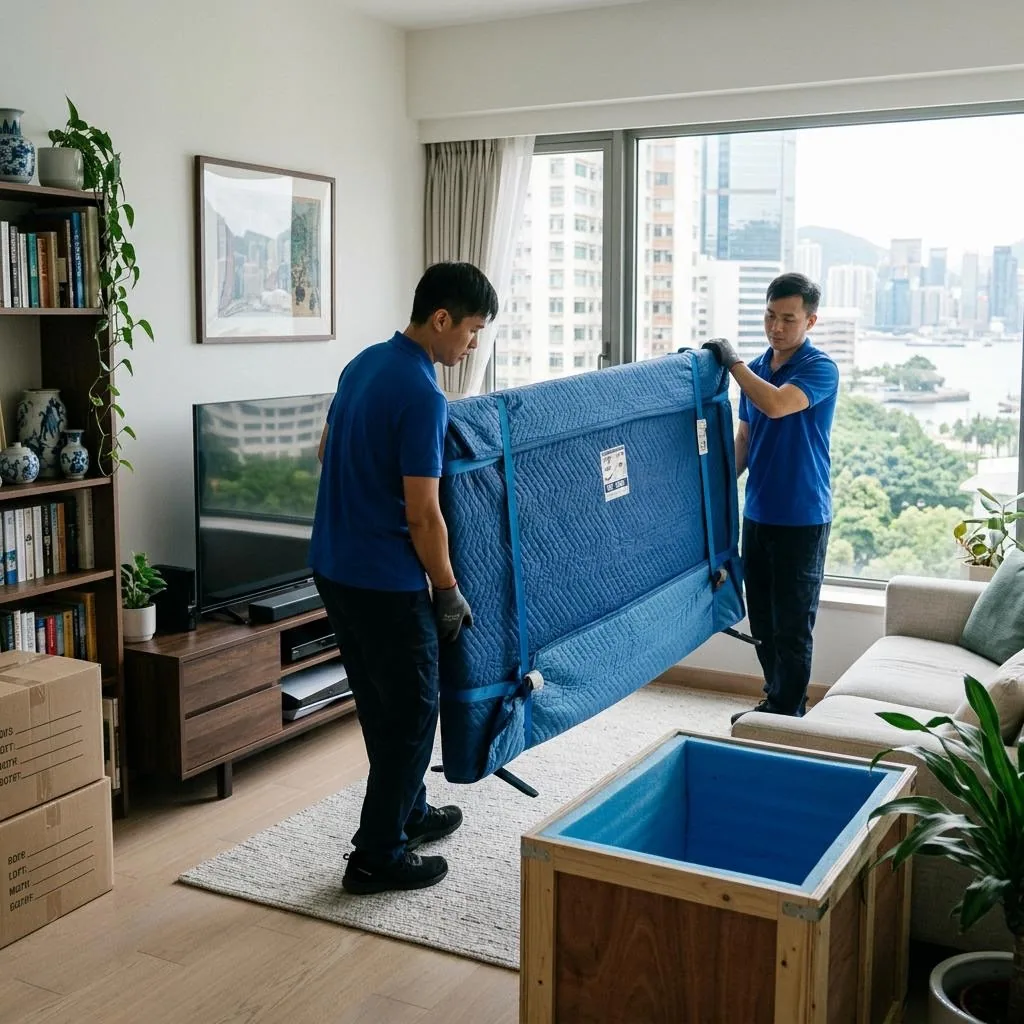
Start with a soft anti-scratch layer over the screen, then add a rigid protective panel or the original front cover. The goal is to prevent pressure on the display surface, so do not tape directly onto the screen or frame, especially on ultra-thin OLED or large-format panels.
The corners are the most vulnerable points, so reinforce them before wrapping the whole unit with bubble wrap. Keep the outer layer smooth and avoid loose ends that could snag. If you still have the original box, use it first. If not, ask for packaging that matches the unit size so the TV does not move inside the carton.
Keep the TV upright and secure in the truck
Once loaded, a large TV should stay upright. Do not lay it flat on the screen or back, and do not lean it loosely between heavy items. On Hong Kong roads, with tight turns and frequent bumps, flat or angled loading can put uneven stress on the panel and raise the risk of cracks.
Place the TV on a level spot, use soft padding on both sides, and secure the carton with straps so it cannot slide during transit. Keep it away from metal items, tool boxes and sharp edges. If other bulky furniture is on the same vehicle, plan the loading order and position carefully to avoid a second impact while unloading or shifting cargo.
Plan the route for Hong Kong buildings
Old buildings, Tong Lau layouts and narrow corridors are where large TVs are most likely to hit door frames, corners or lift entrances. Before moving day, measure the TV and its packed dimensions, then check whether the front door, lift and stair turns can accommodate it. If needed, clear the route in advance instead of making last-minute adjustments.
At the site, one person should lead the route while another protects the corners from behind. Move slowly through tight spaces. If there are glass doors, recessed areas or uneven floors, pause before turning. Do not force a one-person lift through a narrow gap; if the route is clearly too tight, stop and revise the moving plan first.
Set up and inspect the TV at the new home
After arrival, do not switch the TV on immediately. Let it settle at room temperature first, especially if it has moved from an air-conditioned vehicle into a humid home. Then place it in the planned location and check that the cabinet or wall mount is stable before reconnecting the necessary cables.
After the first power-on, look for cracks, lines, dead pixels, uneven backlight or unusual noise. If the unit has been jolted or tilted too much, do not open it yourself to inspect the electronics. Electrical faults, mounting structure issues, signal connections and display abnormalities should be handled by a qualified professional. If there is a dispute, keep the packaging, photos and handover records, and ask the mover for written clarification.
Questions to ask before booking a mover
Before booking a large-TV move, ask whether the team has practical experience with oversized AV equipment, whether they can transport it upright, how they will measure access points in advance, and whether you need to remove wall brackets or clear the route yourself. If stairs, narrow turns or long carrying distances are involved, ask for the process to be confirmed in writing.
Also ask who is responsible for packing, whether the original box is required, what happens if the size does not fit on arrival, and what the handover and inspection procedure will be. For pricing, terms, responsibilities and any limits, request written confirmation and refer to Online Quote, Moving house price list and Service terms rather than relying on verbal assumptions.
Frequently Asked Questions
What is the most important step before moving a large TV?
Power it off, unplug it, disconnect and label the cables, then confirm whether the wall bracket or base needs to be removed first. This reduces the risk of snagging, pulling and uneven strain during the move.
Can a TV be moved flat?
Generally no. A large-screen TV should stay upright because flat transport can place uneven pressure on the panel, and road vibration in Hong Kong can make damage more likely.
What if I do not have the original box?
Use a carton sized to the unit, with bubble wrap, corner protection and proper filling so the TV cannot shift inside. Do not let the screen press directly against hard materials. Ask the mover in advance about their packing method.
Can I switch the TV on as soon as it arrives?
It is better to let it settle at room temperature first, then check the placement and connections before powering on. If the set was jolted, tilted or exposed to a big temperature change, wait and inspect carefully before use.
When should I call a professional?
If the issue involves electricity, wall mounting, signal connections, display faults or internal damage, it should be handled by a qualified professional. Do not open the set or attempt a risky repair yourself.


