MOVING TIPS & ADVICE
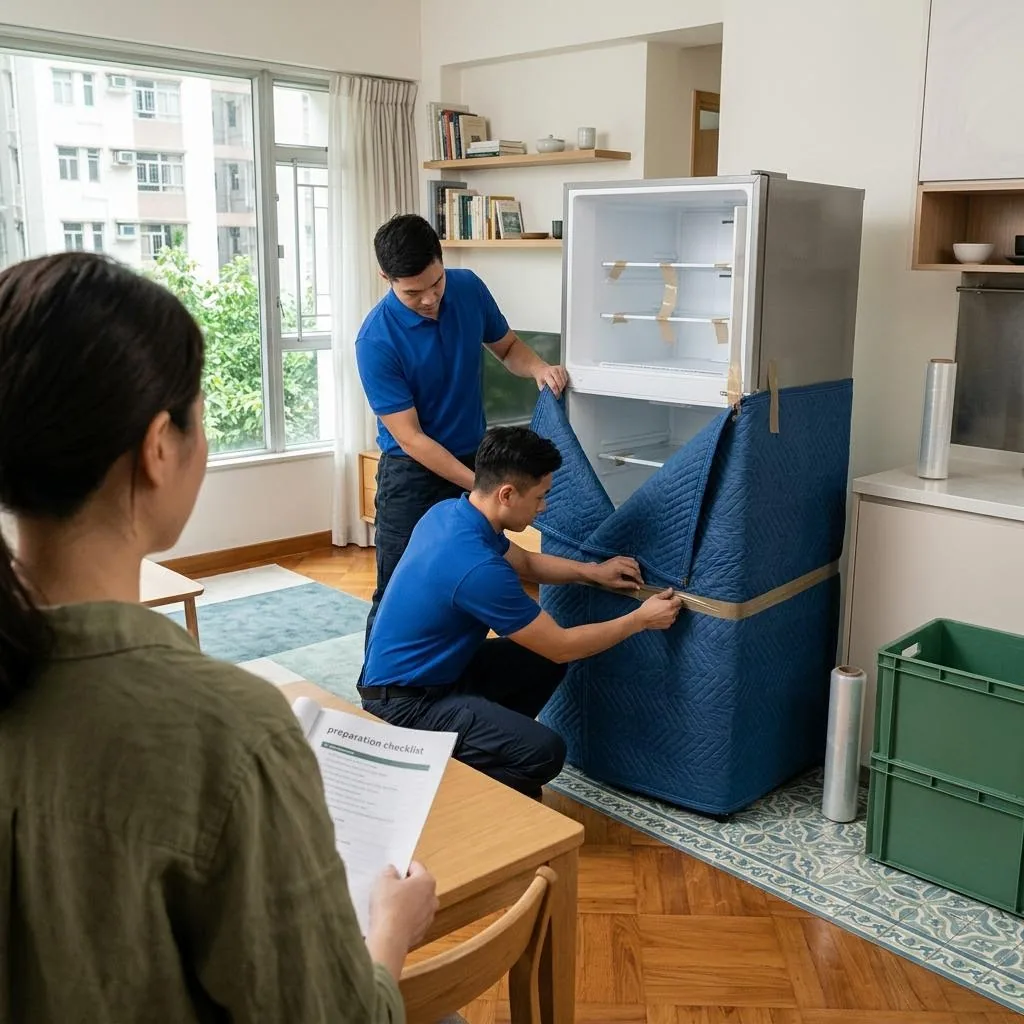
How to Prepare Large Appliances Before a Move
Key answers
Before moving fridges, washers, TVs and other large appliances, clear the contents, handle water and power connections properly, and confirm routes and measurements to reduce leaks, scratches and access problems.
Empty the appliance first, then sort removable parts
Before moving day, clear out everything inside the appliance. Take food and drinks out of the fridge, remove items from the freezer, empty the washer of clothing and detergent, and separate discs, remotes, cables and small accessories from AV equipment. Loose items can shift during lifting and may damage shelves or scratch inner surfaces.
Removeable shelves, drawers, filters and trays should be labelled and packed separately so they can be put back in the right place later. If a part tends to come loose, secure it with tape or protective material, but do not tape directly onto surfaces that may mark easily, especially glass, glossy finishes or TV bezels.
Allow time to power down and defrost fridges and freezers
Fridges and freezers need enough time to switch off, defrost and dry out before moving. If ice is still built up inside, it may melt in transit and leak onto floors, lifts or corridors, creating a slipping risk. After power off, open the door to let cold air escape, wipe away standing water and check the door seal for trapped debris.
On moving day, have the power cord, ice maker water line or related connections disconnected in advance where needed, and confirm with building management whether the door can be left open for a while or the unit can be staged in the corridor. For large or side-by-side fridges, measure the door frame, corridor and lift size early, and think through placement and door swing at the new address.
Handle washers and dryers: water, hoses and transport locks
For a washing machine, turn off the water supply, disconnect the inlet and drain hoses, and remove any remaining water from the drum or base. If the machine has transport bolts or locks, install them according to the manual or the maker's instructions; if you are unsure, ask the supplier, installer or a repair technician first rather than removing internal parts yourself. Any water left at the base can make lifting unstable and wet the route.
Dryers should also be cleared of lint, unplugged and disconnected from any vent or connection, then packed separately. If the setup involves fixed venting, wall openings or built-in installation, have a qualified technician handle the new setup instead of changing it on the spot yourself. Before arrival, confirm that the new location has enough outlet access, vent space and depth for the machine.
Protect TVs, screens and AV equipment from pressure, scratches and shock
TVs and large monitors are vulnerable to pressure on the panel, so remove the stand, bracket and external cables first, then pack the remote, power cable and signal leads together. Cover the screen with the original packaging if available, or with suitable protective material, and add cardboard or foam on the outside to reduce impact. The goal is not tighter wrapping, but avoiding pressure on the center of the panel.
For large AV cabinets, amplifiers or projector systems, take photos of the cable layout before packing and label each cable clearly for later reinstallation. For equipment with precise internal settings or calibration needs, any connection, setup or adjustment before and after the move should be handled by the relevant specialist; the moving crew should focus on safe transport, not high-risk technical work.
Measure the route, access points and final placement in advance
Whether an appliance can be moved smoothly depends not only on weight but also on the route. Measure the appliance width, height and depth, then compare them with the front door, corridor, lift, stair turns, grille gates and the door at the new home. If stairs are involved, check turning space, landing width and handrail positions so the team does not discover a blocking corner on arrival.
It helps to decide the final position in the new home before moving day and leave room for sockets, ventilation and door opening. Fridges should not be pushed flush against the wall, washers need proper drain access, and TVs should have suitable support and viewing height. If the home has narrow passages, multiple stair flights or a need to remove a door frame, say so before booking and ask for written confirmation of what the mover can and cannot do.
Final checks before departure: paperwork, weather, protection and arrival inspection
Before leaving, run through a final checklist: are all cords, hoses and accessories bagged and labelled; is each appliance switched off, unplugged, drained or defrosted; is the outer protection secure; and have family members, building management and the receiving party been told about the route. In rainy weather, watch for slippery floors and damp packaging, and add waterproof protection where needed, but do not place wet material directly against the appliance.
After arriving, inspect the exterior for obvious dents, cracked glass, loose panels, crooked hinges or signs of leakage before turning anything on. If something looks wrong, take photos and raise it with the moving team and the relevant repair professional promptly rather than rushing to power up or forcing use. If you need to confirm what to ask a mover, request written confirmation and refer to Online Quote, Moving checklist or /guides/moving-timeline as needed.
Frequently Asked Questions
What is the most important first step before moving large appliances?
Clear the contents, then deal with power, water connections, accessories and the moving route. That reduces leaks, damage and access problems on the day.
Does a fridge always need to be defrosted in advance?
It is generally recommended. If ice remains, it may melt during transport and wet the floor or pathway. The timing depends on the model and site conditions.
Can a washing machine just be moved as is?
No. It should be drained, disconnected from water, and fitted with transport locks if required. If you are unsure, ask the maker or a qualified technician first.
Should a TV stand be removed before moving?
If the stand or bracket affects handling, it should usually be removed and packed separately. The screen should be protected from pressure; the main goal is scratch and shock prevention.
What if the new home doorway is too narrow?
Measure in advance and tell the mover honestly. You may need to remove a door frame, change the route or reschedule. Structural or installation issues should be handled by qualified professionals.


