MOVING TIPS & ADVICE
How to Make a Move More Efficient: Practical Steps from Planning to Moving Day
Key answers
To move efficiently, start with a timeline, reduce items, label boxes clearly, prepare access and arrival checks, and confirm details in writing when needed.
Set a timeline first and avoid last-minute rushing
The biggest cause of an inefficient move is starting too late. A better approach is to work backwards from the move date and list each step, including sorting, packing, booking transport, handover, and disposal of unwanted items, with buffer time for each stage. If you need elevator booking, loading access, or building notice, include those tasks as well so you do not end up waiting or rescheduling on the day.
It also helps to prepare a simple checklist with three groups: items to keep, items to let go, and items that need separate handling. The list should cover not only furniture and boxes but also keys, documents, contracts, chargers, medication, and daily essentials. If you are unsure about any document or valuable item, keep it with you rather than mixing it into a general box.
Sort before you pack so you move less
Efficiency begins with moving only what you actually need. Before packing, go through each room and divide items into keep, pass on, dispose of, and confirm later. Anything you no longer use, have duplicates of, or have left untouched for a long time should be dealt with first, because every unnecessary item adds boxes, lifting, and time. If the item involves electronics, batteries, chemicals, medical devices, or other special handling, check the proper disposal or handling rules separately and do not move or discard it casually.
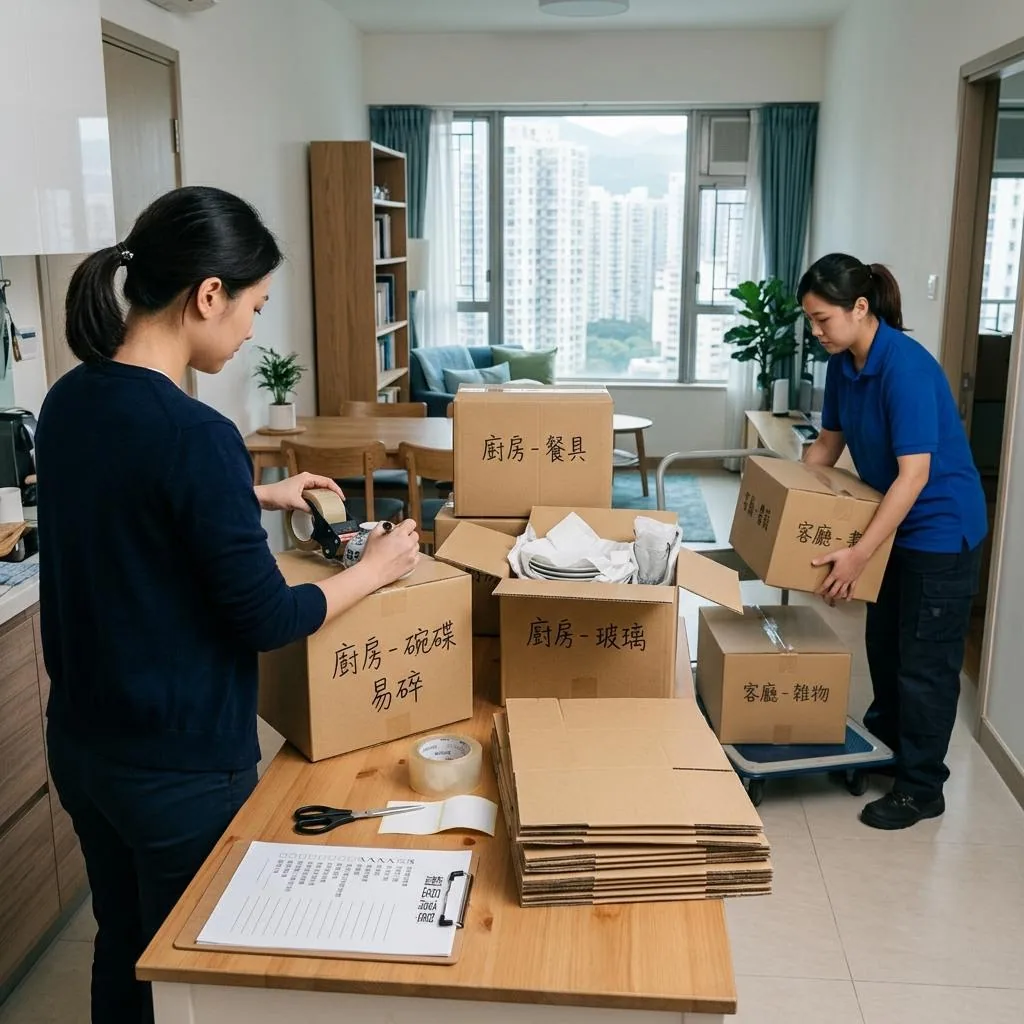
Packing should also make the job simpler at the destination. Keep one room or one category per box, and mark the box with the room name, contents, and whether it is fragile. Put heavy items in small boxes and light items in larger ones so the size does not hide the weight. Prepare one separate box for daily essentials such as toiletries, a change of clothes, tissues, basic utensils, and charging cables, so you can manage the first night without opening everything at once.
Plan the moving method and site layout in advance
Different homes and item volumes call for different moving methods. If you live on a high floor, have bulky furniture, narrow corridors, or limited access, it is worth checking the building entry route, lift size, parking point, and unloading path before moving day. If you are arranging the move yourself, confirm the entrance, route, and temporary staging space in advance so boxes do not block the doorway.
If you are hiring a mover, describe the addresses, floor levels, lift access, dismantling needs, item types, and any fragile or valuable pieces. Ask for written confirmation of the moving scope, arrival time, loading and unloading arrangement, and any extra situation that may apply. You can also review Online Quote or Moving house price list to understand the quotation and terms more clearly, and use Moving checklist to avoid missing details.
Clean-up and handover should happen alongside the move
How efficient a move feels depends on more than the loading itself. Before leaving, clear rubbish, expired food, broken small items, and anything you no longer need. Check drawers, cupboard tops, window ledges, and hidden corners one by one. If you are renting, clean the unit as required by the lease and keep photos for your own record in case there is later disagreement about the condition of the property.
After arriving, deal with the basic living areas first and sort the rest gradually. Put the bed, lighting, cleaning items, and daily necessities in place before tackling clothes and miscellaneous boxes, so you can function normally even if everything is not unpacked at once. If furniture needs to go to specific positions, measure the hallway and room sizes first; otherwise you may waste time shifting items around at the door.
Clear roles on the day prevent duplication and waiting
On moving day, the main source of delay is usually people doing the same thing twice or no one knowing what comes next. Assign roles in advance: one person handles counting and coordination, one watches fragile or valuable items, and one guides the route and room placement. If older family members or children are present, set a safe area so they are not standing in the traffic path.
When the team arrives, do a short confirmation first: what goes out first, what stays until last, what must not be stacked, and what needs special care. At the destination, check for scratches, bumps, missing boxes, or misplaced items before unloading the rest. If access is delayed, the lift is busy, or weather changes the plan, adjust the sequence early instead of forcing the schedule and creating more damage or confusion.
To save time, ask the right questions before booking
Many people think efficiency only means speed, but real efficiency means fewer mistakes, fewer repeat tasks, and less on-site problem solving. Before booking, ask about arrival time, how charges are calculated, whether parking needs to be arranged, whether stairs are involved, whether packing is done by the customer, and how extra items will be handled. Clarifying these points early usually saves more time than asking later.
If you want the whole move to run faster, start with reducing volume, sorting clearly, and labelling properly, then plan the arrival and handover steps in advance. A move is not made efficient by rushing; it becomes efficient when there is less to move, less guessing, and less rework. If anything remains unclear, request written confirmation and then plan according to the actual situation.
Frequently Asked Questions
What should I do first to make a move more efficient?
Start with a moving timeline and work backwards from the move date. That way you can plan sorting, packing, booking, and handover in the right order and avoid last-minute rushing.
What should be dealt with before packing?
Sort out items you no longer need, duplicates, and long-unused belongings first. Special items such as electronics, batteries, chemicals, or medical devices should be checked separately rather than packed casually.
How should boxes be labelled for better efficiency?
Write the room, contents, and whether the box is fragile on each one. Put heavy items in small boxes and light items in larger boxes so they are easier to handle and place correctly later.
How can I avoid confusion on moving day?
Assign clear roles, confirm the loading order, and check items at each stage. If access, lift use, or weather changes the plan, adjust early instead of rushing through it.
What should I ask before booking a mover besides the price?
Ask about arrival time, scope of work, lift or stair arrangements, parking, whether packing is included, and how extra items are handled. Clear answers in advance save time on the day.


