MOVING TIPS & ADVICE
How to Move a Sofa Safely: Measurements, Disassembly, Route Checks, and Practical Tips
Key answers
Before moving a sofa, measure the furniture and the route, clear the path, and protect corners and floors. If the sofa is oversized, heavy, or has to pass a tight stairwell, check whether professional help is needed.
Identify the sofa type and moving difficulty
Before moving a sofa, check whether it is modular, L-shaped, chaise-style, or a fixed one-piece frame. Different designs distribute weight differently, and the ability to remove arms, legs, backrests, or cushions can decide whether it will pass through a doorway, corridor, or stair turn.
If the upholstery is fabric, leather, or any surface that scratches easily, plan how you will cover it before moving. When the sofa is close to the size of the doorway or lift opening, do not guess: measure the full dimensions and include any extra thickness from wrapping or padding.
Measure the route first, then clear and protect it
Before the move, measure the sofa, doorways, corridors, stair turns, lifts, and the main entrance so you know the narrowest point in advance. In Hong Kong, older buildings and village houses often have narrow stairs and awkward corners, so a sofa that looks manageable at home may still jam halfway through the route.
Route preparation matters just as much. Remove shoes, rugs, low cabinets, and any loose items from the path, then protect wall corners, door frames, and floor edges with blankets or padding. If you must pass through a lobby or shared corridor, check building rules first and avoid blocking entrances or lift access.
Disassemble where possible and wrap the parts
If the sofa can be taken apart, remove cushions, legs, backrests, or separate modules before moving it. This often reduces the carrying weight and makes corners easier to handle. Keep screws, washers, and small fittings in a labelled bag so nothing goes missing during reassembly.
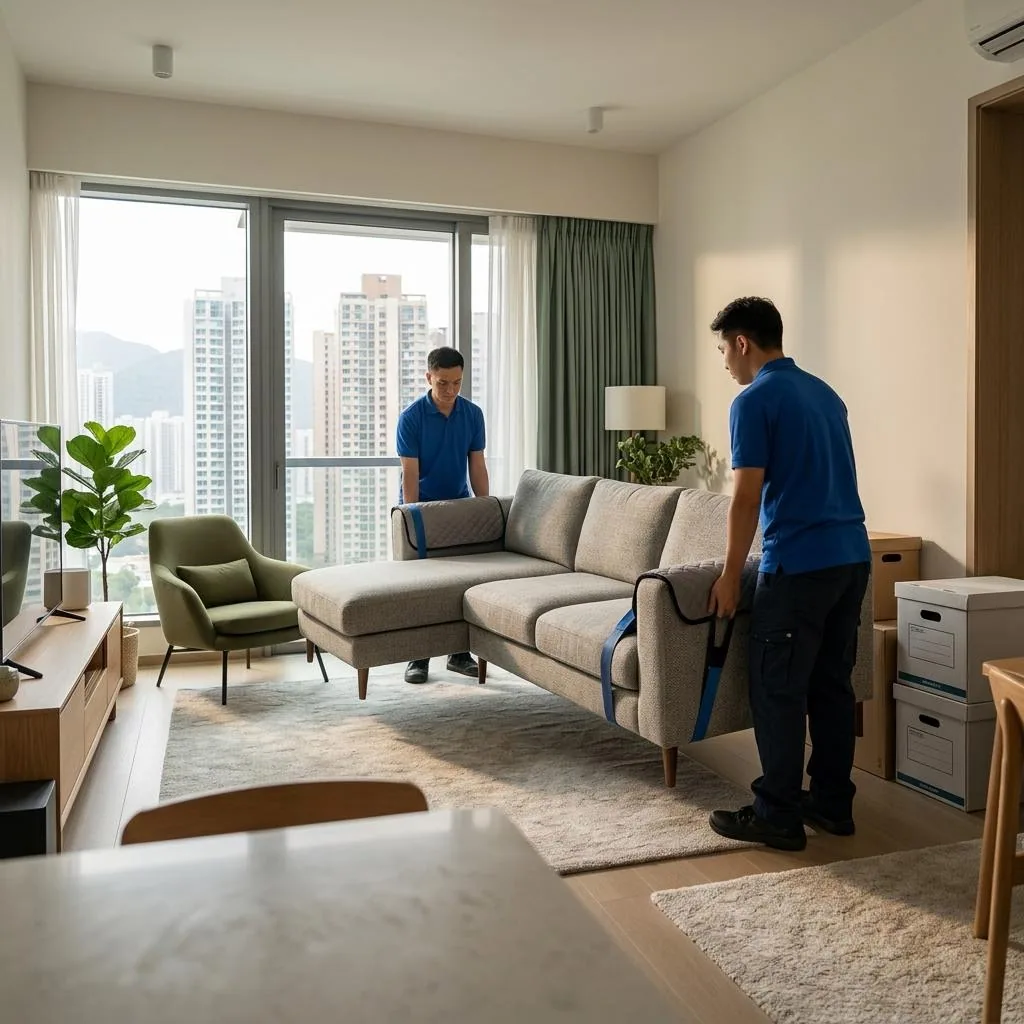
Wrap corners and protruding parts with plastic wrap, blankets, or padded covers, especially around arm edges, metal legs, and wooden frames. If the upholstery can stain easily, keep the sofa dry before moving, and add extra protection in wet weather or when it will pass through outdoor areas or the back of a vehicle.
Use proper posture, teamwork, and turning technique
Do not lift a sofa with your arms alone. Use your legs, keep your back steady, and agree on simple signals with your helper before you start. When two or more people are carrying it, keep a steady pace and pause before each turn so one side does not rush ahead and force the sofa into a wall or doorway.
At doorways, a sofa often needs to be tilted or turned on its side to pass through the narrowest edge. On stairs or ramps, do not force it forward; lower the centre of gravity, move in stages, and reset the angle when needed. Keep fragile items such as glass tables, lamps, and loose cables out of the moving path.
When professional help is the better choice
If the sofa is very heavy, oversized, or needs to pass through a walk-up building, a narrow stairwell, or a route with multiple tight turns, the risk rises quickly. This is common in tenement buildings, village houses, and some older estates, where a short delay or one wrong turn can lead to injury or damage to walls, floors, or the sofa itself.
Before booking any mover, ask whether stair carrying is included, whether disassembly is part of the service, whether the route needs protection, and what limits apply. For especially bulky or complex furniture, request written confirmation of the scope. For pricing and terms, please refer to Moving house price list and Service terms.
Check the sofa after delivery and position it properly
Once the sofa reaches the new home, do not remove all wrapping or place it immediately. Check for dents, scuffs, stains, or missing parts first, then compare the size with the intended spot to make sure it fits in the living room, study, or bedroom as planned. If it will sit against a wall, check nearby sockets, curtains, and windows so nothing is blocked later.
After positioning, check whether the feet are level, the seat is stable, and the backrest or arms are loose. If you find damage, torn wrapping, or missing fittings, take photos immediately and raise the issue before signing off. Keep written records if any follow-up is needed, so later arrangements are clear.
Frequently Asked Questions
What should I measure before moving a sofa?
Measure the sofa size, doorway width, corridor width, stair turns, and lift opening, and include any extra thickness from wrapping or padding.
Does a sofa always need to be disassembled?
No. But if parts can be removed safely, disassembly usually makes the move easier and safer. If the sofa is not designed for it, use a different moving plan or get professional help.
What is the most common mistake when moving a sofa?
The most common mistakes are skipping route measurements, ignoring tight corners, moving in an uncoordinated way, and forcing the sofa through instead of adjusting the angle.
What should I watch out for in older buildings?
Pay special attention to narrow stairs, landing corners, handrails, and building rules. If the building has no lift and many floors, check whether the team and route are suitable first.
How do I know whether I should hire a mover?
If the sofa is oversized, very heavy, or has to pass through a complicated route, professional help is worth considering. Ask for written confirmation of the service scope before booking.


