MOVING TIPS & ADVICE
How to Remove and Move a Built-in Steam Oven
Key answers
A built-in steam oven is connected to power, water, drainage, and the cabinet itself. Before moving it, confirm the removal order, protect the glass door, record all connections, and test the unit again after reinstallation.
Check the structure and risks first
A built-in steam oven is not a normal appliance that can simply be carried away. It is usually connected to power, water supply, and drainage, and fixed inside the cabinet with screws. Before starting, check the model, installation method, and cabinet opening size, then take photos of the front, back, sides, and bottom for reference during reinstallation.
If the oven is tightly fitted beside cabinets, the countertop, or the toe kick, it can easily scratch the glass door or pull on the hoses during removal. Before moving day, reserve enough space for turning and carrying, and check the lift size, corridor width, and loading access so the oven is not removed before you know it can leave the unit smoothly.
Disconnect power, then deal with water and residual moisture
Before removal, switch off the relevant power supply and confirm the plug has been unplugged. If the oven is on a dedicated circuit, have a qualified electrician handle it as needed. If the unit has water supply or drain connections, close the water valve first, then drain any remaining water according to the manual and catch any small spill with a container.
After disconnecting the hoses, wipe the area dry immediately and seal the openings properly so water does not enter the cabinet or the appliance during transport. If the fittings are rusted, hardened, leaking, or the original routing is unclear, stop and seek help from the installer or a qualified technician instead of forcing the parts apart.
Release the fixing screws and support the cabinet
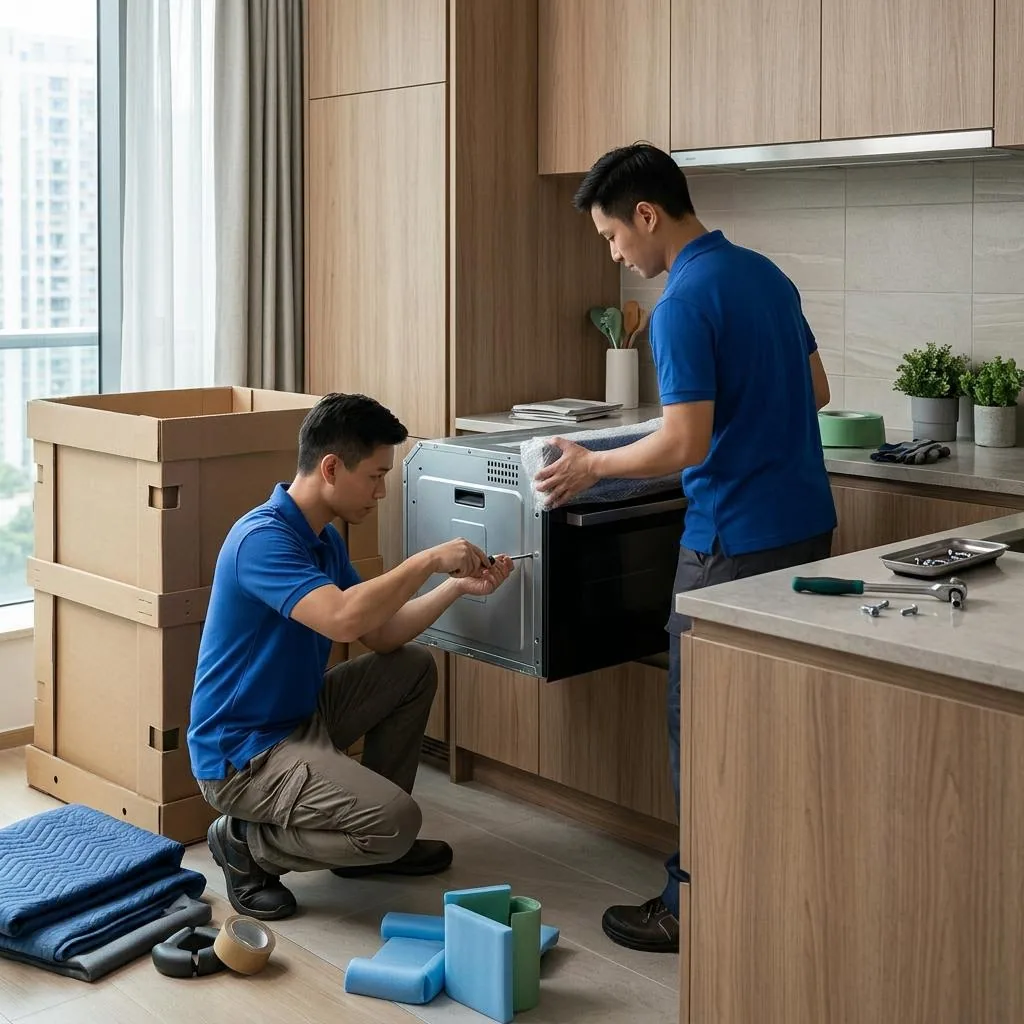
Built-in steam ovens are usually secured by screws at the side or front frame. Before loosening them, close the oven door so the front does not tilt under its own weight. After the screws are removed, do not pull the unit out alone; two people are better, with one supporting the front while the other slides the oven out slowly and keeps an eye on cables and hoses at the back.
If the oven feels stuck or does not move freely, do not pry it out by force. Cabinet edges, back panels, and the appliance shell can all be damaged. Check whether any screws, clips, or sealant have been missed before continuing, especially with heavier units or older installations.
Protect the glass door and corners carefully
The most vulnerable parts of a built-in steam oven are usually the glass door, control panel, and corners. After removing it from the cabinet, clean off grease and moisture first, then wrap the front with thick protective material and add corner protection so it stays more stable during carrying, turning, and loading.
Do not place tape directly on the display, buttons, or printed markings, or the residue may be hard to remove later. If there are removable racks or accessories inside, pack them separately so they do not move and hit the interior during transport. Keep the unit upright unless the manufacturer specifically allows another position; prolonged laying down is not recommended.
Align first, then reconnect at the new home
When the appliance arrives at the new home, do not push it fully into the cabinet right away. First check that the new opening is large enough and that the rear cables, hoses, and ventilation space are not being compressed. Before positioning, clean dust, wood debris, and old sealant from the cabinet opening, and make sure the shelf or frame is level.
When reconnecting power and water lines, confirm each connection against the original layout and run a short test first. Watch for leaks, odors, unusual noise, error codes, or a door hinge that does not move smoothly. If any electrical rewiring, plumbing changes, cabinet cutting, or structural adjustment is needed, leave it to qualified professionals instead of improvising on site.
When to ask a moving company for help
If the steam oven is tall, heavy, deeply built in, or connected to several hoses and a complex cabinet layout, it is usually safer to have a moving team handle the work. Ask in advance for the removal sequence, wrapping method, stairs or lift arrangement, and whether they will place the oven back in position at the new home. Get any exclusions confirmed in writing.
Before booking, send photos of the appliance, the installation spot, the floor level, the lift size, and any staircase access so the company can judge whether extra manpower is needed. If a company says it can handle electrical reconnection or other specialist work, ask for written confirmation of the exact scope; anything beyond normal moving should be handled by the relevant professional.
Frequently Asked Questions
What should be done before moving a built-in steam oven?
Switch off power, unplug it, close the water valve, drain any residual water, and take photos of the connections and fixing points so removal and reinstallation are easier.
Can I pull the steam oven out of the cabinet by myself?
Not recommended. These units usually have fixing screws, hoses, and cables, so it is better to confirm everything has been released and have two people move it steadily.
Which parts need the most protection during transport?
The glass door, control panel, corners, and rear connection area need the most protection because they are easiest to damage when turning corners, loading, or carrying upstairs.
Can I power it on right after it reaches the new home?
Only after it has been positioned, reconnected, and checked for leaks or pinched hoses. Then run a short test and watch for leaks, error messages, or unusual sounds.
When should I hire a professional?
If the job involves electrical wiring, plumbing changes, cabinet cutting, a jammed unit, or a very heavy appliance, ask a qualified electrician, installer, or experienced moving team for help.


