MOVING TIPS & ADVICE
Kitchen Clutter? A Practical Packing and Sorting Method for Moving
Key answers
Kitchen items are easy to mix up when moving. Clear out expired food first, then sort by weight, fragility, and use, label each box clearly, and unpack much faster at the new home.
Clear out first, then start sorting
Kitchen items come in many shapes and sizes, so packing too early usually mixes expired food, duplicate utensils, and everyday tools together. Before you box anything up, go through the cabinets, drawers, fridge, and storage shelves one by one, and separate what to keep, throw away, or pass on.
The first things to deal with are expired dry goods, tins, seasoning packets, cracked plates, warped plastic containers, and small tools you no longer use. Try to finish what you can before moving day; if you keep a few unopened items, make sure the packaging is intact and keep them away from fragile items so leaks do not spread to other boxes.
Group by use, not just by size
For kitchen packing, size alone is not enough. Group items by function first, such as plates and bowls, cooking tools, cups, dry goods, and small appliances. That makes unpacking easier because the items you need first will not be buried under everything else.
Within each group, separate by how often you use them. Everyday cups, cutlery, and food containers should go in an easy-to-reach box, while seasonal bakeware and display tableware can be packed together for later unpacking. For any plug-in appliance, unplug it first and wait until it is fully cool before cleaning or storing it.
Heavy items go low; fragile items need to stand upright
Place the heavier, sturdier items at the bottom of the box, such as cast-iron pans, thick frying pans, rice, or unopened dry goods. Fill gaps with lighter items like plastic containers, dish towels, or napkins so the contents do not shift. Do not overload one box with all the heavy items, or it may become too hard to carry and the bottom may fail.
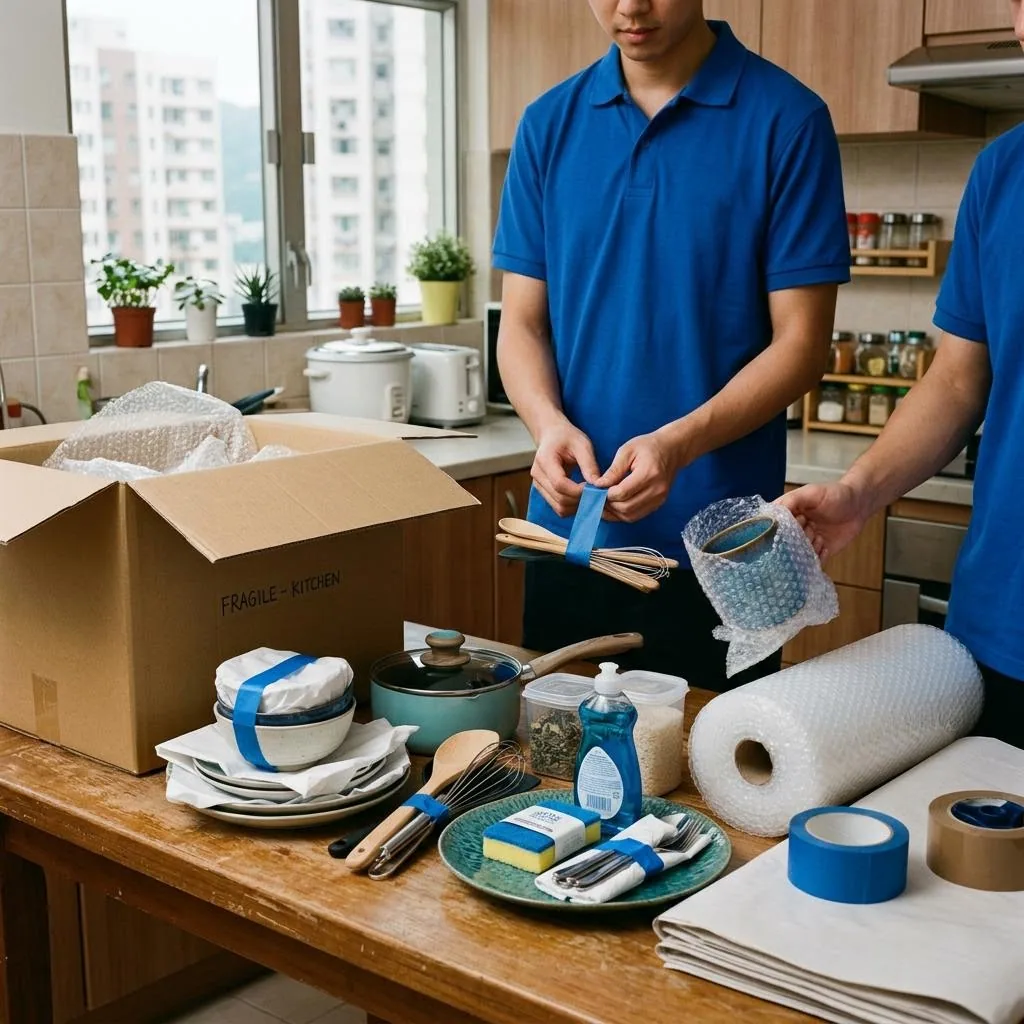
Wrap ceramic bowls, glass cups, wine glasses, and shallow dishes individually, then stand them upright with paper or soft padding between them to reduce impact. Knives should be wrapped so the blade is covered and kept in place, never loose in the box. For glass bottles of seasoning or sauces, make sure the cap is tight and use a simple leak barrier such as a bag or paper towel to prevent spills.
Use enough packing material, and label boxes clearly
Clean paper, towels, kitchen cloths, or suitable padding can be used for protection. The goal is not to use as much as possible, but to keep items from moving inside the box. Do not overfill the box, and do not leave too much empty space; the box should close without being crushed. If the contents are fragile, add an outer marking so the movers know to avoid stacking pressure.
When labeling, write the main category, whether the box is fragile, which side should face up, and the order in which it should be opened. Examples include plates, cooking tools, and breakfast items. If a box contains glass, knives, or liquid seasoning bottles, say so clearly on the outside. Do not label everything as kitchen miscellaneous, or you may waste time searching for urgent items after arrival.
Check again the day before and on moving day
The day before the move, check again that the fridge, cabinets, drawers, and shelves are empty, and remove trash, used wrapping, old plastic bags, and small broken pieces. If there are still leftover ingredients or sauces, seal them properly and handle them separately so they do not leak in transit.
On moving day, tell the movers which boxes contain fragile items and which boxes should be loaded or unloaded first. Also check whether the labels are clear. If you find large appliances, built-in wiring, or anything that needs specialist handling, arrange for a qualified professional instead of trying to dismantle it yourself. Movers should only handle items that have already been properly prepared.
Common mistakes, and when to ask for help
Common mistakes include mixing pans, cups, seasoning bottles, and knives in one box; placing heavy items on top; leaving bottles unemptied so they leak; and stuffing a box just to use fewer cartons. Another frequent mistake is forgetting to set aside the basic plates and utensils you will need on the first night, which means searching through several boxes after arrival.
If you have a large number of kitchen items, many fragile pieces, or limited time, an experienced moving team can help with packing and transport. Before you book, ask exactly what packing is covered, which items you must prepare yourself, and how the items will be checked at delivery. Electrical work, gas connections, structural dismantling, and other specialist tasks should be handled by the appropriate qualified professionals; for service arrangements and terms, please request written confirmation.
Frequently Asked Questions
What should I sort first when packing a kitchen for moving?
Start with expired food, duplicate utensils, broken tableware, and tools you no longer use. Then separate everything into keep, give away, and discard before boxing items up.
Can pots and plates go in the same box?
They can, but do not mix them loosely. Heavy pots should stay at the bottom, and plates should be wrapped separately and protected from direct pressure.
What is the safest way to pack glass cups and knives?
Wrap each glass cup individually and stand them upright with padding in between. Knives should be wrapped with the blade covered and fixed in place, never left loose inside the box.
Should I empty the fridge and all dry goods before moving?
Try to use up what you can before moving day, and clear the fridge, cabinets, and drawers as much as possible. Keep only properly sealed items that will not leak or spoil the rest of the load.
When should I ask movers to help with kitchen packing?
Ask for help if you have many items, a lot of fragile tableware, or not enough time to sort everything yourself. Confirm the packing scope in writing and check what specialist work is excluded.


