MOVING TIPS & ADVICE
How to sort and pack kitchen clutter, seasonings and tableware
Key answers
Kitchen packing is tricky because of fragile dishes and leak-prone condiments. Clear out expired items first, then separate liquids, breakables and daily-use items into labeled boxes with good padding.
Sort first, then decide what moves
Kitchen items should be counted before anything is packed. Lay out condiments, tableware, cookware, food containers and disposable items separately, then check each one for expiry, cracks, deformation, residue or long-term non-use.
Expired sauces, stale dry goods, duplicate dishes and containers without lids should be discarded, recycled or given away if appropriate. Starting a week before moving day reduces box count and prevents unnecessary clutter from being carried into the new home.
Protect condiments from leakage
Liquid seasonings are the most likely items to leak during transit, especially soy sauce, cooking oil, vinegar, oyster sauce and homemade sauces. Before packing, check that each lid is tight, add a layer of cling film or wrap around the neck if needed, and then close the cap firmly. If the original box is still intact, place the bottle back inside it before wrapping.
Keep glass bottles, plastic bottles and tins separate. Heavier bottles should go at the bottom and lighter ones above, all kept upright. Fill every gap with newspaper, towels or bubble wrap so they cannot move around. If a container is still likely to leak, empty it first or seal it properly; do not pack it with clothes or electronics.
Pack fragile dishes one by one
Bowls, plates, glasses and teapots are fragile and should never be stacked loosely in a carton. Wrap each item with paper or bubble wrap, separate dishes one by one, and stuff crumpled paper inside cups to support them. Tape the wrapping securely so items do not knock against each other inside the box.
Place heavier ceramic plates and bowls at the lower layer, with thinner glasses and lids on top. Do not mix tableware with pots, chopping boards or glass bottles. If there is too much empty space, add more padding; if the box becomes too heavy, split it immediately, because overfilled boxes are more likely to burst and cause breakage.
Separate by use so unpacking is faster
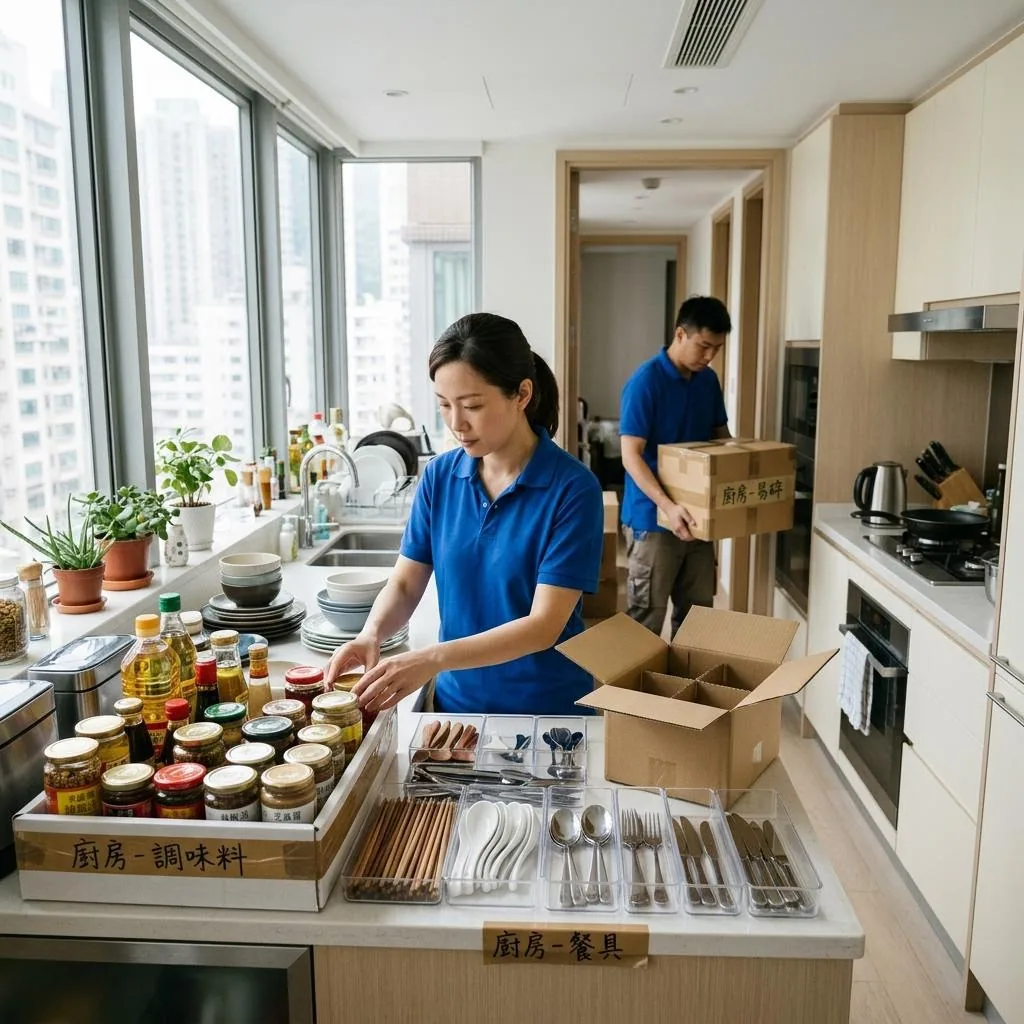
Kitchen items should be sorted not only by fragility but also by how soon they will be used. Items needed first in the new home, such as rice bowls, chopsticks, pots, daily condiments and cleaning cloths, can go into a clearly marked daily-use box. Less frequently used dishes, festival tableware and baking tools can go into secondary boxes.
If there are children, older adults or shared household members, make the labels more specific, such as 'Kitchen - fragile dishes', 'Kitchen - condiments' and 'Kitchen - daily use'. Write on the top and at least one side of each box so it can be identified from different angles and placed in the right room more easily.
Do a final check before sealing boxes
Before closing each box, inspect it again. Make sure every lid is tight, glass items have no cracks, heavy items are not overloaded and the bottom is reinforced with tape. Sharp tools such as knives, graters and peelers should be wrapped with thick paper first and packed in a separate rigid small box to avoid cutting the carton or injuring hands.
Also make sure washed bowls, chopping boards and containers are fully dry before packing; otherwise moisture can lead to odour or mould after sealing. If there are strong-smelling foods, dry goods or poorly sealed tins, place them in airtight bags and handle them first on moving day so they do not contaminate other boxes in the vehicle.
When to let movers handle the load
If the kitchen has many items, narrow stairs, tight corridors or a mix of fragile pieces and heavy cookware, sorting and carrying everything yourself can take a lot of time. In that case, you can finish the category sorting first, then ask a moving team to handle the packed boxes, clearly explaining which boxes contain fragile items and which may contain liquids.
For especially bulky shelves, built-in appliances, or anything involving electrical or gas connections, use the appropriate qualified professional rather than attempting a DIY removal. Before confirming the job, request written confirmation of the service scope, box-label requirements, stair or access limitations and pricing details; for more information, see Online Quote or Service terms.
Frequently Asked Questions
Can condiments and tableware be packed in the same box?
It is not recommended. Liquids, fragile dishes and metal utensils should be packed separately, or at least divided into layers with plenty of padding. Bottles should stay upright so leakage and breakage are less likely.
How should glasses and bowls be placed in a box?
Wrap each item individually, stuff paper inside cups for support, and keep bowls and plates separated and upright rather than stacked flat. Put heavier items lower and fill all empty space with padding.
What should I do with a small amount of opened sauce?
If the cap is loose or the container is damaged, it is better to discard it or reseal it properly before moving. Do not place a leaking sauce container into a normal box, especially not with fabrics or electronics.
How detailed should kitchen labels be?
At minimum, mark the room, category and whether the box is fragile, for example 'Kitchen - condiments', 'Kitchen - fragile dishes' or 'Kitchen - daily use'. If there are multiple boxes of the same type, add numbers as well.
When should I ask a moving team for help?
If there are too many kitchen items, narrow stairs, heavy loads or a high number of fragile pieces, it is more efficient to ask a moving team to handle the packed boxes. Electrical, gas and other specialist tasks should be left to qualified professionals.


