MOVING TIPS & ADVICE
Moving Decluttering Guide: Sort, Remove, and Check Before Move-In
Key answers
Decluttering before a move reduces boxes, saves time, and makes your new home easier to keep tidy. This guide explains how to sort what to keep, how to handle unwanted items, and what to check before handing everything over to movers.
Start with decluttering before packing
The hardest part of moving is often not the transport itself, but deciding what should even be packed. If you sort out unwanted items first and then pack, you avoid carrying years of unused clutter into the new home and make the whole process more manageable.
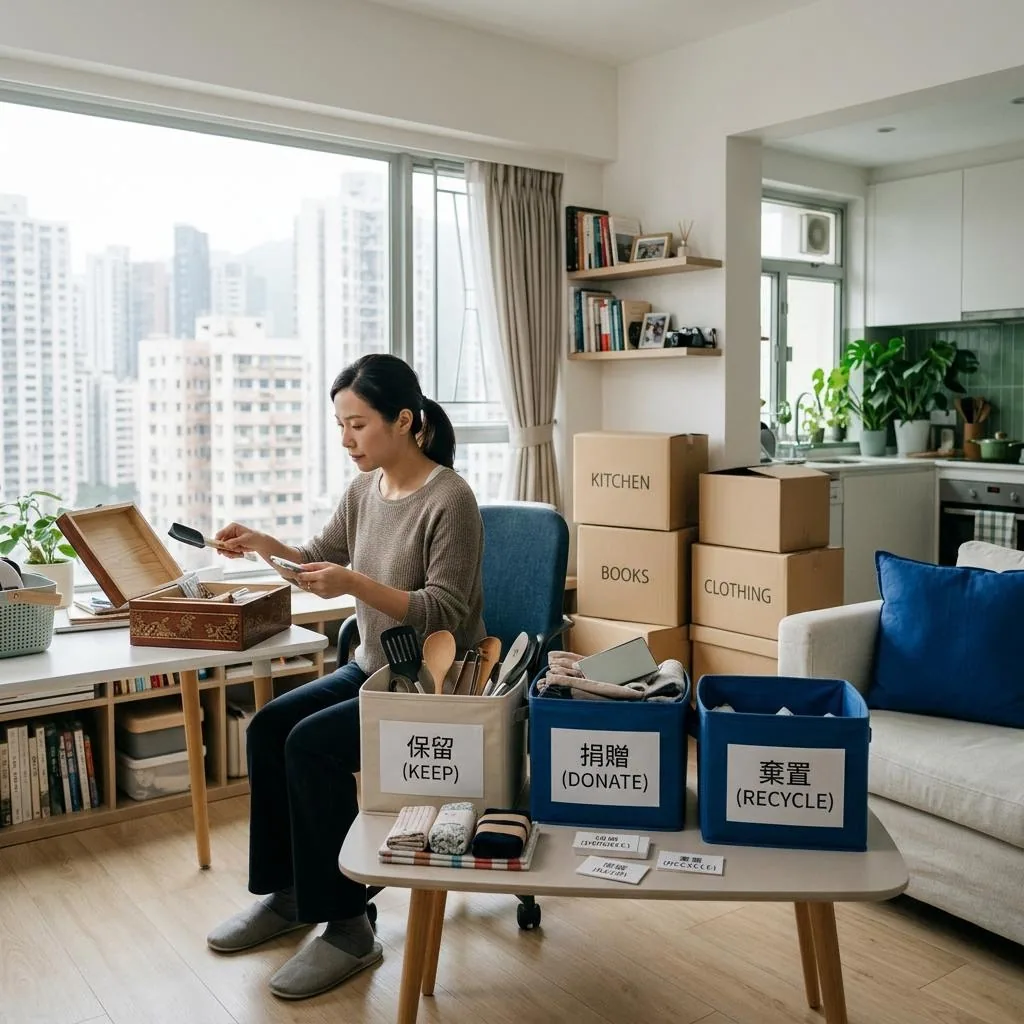
Decluttering is not about clearing everything at once. It is about separating items into four groups: must keep, can pass on, can recycle, and needs professional handling. That approach reduces box count, shortens packing time, and helps movers plan labour and vehicle space based on the real volume.
Use three simple rules to decide what stays
The first rule is frequency of use: items not used for a long time, and not clearly seasonal or backup items, should be reviewed carefully. The second is condition and repair value: if something is damaged, damp, mouldy, missing parts, or costs nearly as much to repair as to replace, it is usually better to let it go.
The third rule is duplication and space: too many similar items, such as duplicate kitchen tools, excess freebies, or clothes that have not been worn for years, only add storage pressure. If you are still unsure, place the item in a hold box, label the date, and review it again later instead of making a rushed decision.
Do not treat everything as rubbish
Items that are still in good condition, such as clothes, books, small household goods, or resaleable furniture, may be suitable for donation, passing on, or second-hand sale. But suitability depends on hygiene, completeness, and the requirements of the receiving party. If an item still has obvious damage, stains, or any safety concern after cleaning, it should not be forced into reuse.
Bulky furniture, packaging waste, metal, cardboard, and mixed disposal items should be separated according to building rules and local recycling arrangements in Hong Kong. Electrical goods, batteries, and items with special materials should not be mixed with general waste. If the item involves hazardous substances, asbestos, gas-related parts, medicine, or other regulated materials, leave it to qualified professionals or the proper official channels.
Make a list before packing so you do not regret it later
Before packing starts, list what stays, what goes, and what is undecided for each room. Taking photos of large items and their condition also makes later checking easier. At the same time, measure the new home's doors, corridors, lift, and stair turns so you do not keep oversized furniture that cannot actually be brought inside comfortably.
Also separate items into three groups: carry yourself, move early, and move last. Cash, documents, medicine, keys, chargers, a few cleaning supplies, and other essentials should be kept in a separate bag under your own control. Fragile items should be clearly marked and kept away from heavy objects so they are not crushed during transport.
What to ask the mover after decluttering
Even after you have reduced the load, you should clearly tell the mover the item count, floor level, lift restrictions, narrow access points, and whether any extra carrying arrangements may be needed. If you have large furniture, beds or wardrobes that need disassembly, or especially heavy items, confirm in advance whether they can be handled, and ask for written confirmation of the details.
You should also ask about packing responsibility, protection methods, the arrival inspection process, and what happens if damage is noticed on the spot. If the move includes a piano, a safe, large glass items, or other special pieces, confirm the arrangement first. When something is uncertain, ask for written confirmation rather than relying on a verbal promise.
Final move-in checks for a clean start
Before leaving the old home, check every room, cabinet top, under the bed, window ledges, drawers, bathroom, and storage corners so that no documents, receipts, jewellery, or other small but important items are left behind. When you arrive at the new home, confirm the contents room by room, then inspect the packaging for visible damage and check whether furniture has been placed securely and whether walls, corners, or floors were affected during the move.
Finally, connect the move to the result of decluttering: only put back what you truly need, and leave less urgent items boxed for the time being. If you want your storage to stay manageable, use a one-in-one-out rule, so every new item you buy prompts you to review one old item. That helps prevent clutter from building up again after the move.
Frequently Asked Questions
Where should I start when decluttering before a move?
Start with clothes, books, kitchen items, or storage cabinets, because duplicate and long-unused items are easiest to spot there. Beginning with smaller categories helps you build momentum before you deal with larger pieces.
Do I have to throw away everything I have not used for a year?
Not necessarily. Seasonal items, documents, backup tools, or items with a specific purpose may still be worth keeping. If something only takes up space and has no clear use, it is worth reviewing more strictly.
How should I deal with old items I do not want to throw away?
Clean and sort them first, then decide whether they are suitable for donation, passing on, second-hand sale, or recycling. If an item is damaged, mouldy, or unhygienic, it should not be kept or redistributed.
How do I stop unwanted items from being moved into the new home?
Sort everything into keep, discard, and undecided groups before packing, and label each box by room and purpose. Review the list again after packing to reduce mistakes and double handling.
When should I confirm the reduced item list with the mover?
Update the mover before the booking is finalised if possible, especially if the item count, floor level, access route, or special items have changed. If the load changes again later, confirm the revised details as early as possible.


