MOVING TIPS & ADVICE
Moving Large Appliances: Key Tips for Fridges, Washers, and TVs
Key answers
Prepare large appliances before moving by switching them off, defrosting, draining water, securing loose parts, and packing them properly. After delivery, allow the right settling time and check for leaks, damage, and safe placement before use.
Basic preparation before moving day
Large appliances need different handling, so do not leave packing until the last minute. Make a list of each item’s model, size, weight, door swing, and cable points, then check whether the route involves lifts, stairs, tight corners, or narrow doorways so the move can be planned in a practical way.
If the appliances are still in use, it is better to start clearing, cleaning, and switching them off one or two days in advance. On moving day, keep the work to a final inspection only, because rushed unplugging, on-the-spot dismantling, and hurried wrapping are the most common causes of damage to the appliance, walls, or flooring.
How to shut down fridges and washing machines
Before moving a fridge, empty all food, switch it off, defrost it, and wipe away any remaining water inside and outside. Remove shelves, drawers, ice trays, and loose fittings and pack them separately, so they do not come loose in transit. If you secure the door, use tape lightly and avoid leaving adhesive on surfaces that mark easily.
For a washing machine, drain the remaining water in the drum and hoses, then deal with the inlet hose, drain hose, and any rear securing parts according to the model. Front-loading machines often need their transit bolts kept or refitted for moving; if you are unsure, check the manual or ask a qualified technician instead of guessing.
Packing TVs, audio gear, and cables
A television is especially vulnerable, so disconnect every cable first and take photos of the original setup if you will need to reconnect it later. If you still have the original box, use it. If not, wrap the screen with thick padding, corner protection, and a sturdy outer carton, then mark the box clearly as this side up.
Keep cables, remote controls, stand screws, and fitting parts in separate bags with labels. Do not place a TV flat at the bottom of the truck or under heavy items, and never carry it by the screen itself. Support it from the frame, and avoid strong pressure or repeated vibration during loading and unloading.
Angles, routes, and anti-collision protection
The main risks during an indoor move are usually not the weight itself, but narrow passages, corner scrapes, and imbalance on stairs. Measure the doorway, lift size, and turning space before moving, and allow extra room for padding. If a fridge, washer, or TV must go down stairs, check whether the weight and shape are suitable for manual handling before attempting it.
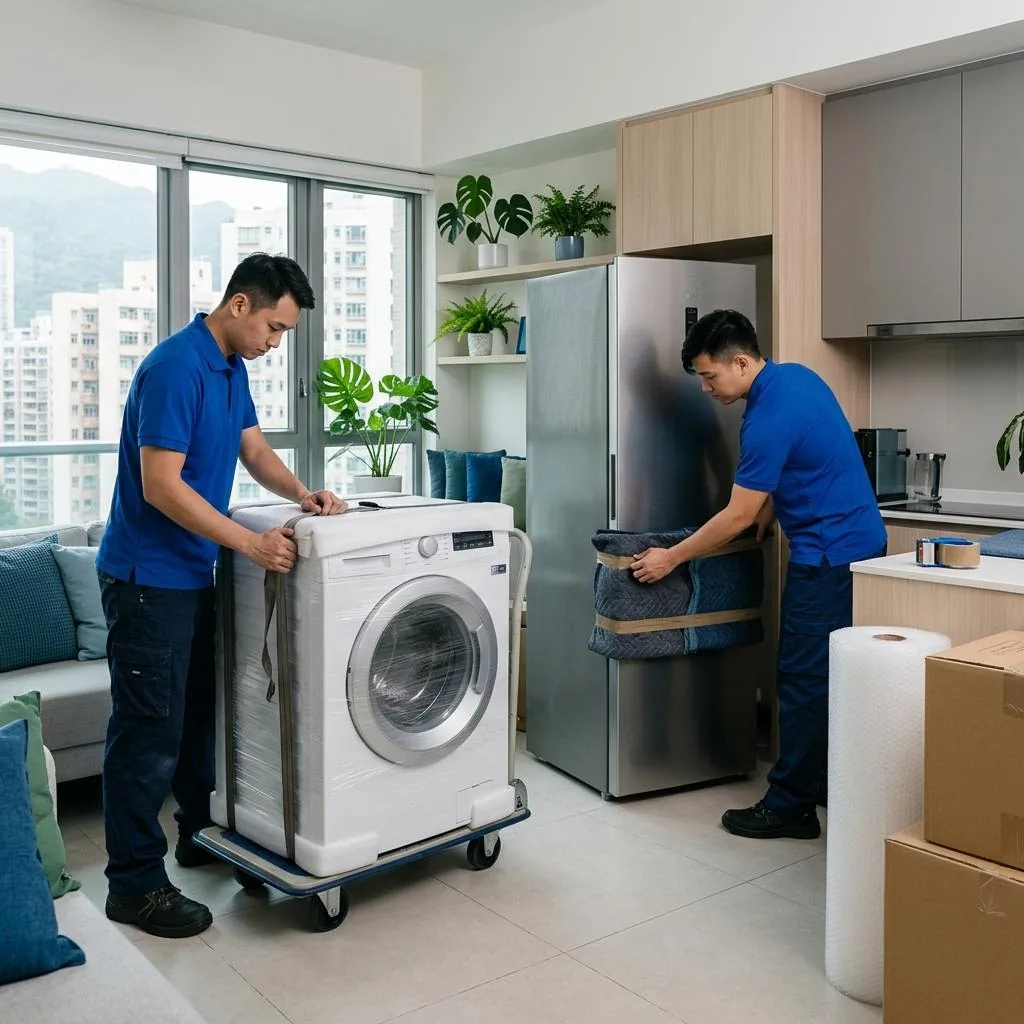
Wrap the appliance in blankets, thick cloth, or bubble padding, especially at corners, panels, handles, and feet. Move slowly through doorways, corridor turns, and level changes, and do not drag or spin the item suddenly. If the route involves an old building, a walk-up, a village house, or a home without enough lift access, confirm the practical limits in advance and ask for written confirmation of the moving method.
Placement and checks after delivery
After arrival, do not plug in appliances immediately, especially fridges and washing machines that have been unused for some time. Set each item in place first, check that the floor is level, the ventilation gap is sufficient, and the rear has enough clearance from the wall, then allow the appliance to settle as required for its model. If it has travelled at a strong angle or over a long distance, follow the manual or the maker’s advice.
Before testing, check for fresh scratches, cracked glass, uneven feet, or loose hoses, and make sure the socket, voltage, and load are suitable. If you notice a smell, unusual noise, leaks, or a failure to start properly, stop using the appliance and have it checked by a qualified repair professional instead of opening it yourself.
What to ask the mover before booking
When arranging a move for large appliances, do not just ask whether they can be moved. Ask whether pre-measuring is needed, whether packing is included, whether stairs require special arrangements, which appliances need the customer to complete shutdown steps, and how they handle hoses, wall brackets, or special connection points that cannot be removed on site.
For expensive appliances, narrow access, or glass panels that need extra care, ask for the scope, limits, and responsibilities to be confirmed in writing before booking, and review the terms and pricing at Service terms and Moving house price list. If you want to prepare boxes, labels, and the moving schedule at the same time, use Moving checklist and /guides/moving-timeline to work through the details step by step.
Frequently Asked Questions
Do fridges always need to be defrosted before moving?
It is generally recommended to defrost and dry the interior first, because leftover water can leak during transit and affect the floor or components. For some models, follow the manual or confirm with the manufacturer.
Do washing machines always need transit bolts refitted for a move?
Front-loading machines usually need the transit bolts handled according to the model requirements to protect the drum, but the correct method varies by brand. Check the manual or ask a qualified technician if you are unsure.
Can a TV be laid flat during transport?
It is not recommended to do so casually, especially for large or thin panels, because pressure and vibration can damage the screen. Use the original box if possible, or keep it upright and avoid stacking heavy items on top.
Can appliances be switched on the same day after delivery?
Not always. Fridges and some other appliances need a settling period after placement so the internal components stabilise. Follow the model manual or the maker’s guidance instead of turning it on immediately for long use.
What should I do if the route is very narrow?
Measure the doorway, corridor, corners, and lift in advance, and tell the mover the real conditions honestly. If there is not enough space, adjust the plan early with extra protection, disassembly, or a different route rather than forcing it on the day.


