MOVING TIPS & ADVICE
How to Protect Plants When Moving Home: Packing, Transport, and Setup Tips
Key answers
Sort plants by size and fragility, secure the potting mix, protect leaves and stems, and set them up promptly at the new home to reduce shock and breakage.
Start with a plant list and a health check
Before moving day, list each plant by name, size, pot weight, location, and whether it has fragile stems or leaves. Separate any plant that already shows pests, yellowing leaves, root rot, or standing water in the pot, so you do not carry the problem into the new home or spread it to other items during transport.
For large pots, climbing plants, or dense foliage, trim only what is reasonably safe to reduce bulk and tipping risk. Avoid fertilising heavily, repotting at the last minute, or overwatering right before departure, because extra moisture makes the load heavier and can leak into boxes, floors, or other belongings.
Choose packaging based on the plant type
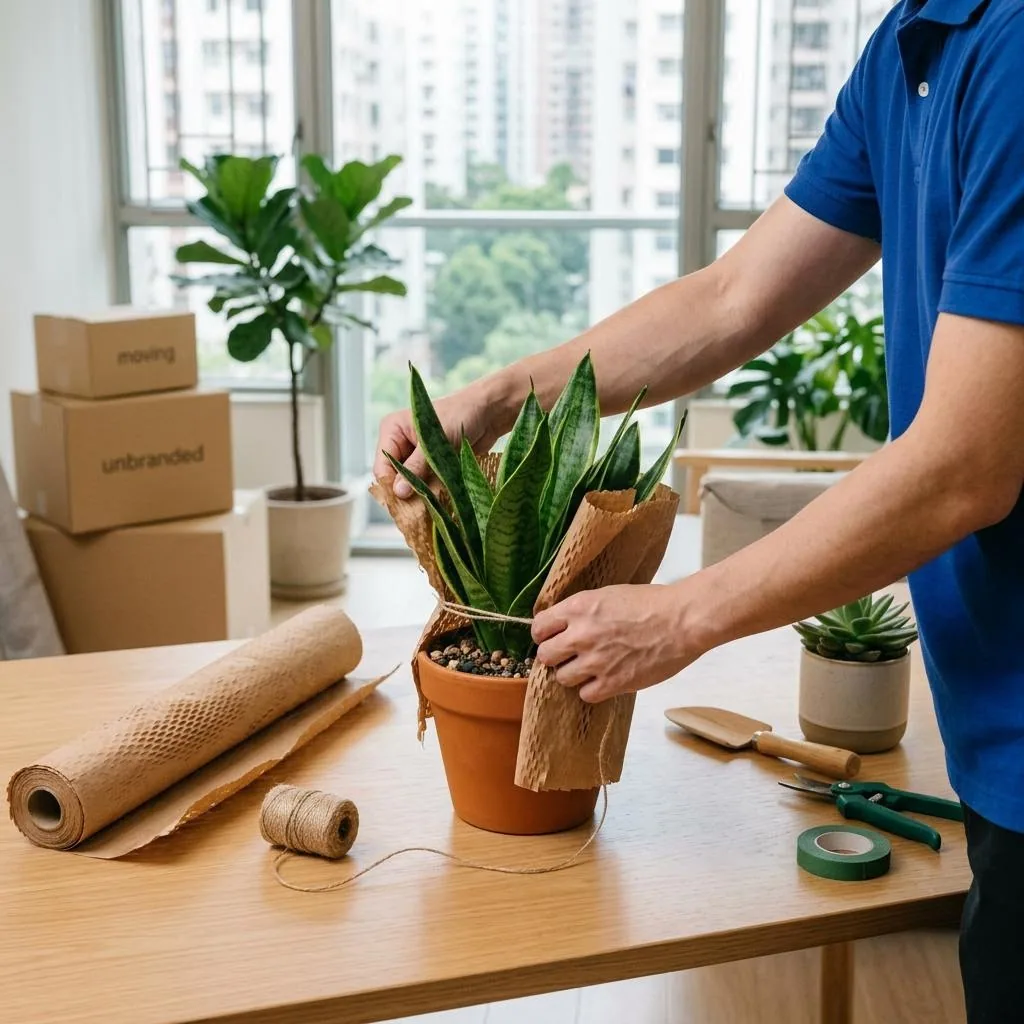
Small potted plants can usually be carried in a sturdy carton with absorbent paper or a towel at the bottom. Place the pot in the centre and pack crumpled paper or soft padding around it so the plant cannot shift. If the leaves are broad or the stems break easily, use a loose paper cover and a breathable way to hold the foliage in place rather than sealing it tightly in plastic.
Do not empty all the soil or leave the roots exposed for long periods. For longer moves, a small pot can sit inside a more stable outer box, but the top growth must still have room and should not be crushed. Cactus, succulents, thorny plants, and plants with irritating sap should be wrapped separately and clearly marked so they are not mixed with clothing, fabric, or children's items.
Control heat, position, and movement during transit
Plants should not sit for long in sealed, overheated, or heavily shaken spaces. On moving day, keep them in the most stable part of the vehicle and avoid leaving them in any enclosed area that can overheat. For longer trips, keep direct sunlight away from the boxes and avoid tilting them; in Hong Kong's hot and humid weather, do not leave plants in a parked vehicle for too long.
Make sure the boxes cannot slide forward or sideways. Use other stable items to support them, but never place heavy loads on top of plant boxes. If a plant is tall, add simple internal support so the top growth has space. During loading and unloading, move more slowly at doors, stairs, and lift entrances to avoid repeated knocks and bumps.
Settle the plants first, then restore conditions gradually
When you arrive, place the plants in a spot with good airflow and moderate light. Do not move them straight into harsh sun, water them heavily, or repot them immediately. First check for drooping leaves, loose soil, or bent stems, then adjust light levels gradually according to the plant's normal needs. For sensitive plants, a temporary holding spot is often safer than a permanent display position.
In the first day or two, water only according to the actual dryness of the soil. Do not keep watering just because the plant looks stressed. If you notice yellow tips, leaf drop, or mild wilting, check whether the issue comes from vibration, temperature change, or altered light. If there is clear root damage, broken branches, or ongoing decline, contact a qualified plant care professional rather than attempting risky fixes yourself.
Common mistakes people overlook
A frequent mistake is packing plants like ordinary household items, without marking the upright direction or leaving room for airflow. Another is overwatering right before departure, which can soften cartons, leak into the vehicle, and affect other belongings. If a plant has buds or tender new growth, keep it away from books, electronics parts, and fragile glass items.
Some people also put every plant into one standard box without separating height or fragility, so heavy pots crush seedlings or trailing stems. If you are unsure whether a species can tolerate short-term removal from its pot or needs shade, ask a garden shop or plant care professional first, and write the special instructions on your moving checklist so you can verify them before and after the move.
When to ask a moving team for help
If you have many plants, large pots, narrow stairways, or other furniture to move at the same time, handling everything on your own can become difficult. In that case, tell the mover about the plants before quoting and ask whether the loading order, route, and packing support can be arranged around the list you provide. For especially tall or fragile pots, request written confirmation of the handling plan.
A moving team can usually help with carrying, lifting, and general packing support. Pest treatment, pruning, repotting, irrigation systems, electrical lighting, heating devices, and other specialist plant work should be left to qualified professionals. If you want to plan the full move in advance, use a moving timeline and packing guide so the plants are arranged separately from the rest of the household goods.
Frequently Asked Questions
Should I repot plants a few days before moving?
Usually no. Repotting right before a move can stress the roots and make the plant less stable. If repotting is necessary, do it well in advance and wait until the plant has recovered before moving it.
Should I water plants heavily before moving day?
No. Water only as needed. Too much water makes the pots heavier and increases the risk of leaks, soft cartons, and root problems. Check the soil moisture and adjust lightly if needed.
Can I just put plants in cardboard boxes and move them?
Yes, for many small plants, but the box must hold them securely. Add support so the pot cannot slide, and handle tall, fragile, or thorny plants with separate protection and clear labelling.
Can plants go straight into direct sun after arriving?
It is better not to. Place them in bright but indirect light first, let them adjust to the new temperature and humidity, and then move them gradually to their normal spot.
What should I ask the mover if I have many plants?
Ask whether they can follow a plant list, how they handle fragile or tall pots, what packing you should complete beforehand, and how they will avoid knocks on stairs, lifts, and doorways.


