MOVING TIPS & ADVICE
Post-Move Cleaning and Organising Tips
Key answers
After moving in, clean room by room, unpack in order of daily use, label what still needs deciding, and leave technical or structural issues to qualified professionals so your new home settles faster.
Set the order first so unpacking does not turn into a mess
The easiest mistake after a move is opening boxes at random. Start by dividing the home into zones: entry, living room, kitchen, bedroom, and bathroom. Focus first on the areas you need to live in right away, then move on to storage items, documents, and seasonal belongings. This keeps the basics usable and reduces repeated lifting.
Before you begin, prepare rubbish bags, cloths, cleaning products, gloves, labels, and a marker. If the old or new home has heavy dust, adhesive residue, damp spots, or construction debris, clean the surface first and then work through the rest step by step; electrical faults, gas appliances, structural damage, and similar technical issues should be handled by qualified professionals, not by DIY.
Do the first-day clean before fine-tuning the layout
A place that looks tidy is not always ready to live in. Check floors, window edges, door frames, cabinet interiors, and bathroom corners for dust, debris, and leftover packing materials. In older buildings or village houses with narrow corridors, clear the access path first so boxes do not block movement or exits.
Clean from top to bottom and from inside to outside: shelves and counters first, then the floor. For stubborn stains, check the material before using any cleaner to avoid damaging wood, stone, or coated surfaces. If you notice anything unusual with sockets, lights, pipes, or leaks, stop and ask the right tradesperson to inspect it.
Unpack in stages and start with daily essentials
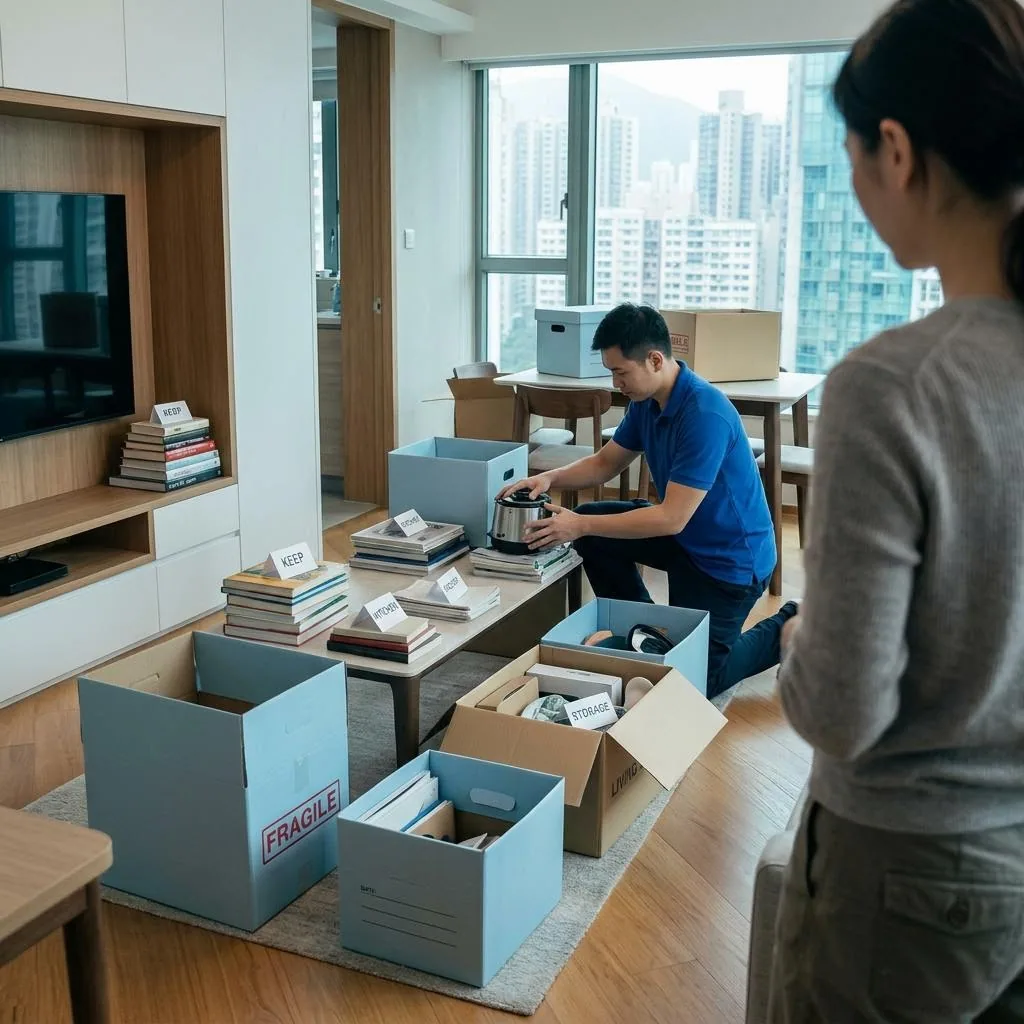
Sort items into three groups: needed today, needed within the week, and not needed for now. Open bedding, towels, toiletries, everyday tableware, chargers, documents, and medication first; books, decorations, and seasonal clothes can wait. This helps you establish a basic routine without having every box open at once.
Give every item a place as you unpack it. Do not create piles on the floor while deciding where things belong. A temporary “to sort” area is useful for items you are still deciding on, but avoid turning the whole flat into a storage room. If there are too many belongings, group them by function first, then decide whether they should go into a cupboard, drawer, or storage box.
Use labels and a simple storage system so things are easier to find later
Good organisation is not just about appearance; it also needs to work later. Transparent boxes, divider baskets, drawer inserts, and same-size containers can help, and each box should be labelled with the room, item type, and priority, such as “kitchen - daily use” or “bedroom - seasonal.” A short contents list on the box can save a lot of searching later.
Place items according to how often you use them: everyday items at waist to eye level, less-used items higher up or in corners, but never put heavy items too high. If space is limited, make better use of vertical storage and wall-side areas so the passage stays clear. In a rental home, also think about restoration requirements and choose methods that do not damage the walls.
Declutter before decorating so the space stays easier to maintain
A move is the best time to review what you really need. Items that are no longer useful, duplicated, or damaged can be donated, sold, or discarded, but check the estate rules and local disposal points first so you do not leave large waste in common areas. For documents with personal data, old electronics, or anything sensitive, clear the data or contents properly before disposal.
Once the basics are sorted, simple decoration becomes much easier. Keep enough walking space between furniture pieces and avoid blocking the path just to make the room look fuller. Start with a small number of decorative items and adjust after living there for a while. If you need wall fittings, lighting changes, gas stove work, or any other specialist task, ask a qualified person to assess it first instead of rushing into installation.
When to ask for help and what to confirm with a moving team
If the new home needs many boxes, heavy items, old furniture removal, or quick post-move setup, a moving or clearing team can help, but the service scope should be clear first. Ask whether they only move items, also shift furniture after delivery, or also handle packing, unpacking, or disposal. If there are stairs, narrow access, parking issues, or loading restrictions, confirm those details in advance.
Before booking, ask about arrival time, floor access, whether a clear path is needed, and how fragile, valuable, or bulky items should be marked. If you want a full estimate or contract terms, request written confirmation and check Online Quote, Moving house price list, and Service terms so you are not surprised by a different scope on the day.
Frequently Asked Questions
Should I clean first or unpack first after moving in?
In most cases, do a basic clean first and then unpack the items you need immediately. That way the floors, cabinets, and bathroom are ready before boxes take over the space.
What should I unpack first in a new home?
Start with bedding, toiletries, everyday tableware, chargers, documents, and anything needed on day one. These items make the home functional while the rest can wait.
How can I organise a small home without making it messier?
Sort by how often you use things, keep daily items easy to reach, place less-used items higher or farther away, and use matching containers with labels.
How should I deal with items I do not want to keep?
Check the building or estate disposal rules, then decide whether to donate, resell, recycle, or discard them. Anything with personal data should be handled carefully before disposal.
When should I call a professional instead of doing it myself?
If the task involves electricity, gas, leaks, structure, heavy installation, or other specialist work, use a qualified professional rather than attempting it yourself.


