MOVING TIPS & ADVICE
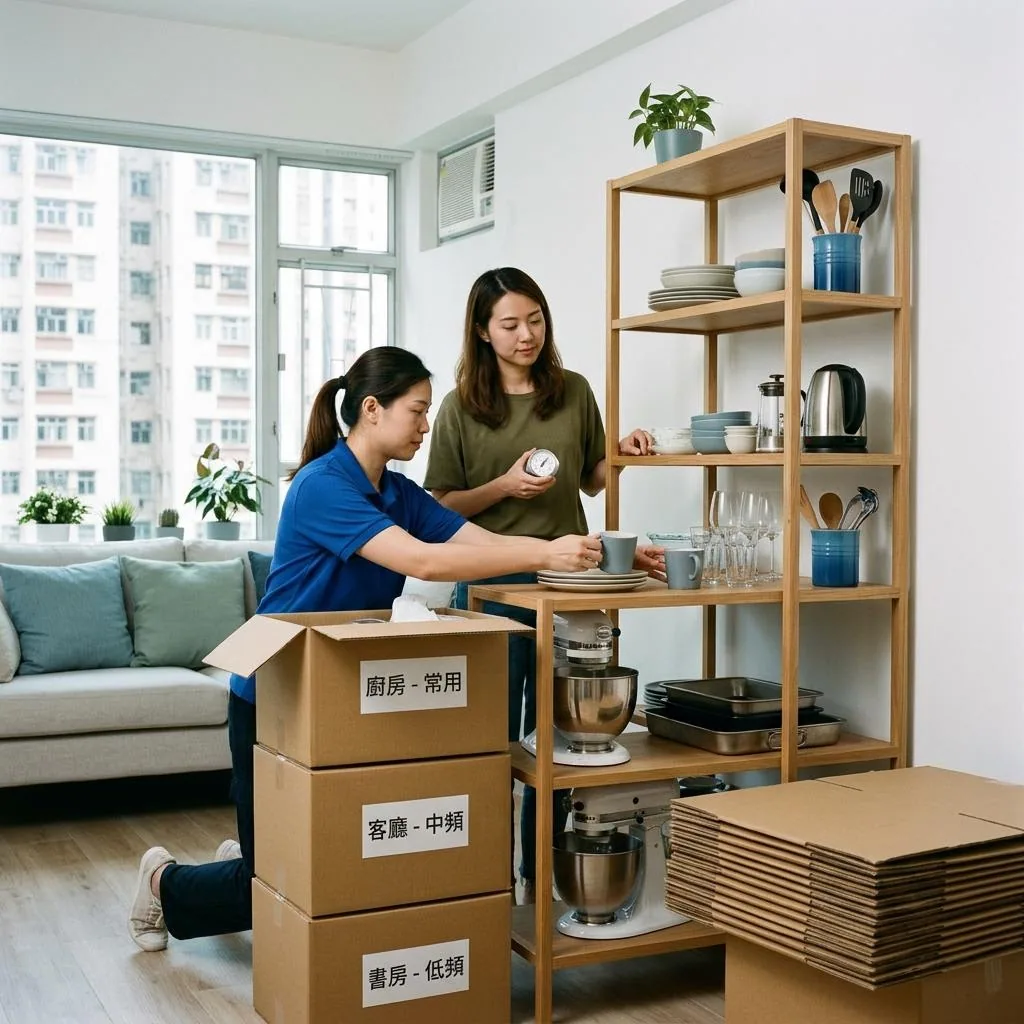
How to Unpack by Usage Frequency and Quickly Restore Order After a Move
Key answers
Unpack first by how often you use each item: daily essentials, then weekly or monthly items, then rarely used belongings. With clear labels, a temporary living zone, and prompt packing-material cleanup, your new home becomes usable faster.
Why random unpacking creates chaos
The messiest moment in a move is often not transport itself, but opening boxes without a plan once they arrive. If you unpack whatever is nearest, kitchen items, bathroom items, and bedroom belongings quickly get mixed together, and even small things become hard to find.
In compact Hong Kong homes, scattered boxes also block walkways and make the space feel smaller than it really is. A better approach is to pause first, sort by room, purpose, and urgency, then unpack in order instead of turning the flat into a temporary storage room.
Sort everything into three usage levels
The simplest method is to divide belongings into three groups: daily essentials, items used weekly or monthly, and rarely used items. Daily essentials include toiletries, phone chargers, regular clothing, basic tableware, and a few cleaning items, and they should go where you can reach them easily.
Medium-frequency items such as seasonal clothing, files, books, and occasional appliances can go in mid-level cabinets, under-bed storage, or a storage corner. Low-frequency items such as holiday decorations, keepsakes, and spare luggage are best placed higher up or where they will not interfere with daily life.
Set up the first-day living zone
On moving day, the goal is not to empty every box at once. The priority is to create a basic liveable zone, starting with sleep and washing needs. Prepare bed linen, pillowcases, towels, toiletries, chargers, and one or two changes of clothes so the first night is settled.
For the kitchen, locate a kettle, cups, basic tableware, and a few simple cooking items so you can handle the first meal or two. If appliance connections, gas work, light fittings, or large furniture fixing are still pending, leave those to qualified professionals instead of forcing a DIY solution.
How to handle medium- and low-frequency items
Once the high-frequency items are in place, you can move on to the rest. Keep categories together and avoid mixing books, small hardware, and cleaning supplies in the same box. A move is also a good time to check whether older items are still worth keeping.
Before storing something away, ask three questions: have I used it in the past six months, is it still suitable, and would buying it again be sensible? Keep what is truly useful, and consider donating, recycling, or discarding the rest. Clear labels such as bedroom clothes or spare tools will save a lot of time later.
Common unpacking mistakes and how to fix them
A common mistake is unpacking a little bit everywhere, which leaves every room half-done and no area fully functional. Another is hiding away items that seem less urgent while everyday essentials end up buried at the bottom, making normal life harder than it should be. Finish one zone before moving to the next.
Do not let packing materials linger indoors. Flatten boxes, separate plastic bags and filler, and remove them as soon as practical. If you notice damage, blocked doors, or a repair issue after the move, record it first and request written confirmation through the agreed process instead of trying to solve structural problems on your own.
When it makes sense to ask for moving help
If there are many boxes, elderly family members or children in the home, or you need help with unloading, room-by-room placement, and waste removal at the same time, progress can slow down quickly. In that case, moving support can help you get the home usable faster.
Before booking, ask exactly what is included: transport only, stairs, unpacking support, placement, and how large furniture or special items are handled. Electrical, gas, structural, medical, and other specialist tasks should always be handled by the proper qualified professional.
Frequently Asked Questions
Which boxes should I open first after a move?
Open the daily essentials first: toiletries, chargers, bedding, and a small set of tableware. That lets you sleep, wash, and manage the first day without stress.
How can I avoid making the living room messier while unpacking?
Keep unopened boxes grouped by room and work on one area at a time. Flatten and remove packing materials as you go so the clutter does not spread across the flat.
How should I decide where each item belongs?
Use frequency. Put daily-use items in the easiest-to-reach spots, weekly or monthly items in mid-level or under-bed storage, and rarely used items higher up or out of the way.
Should I declutter during unpacking?
Yes. If something has not been used in six months, no longer fits your needs, or is cheaper to replace, it is a good candidate for donation, recycling, or disposal.
What work should not be handled as a DIY task after moving?
Electrical, gas, structural, leak-related, medical, and other specialist tasks should be left to qualified professionals. If the service scope is unclear, request written confirmation first.


