MOVING TIPS & ADVICE
Practical Moving Tips for Relocating with Pets
Key answers
The key to moving with pets is early familiarisation, safe separation on moving day, and a gradual settle-in at the new home. Keep routines steady, reduce noise and strange smells, and let your pet adjust step by step.
Start Familiarisation Before the Move
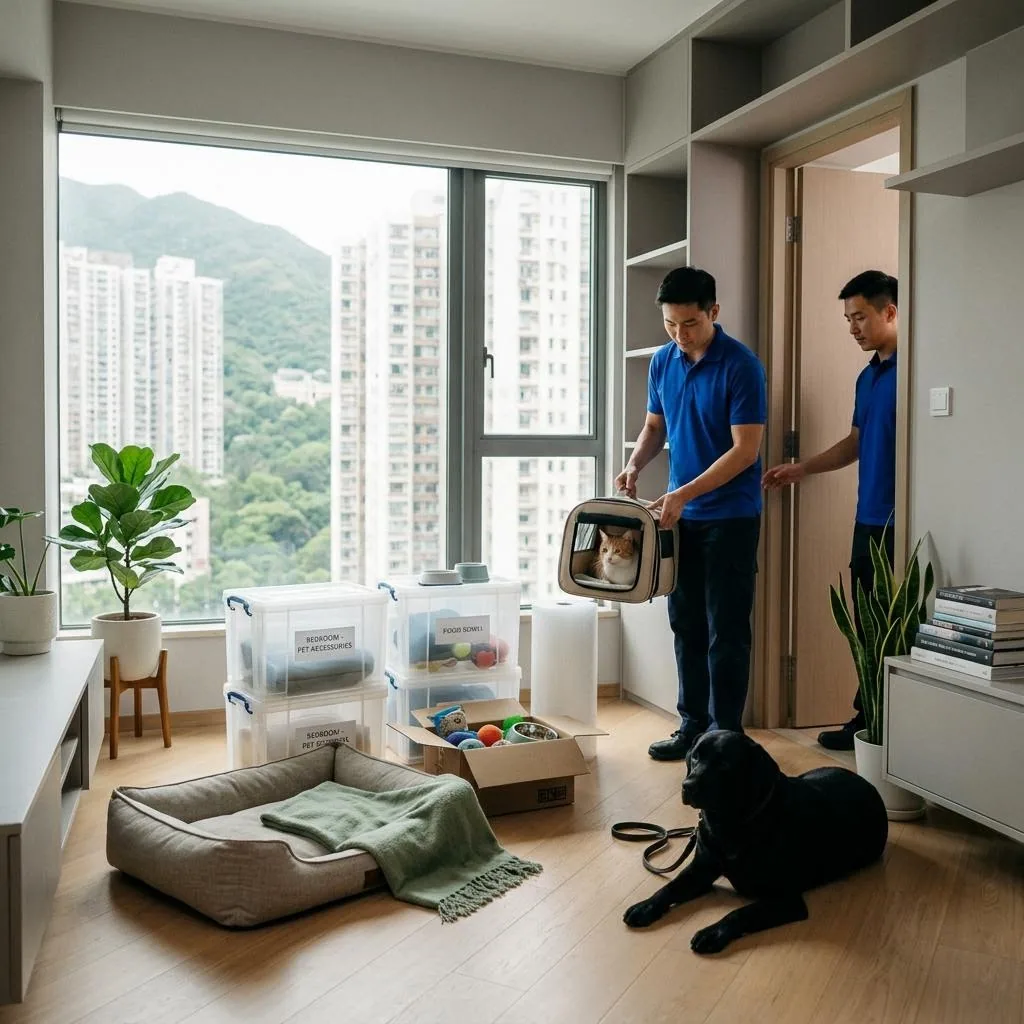
A few weeks before moving day, let your pet get used to boxes, bags and storage tubs so they do not associate them only with stress. While packing, keep one corner of the home unchanged and leave familiar bedding, blankets and toys there to soften the impact of sudden smell and routine changes.
Try to keep normal feeding, walking and litter-cleaning times as steady as possible. If your pet takes regular medicine, needs a vet-approved calming plan, or has a special diet, check with a veterinarian in advance and prepare enough supplies with clear labels.
Separate Your Pet Safely on Moving Day
Moving day is noisy and busy, so place your pet in a cleared room with the door and windows shut, and post a note asking movers not to open it casually. If you have more than one pet, keep them separated so they do not frighten each other or bolt when the door opens.
When transporting your pet, use a properly sized carrier or a secure pet bag and have the owner accompany them. Do not place pets in a truck cargo area, a sealed car boot or any space without ventilation; if your pet is prone to travel stress, ask a veterinarian about suitable ways to ease the journey.
Set Up a Safe Corner in the New Home
Once you arrive, do not let your pet roam the whole home at once. Start with one quiet room as a temporary safe zone, and place the water bowl, food bowl, litter tray or bed there first so the pet can begin with familiar smells and fixed locations.
It is best not to wash the old blanket, bed or toy immediately, because the original scent helps comfort your pet. For the first few days, keep visitors and loud music to a minimum, and expand access to other rooms only after feeding, toileting and resting return to normal.
Watch for Stress Signs and Keep a Stable Routine
After a move, reduced appetite, hiding, frequent vocalising, scratching at doors, indoor accidents or refusing the litter tray can all be signs of stress. The first response should be a steady routine for meals, play and rest; if the problem continues or worsens, contact a veterinarian and do not give human medicine on your own.
In the early days at the new home, spend more time with your pet, but do not force interaction. Short play sessions, treats and calm voice cues can help build confidence, while windows, balconies, entrances and small gaps should be checked carefully so your pet does not escape or get hurt.
Questions to Raise with the Moving Team
If you are using movers for furniture and household items, tell them in advance that a pet is present and confirm arrival time, stair access, temporary door control and the moving route. If your pet is sensitive to strangers, ask for a plan that concentrates the busiest work into one period to reduce repeated door opening and noise.
You should also ask which items should be dismantled first and which room should be moved last, so you can keep one safe room for your pet. Electrical work, gas work, fixed installations and other specialist tasks should be handled by qualified professionals; do not rush into risky DIY just to save time.
Follow-Up After Move-In and Common Mistakes
A common mistake is opening every room too quickly, or inviting many visitors before the pet has settled. Another is forgetting feeding and cleaning routines while unpacking; the better approach is to stabilise daily life first, then widen the pet's access step by step.
If your pet keeps refusing food, vomiting, breathing heavily, acting restless or hiding for several days, seek veterinary advice early. The move itself is not usually the real problem; it is the disruption, unfamiliar smells and lack of routine. With proper preparation and a calm plan, most pets can adapt well to a new home.
Frequently Asked Questions
When should I start preparing my pet for a move?
A good rule is to start one to several weeks before moving day, so your pet can get used to boxes, a steady routine and gradual packing changes.
Can my pet stay inside the moving truck on moving day?
No. Your pet should travel with the owner in a secure, ventilated space and should never be left in a cargo area or sealed compartment.
What should I do first after arriving at the new home?
Set up one quiet room as a safe area, then place water, food, a litter tray or bed there so your pet can start with familiar smells and a stable location.
Is it normal if my pet does not eat right after the move?
A short drop in appetite can happen, but if your pet refuses food or water, vomits or seems unwell for a while, speak to a veterinarian as soon as possible.
Can I ask the movers to make special arrangements for my pet?
Yes. You can ask them to confirm timing, entry control and the moving sequence to reduce stress, but day-to-day pet care remains the owner's responsibility and should be confirmed in writing when needed.


