MOVING TIPS & ADVICE
Moving Boxes or Plastic Crates? Choose the Right Packing Option by Item Type
Key answers
Paper boxes and plastic crates each serve a different purpose when moving. Use paper boxes for light items and clothing, and plastic crates for heavy, fragile, or damp-sensitive items. The safest choice depends on weight, weather, access, and how the boxes will be stacked.
Start with the items, not the box type
When packing for a move, the common mistake is buying boxes first and sorting items later. In practice, paper boxes and plastic crates each have strengths, so the right choice should depend on weight, fragility, moisture sensitivity, and whether the route includes stairs, narrow corridors, or outdoor exposure.
Using only one box type for the whole home often leads to boxes that are too heavy, too damp, too tall, or hard to stack. A more practical approach is to sort items into light, heavy, fragile, and moisture-sensitive groups first, then match each group to the most suitable box type.
Paper boxes are best for light household items
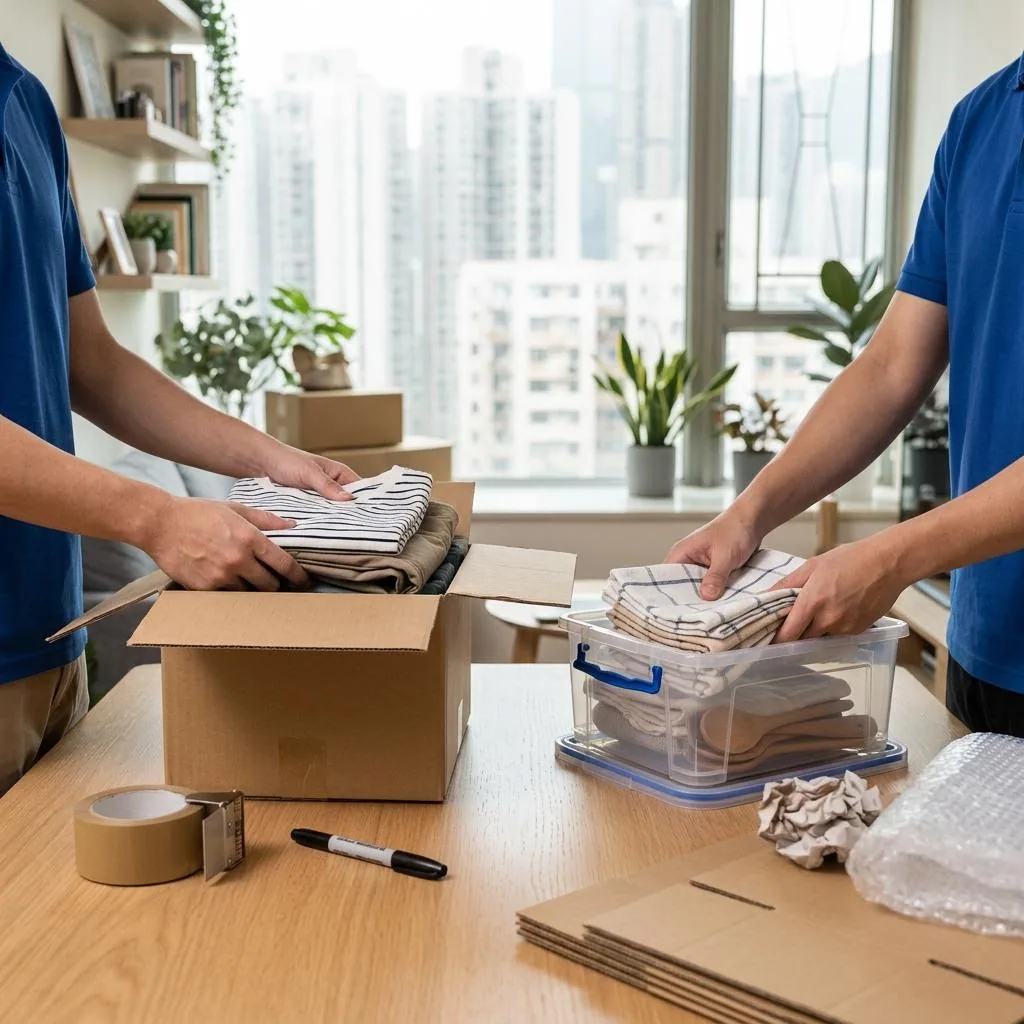
Paper boxes are easy to source, easy to label, and easy to flatten after the move. They work well for clothing, bedding, towels, toys, documents, magazines, and lighter household goods. If the base is taped properly and the empty space is filled, they are usually enough for everyday moving needs.
Their weak point is moisture and overloading. Hong Kong moves often involve rain, humid weather, or wet floor areas, and paper can soften quickly when damp. Heavy items such as books, canned food, bottles, or small fitness equipment should not be packed into one large paper box, or the base may give way during lifting.
Plastic crates suit heavy, fragile, or moisture-sensitive items
Lidded plastic crates are generally sturdier and better for items that need more support, such as books, files, kitchenware, collectibles, fragile tableware, or belongings that must stay dry. If the moving day may involve wet ground or exposure to rain, a crate is often easier to clean and helps keep the contents drier.
That said, crates are not a free pass to overpack. Even a rigid box still needs a sensible weight limit, because a hard shell does not make a heavy load easier to carry. Crate size also matters: if the route involves elevators, corners, or a limited vehicle space, check the dimensions first to avoid blocking movement or stacking problems.
Mixing both is usually the most practical choice
The most sensible moving plan is usually not an either-or decision. Use paper boxes for light, bulky items and plastic crates for heavier, damp-sensitive, or pressure-sensitive belongings. This keeps costs reasonable while matching each item to the packaging that suits it best.
When packing, sort items by room and category instead of mixing books, kitchen items, clothing, and loose odds and ends in the same box. Label each box with the room, contents, fragility, and which side should face up. Keep frequently needed items separate so they can be unpacked first at the new home.
Prepare properly and avoid common packing mistakes
Before packing, prepare enough tape, markers, labels, and cushioning material, and remove items that do not need to move. Wrap fragile items individually and fill empty gaps so nothing shifts inside the box. Liquids and cleaning products should be checked carefully for leakage risk before deciding whether they need separate packing.
Common mistakes include overfilling boxes, leaving the base insufficiently taped, mixing too many item types in one box, and failing to label where each box should go in the new home. On moving day, check whether each box is still safe to lift, especially if the move involves stairs or a longer carrying distance.
What to ask a mover before using packing support
If you want a moving team to help with packing, ask in advance what box types they provide, whether they are loaned or supplied, which items they are suitable for, when they will arrive, and how returns or disposal are handled. If the home includes stairs, narrow doors, village houses, tong lau buildings, or oversized furniture, describe the site clearly so the packing plan can match the actual layout.
For electrical work, gas, medical devices, structural dismantling, data recovery, or any specialist technical task, use properly qualified professionals instead of treating it as ordinary packing. Before the move, confirm the item list, take photos for your own record, and request written confirmation of the service scope and arrangements to reduce misunderstandings on the day.
Frequently Asked Questions
How should I choose between paper boxes and plastic crates for moving?
Choose by item type and conditions: paper boxes are good for light clothing and general household items, while plastic crates are better for heavy, fragile, or moisture-sensitive items. A mixed approach is usually the most practical.
Can I use paper boxes for books and canned food?
Yes, but keep them separate and control the weight of each box. Books, canned food, and bottled items are heavy, so do not pack too many into one large box or the base may fail during carrying.
Are plastic crates always safer than paper boxes?
Not always. Crates are sturdier and more moisture-resistant, but they still need a sensible load, proper fastening, and suitable dimensions for the route. A rigid box is not a reason to overpack it.
What is the safest way to pack boxes before moving day?
Sort items first, seal the base well, fill empty gaps, wrap fragile items individually, check liquid containers for leakage, and label each box with the room, contents, and whether it is fragile. That makes carrying and unpacking easier.
What should I ask if I want the mover to help with packing?
Ask what box types are available, how they are provided, what items they suit, when they will be delivered, and how they are returned or handled after the move. For any specialist technical work, request a separate qualified professional and written confirmation of scope.


