MOVING TIPS & ADVICE
Moving Tips and Packing Guide for First-Time Movers: From Planning to Move-In Checklist
Key answers
Start early with a moving timeline, sort and reduce clutter, pack by weight and room, prepare an essentials bag, and check the new home step by step to avoid stress and missed items.
Plan the moving timeline early
The biggest mistake is leaving everything to the last minute. Start at least three to four weeks before moving day by fixing the move date, handover time, old-flat checkout, and the time window for entering the new place, then work backwards for packing, clearing, and notifications. If you are moving during peak periods, weekends, or in a building with stairs, book earlier and confirm lift use, loading access, and property management rules in advance.
Also handle utilities, broadband, mail forwarding, and address updates for school or work as early as possible. If the move involves items such as bed frames, lights, washing machines, air conditioners, or any task that requires a qualified technician, arrange that separately and do not mix it into the general moving schedule. A simple checklist with responsibilities, deadlines, and items to confirm with the mover will reduce last-minute confusion.
Sort, reduce, and cut volume first
Before packing, sorting is more important than finding boxes. Group everything by room, purpose, and how often it is used, such as daily use, occasional use, donate, sell, and dispose. This reduces duplicate handling and makes it much easier to place items back in the right rooms after the move, instead of stacking every box in the living room.
Items not used for a year or more, damaged goods, expired items, and things that clearly no longer fit your needs should be cleared out decisively. Good-condition clothes, books, and small household items can be donated or passed on. For large furniture, appliances, or items that may require special disposal, check the building rules and recycling arrangements first. Reducing volume before the move is usually faster and cheaper than dealing with it after arrival.
Pack systematically by weight and room
Follow one simple rule: heavy items go in small boxes, light items in larger boxes. Books, files, tools, and canned goods should be packed separately; clothing, bedding, and other light items can go into bigger cartons, but do not overfill them. Keep each box to one room or one category as much as possible so that unpacking does not become a search mission across the whole flat.
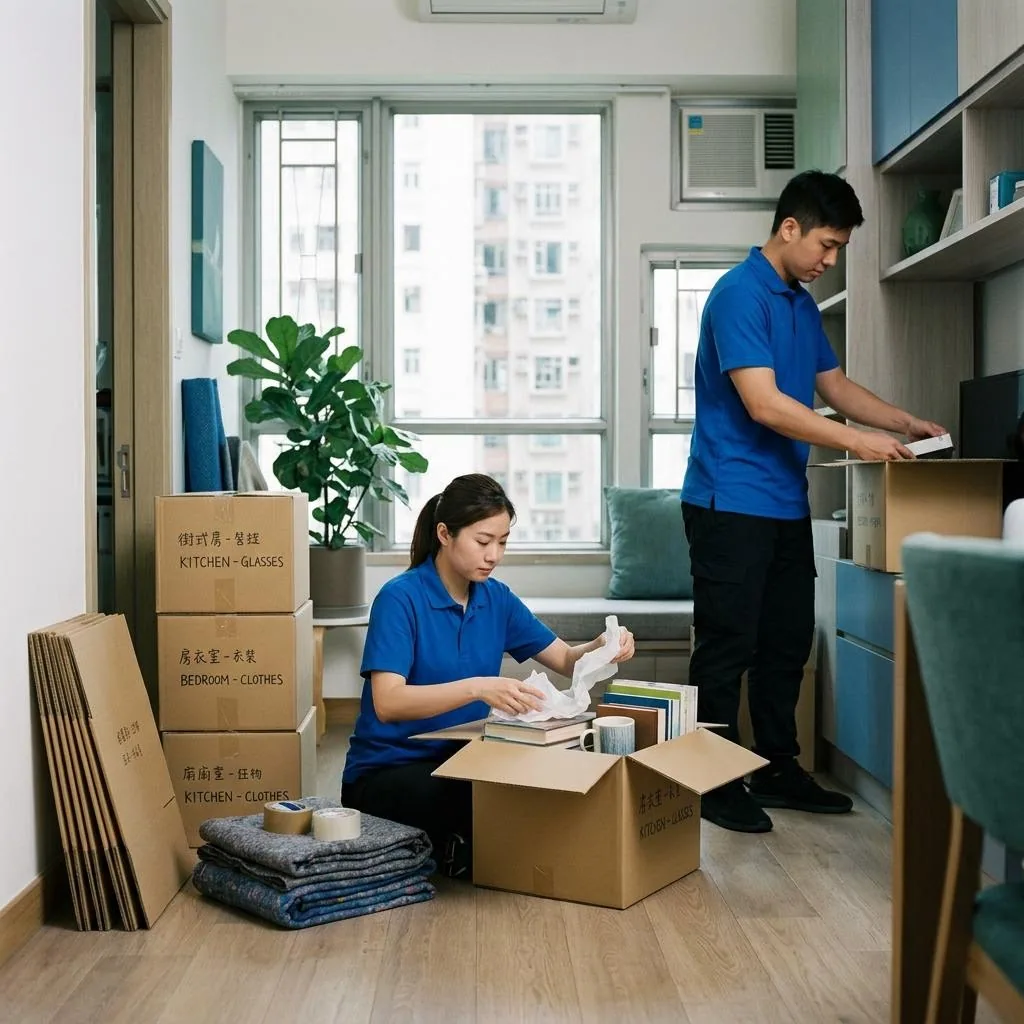
Wrap fragile items individually with paper, towels, or suitable packing material, then place them with padding between layers. After sealing, write the room name, main contents, and whether the box is fragile on the top and at least one side, and add notes such as “open first” or “open last” where useful. Important documents, keys, IDs, receipts, and small valuables should stay in a separate bag that you carry with you rather than going into the main load.
Prepare an essentials bag and unpack in the right order
You may not finish unpacking everything on move-in day, so prepare a separate essentials bag or overnight kit in advance. Include spare clothes, toiletries, a towel, charging cables, basic medicine, simple tableware, tissues, plastic bags, drinking water, and some cash, so you can wash up, rest, and handle basic needs even if the rest of the boxes remain closed.
At the new home, do not unpack randomly. Start with the items that affect daily living first, such as bedding, toiletries, basic cleaning supplies, and everyday clothes. Then open boxes room by room, setting up the bedroom and kitchen before the living room and storage areas. If anything arrives damaged, missing, or inconsistent with the list, photograph it immediately and confirm the issue in writing with the mover or relevant party.
Move-day checks and common mistakes
Move-day mistakes usually come from rushing and failing to check properly. Before leaving, walk through every room and check inside cabinets, drawers, window ledges, under the bed, the bathroom, balcony, and storage areas for anything left behind. Also confirm utility shut-off, windows and doors, keys, and handover items for the building or management office. After arriving, count the boxes and large items first, then inspect for visible scratches or compression damage and record it immediately instead of relying on memory later.
Common mistakes include unlabeled boxes, heavy items packed in oversized cartons, fragile items with no separation, important documents mixed with clutter, looking for keys or address details on the move day itself, and failing to reserve access routes or parking in advance. If you have narrow turns, tight doorways, glass surfaces, antiques, or unusually heavy pieces, explain the size and constraints clearly before the move and ask for written confirmation of how they will be handled.
When to ask for mover support
If this is your first move, if the item count is high, if time is tight, or if you have bulky furniture and multiple rooms to handle, hiring an experienced moving team is often the more efficient choice. You can leave the heaviest lifting, transport, and stair handling to professionals while focusing on sorting, labeling, and setting up the new home, which keeps the whole process more orderly.
Before booking, ask what details must be provided in advance, whether dimensions and floor levels are needed, which items require special notice, whether self-packing is accepted, how mismatches are handled on arrival, and who should be arranged separately for any specialist technical work. Pricing, terms, and responsibility limits should be confirmed in writing; to compare options, see Moving house price list, Online Quote, and Service terms.
Frequently Asked Questions
How early should a first-time mover start preparing?
A good rule is to start at least three to four weeks in advance. Fix the date, make a checklist, then pack and notify address changes in stages. Move earlier if the period is busy or the load is large.
What packing mistake happens most often?
The most common mistakes are overfilling large boxes with heavy items, mixing items from different rooms, failing to label boxes, and putting keys or documents into random cartons. These slow down both moving and unpacking.
How should fragile items be packed?
Wrap each item individually, add cushioning between layers, and keep fragile pieces away from heavy items. Mark the box clearly as fragile and avoid overpacking it.
What should go into the essentials bag?
Put in spare clothes, toiletries, a towel, charging cables, basic medicine, drinking water, simple tableware, and important documents. The goal is to let you clean up and spend the first night comfortably.
When should I consider hiring movers?
Consider it when you have many items, a tight schedule, stairs, bulky furniture, or little moving experience. Before booking, explain size, floors, and any restrictions clearly and ask for written confirmation.


