MOVING TIPS & ADVICE
Lease Ending in Three Days: A Practical Plan for Fast Box Packing
Key answers
When a move is down to three days, start by reducing what you own, then pack room by room, and keep fragile items, heavy items, and important documents separate so the move stays manageable.
First, define what must be done within three days
The biggest mistake in an emergency move is trying to handle everything at once. Spend about half an hour sorting your belongings into three groups: must take, can give away or recycle, and can wait. Once unnecessary items are removed, you will need fewer boxes, less tape, and less help.
Hong Kong homes are often small, with narrow corridors and tight lift schedules, so a room-by-room plan matters. A sensible order is kitchen, desk, wardrobe, living room clutter, and finally the bed area and daily essentials. That keeps passageways clear and avoids piling boxes where they block movement.
Day one: reduce volume and sort into bags
On the first day, the goal is not to pack everything. It is to cut volume quickly. Use large rubbish bags, recycling bags, and one small bag for valuables. Check cupboards, drawers, bed storage, and wardrobe shelves, and remove items you have not used for a long time. Food, expired medicine, broken items, and duplicates should be dealt with separately so they do not occupy box space.
If you are unsure about something, place it in a clearly marked hold box instead of spending too long deciding. A common move-day mistake is treating every item as essential, which inflates the number of boxes and slows the whole process.
Day two: pack in batches by room and weight
Use the second day for the main packing work. Treat it like an assembly line. Start with kitchenware and fragile items: wrap each piece with paper or cushioning, stand them upright in the box, and fill empty gaps with soft items. Then pack books, files, and small appliances, with heavier items at the bottom and lighter items on top. Avoid concentrating too much weight in one box.
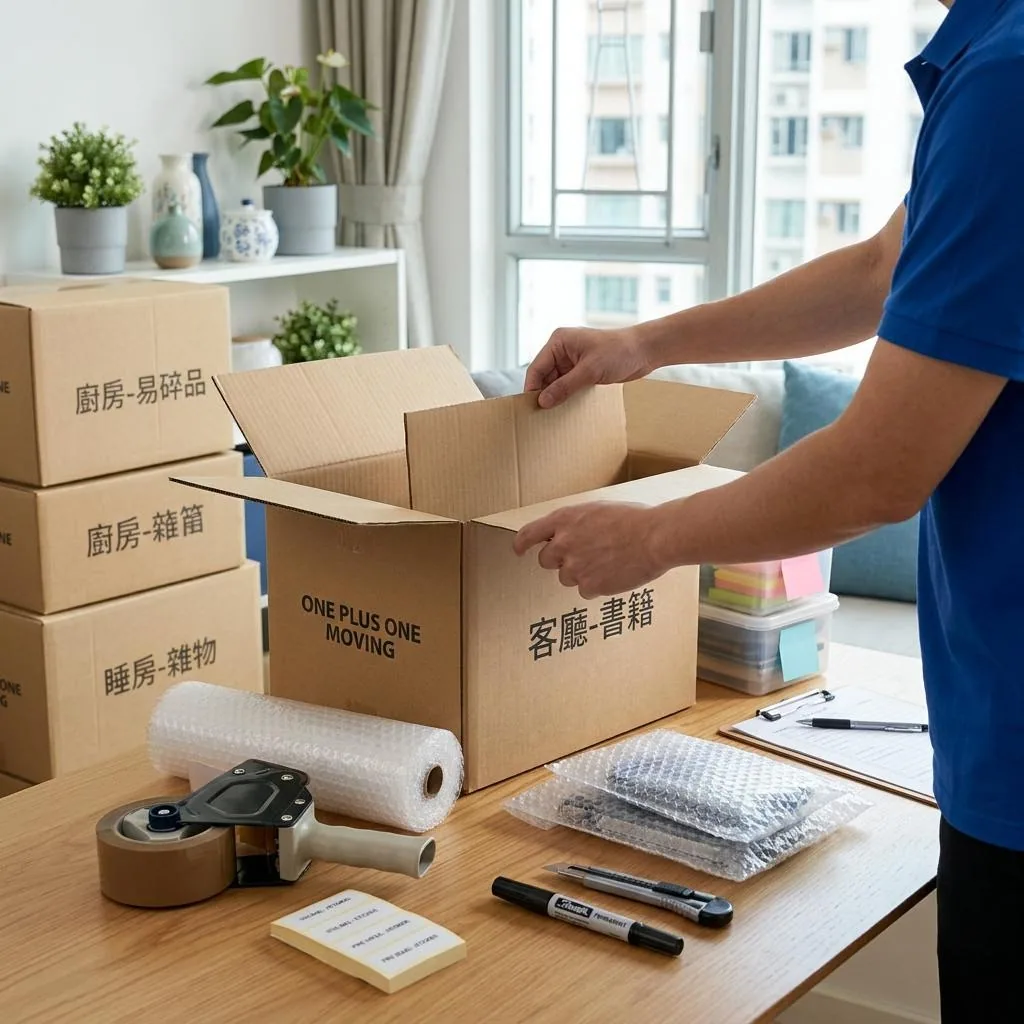
Clothing and bedding can go into larger boxes or vacuum bags. Keep daily wear, sleepwear, and the next day’s essentials in a separate set. Do not wait until the end to label boxes; write the room, contents, and whether the box is fragile on at least two sides, otherwise unpacking becomes slow and confusing.
Day three: finish admin and stop major packing
The day before moving should be for finishing, not for starting a new round of packing. Put your ID, lease papers, keys, charger, cash, daily medicine, toiletries, and the clothes you need overnight into one carry bag. That bag should stay with you and should not be mixed into the boxes. Any last-use items, such as cleaning tools and a few dishes, should also be grouped separately for final cleaning.
If your lease requires the flat to be returned in its original state, check walls, cabinet doors, floors, and window ledges, and take photos before handover. For water, electricity, gas, internet, or other account transfers, follow each provider’s process early and keep written confirmation where possible so you are not left dealing with unfinished paperwork after the move.
The practical problems people often forget in a rush
In a three-day move, the problem is often not the number of boxes but the packing order. Common mistakes include mixing food with cleaning products, putting heavy items into large boxes, and failing to separate bedding from loose accessories. That usually leads to wasted time when you arrive at the new home and need the first-use items immediately.
If you need to dismantle large furniture, or if the doorway, stairs, or lift area is narrow, measure the route first so you do not discover a blockage at the last minute. Any electrical reconnection, gas-related work, structural issue, medical equipment, or other specialist task should be handled by a qualified professional rather than attempted as a DIY fix.
If time is too tight, ask the mover the right questions
If you only have three days, doing everything alone can be overwhelming. When you ask a mover for help, confirm the schedule, whether boxes must be ready in advance, how the team will divide tasks, which items need special marking, and how tight entrances or narrow access points will be handled. For anything uncertain, request written confirmation.
The real goal in an emergency move is not perfection. It is to get your belongings to the new place safely, clearly, and in a way you can still track. If time is short, protect essentials and fragile items first, then handle the non-urgent things later. For timing, tools, and packing order, check the moving guide and checklist so the three-day plan stays organised.
Frequently Asked Questions
What should I do first if I only have three days to move?
Start by reducing what you own. Sort items into must take, can donate or recycle, and can wait, then pack by room instead of grabbing everything at random.
Do I still need to sort items carefully when time is very tight?
Yes, but keep it basic. Separate fragile items, heavy items, important documents, and ordinary clutter at minimum, or unpacking will be chaotic later.
How should I label boxes so they are actually useful?
Write the room, contents, and whether the box is fragile on at least two sides. If helpful, add priority such as first-open or later-open.
What are the most common packing mistakes in a rush move?
Putting heavy items in oversized boxes, mixing unrelated items together, and forgetting to keep a carry bag for documents and same-day essentials are the most common mistakes.
What if three days is still not enough?
Protect essentials, fragile items, and documents first, then defer non-urgent clutter. Also confirm schedule, roles, and special items with the mover in writing where possible.