MOVING TIPS & ADVICE
Packing Sports Equipment and Odd-Shaped Items: What Is the Safest Way?
Key answers
Dumbbells, rackets, folding bikes, yoga mats, and other awkward items need to be disassembled, cushioned, secured, and clearly labelled. The right method reduces crush damage, scratches, loose parts, and handling risks during a Hong Kong move.
Why do oddly shaped sports items so often cause problems during a move?
Sports equipment and irregular items are difficult to pack because their weight is uneven, their edges protrude, and their surfaces may be delicate. A standard cardboard box is designed for fairly regular household items. Once you place a dumbbell, kettlebell, folding bike or golf bag inside, the box can bow, split at the base, or shift while being carried through tight corridors and lifts in Hong Kong.
The problem is not only size. It is also how the item sits in the box and how it contacts other objects. If you pack by force just to make it fit, you increase the chance of impact damage, scratching and snagging on door frames, railings and neighbouring cartons.
What should you do before packing starts?
Start by sorting and separating. Detachable parts such as pedals, adjustment pieces, straps, small tools and accessories should be removed if the product is designed to be disassembled, then placed in sealed bags and labelled clearly. Keep screws, pins and clips together so you are not missing parts when reassembling later.
Next, inspect the item itself. If there are loose joints, cracks, rust, unstable fittings or damaged surfaces, address those issues before moving day instead of forcing the item through the move. For items involving power cables, batteries, heating elements or mechanical assemblies, follow the maker’s instructions and use qualified professionals for electrical, gas, medical or other specialist work. Do not attempt risky DIY repairs or modifications.
Which packing materials work best?
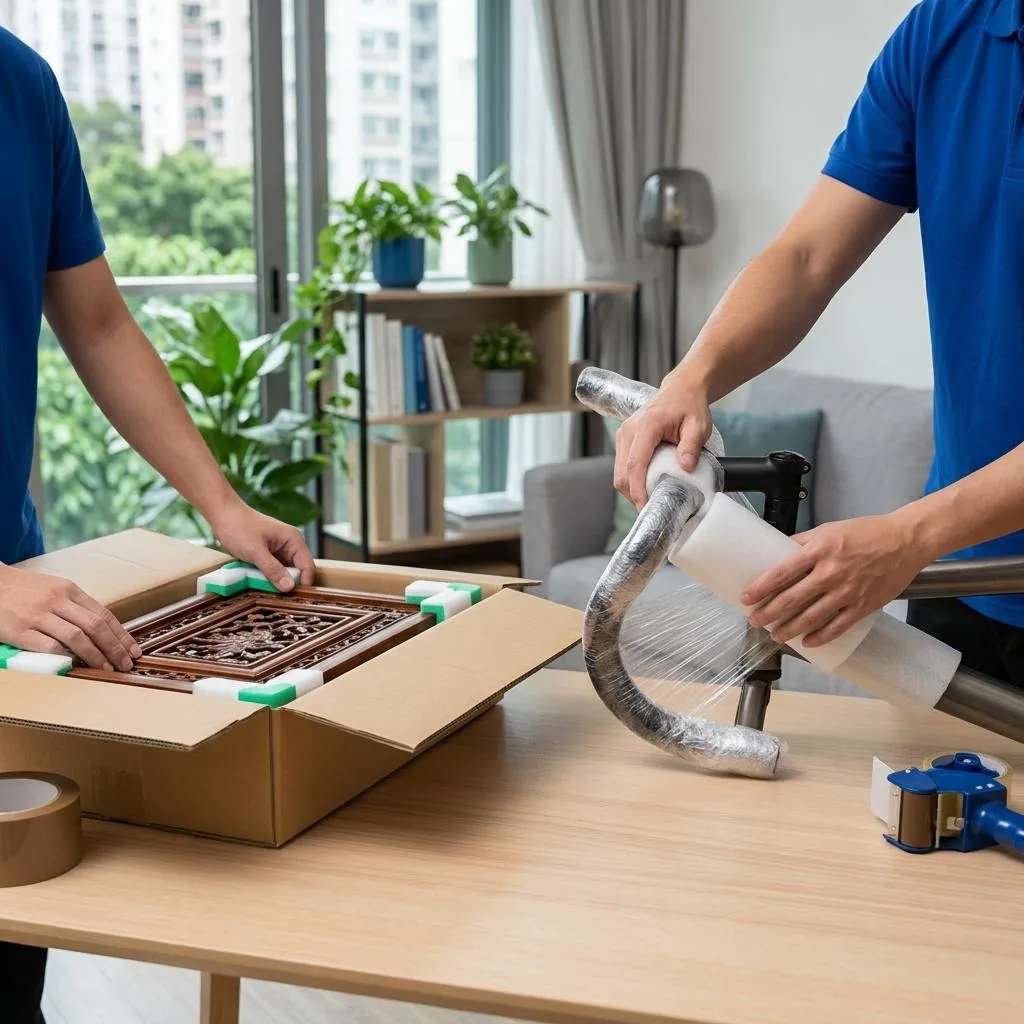
For scratch-prone surfaces, foam sheets, EPE padding and bubble wrap are far better than a single layer of newspaper because they absorb vibration and keep hard surfaces apart. Wrap frames, corners and contact points carefully, then secure the padding with tape. Avoid taping directly onto a sensitive finish whenever possible, because removal can leave residue or marks.
Heavy or sharp-edged items usually need more than soft padding. Use a reinforced box, rigid storage bin, inner dividers or straps to distribute pressure and prevent the contents from shifting. The box should not be too large, because extra empty space lets the item move around, and it should not be too small, because compression may deform the item.
What is the practical packing sequence?
Begin with the most fragile areas, such as racket frames, handle bars, protruding parts and corners. Add at least two layers of cushioning, then secure the wrap with tape. Place the item in a properly sized outer carton and fill all gaps with paper, foam or similar filler so the item cannot wobble inside. A gentle shake test should show no obvious movement.
Long items such as yoga mats, poles, clubs, fishing rods and camping supports should be kept aligned with their shape and protected at the ends. Heavier items such as dumbbells, kettlebells and weight plates should ideally be divided into several smaller cartons. Mark the box as heavy, fragile or this side up where appropriate, and do not overload a carton just to save space.
What are the most common packing mistakes?
A very common mistake is mixing heavy and light items in the same box. The result is crushed soft goods underneath and pressure damage from the weight above. Another mistake is not securing small components, so screws, clips and fittings go missing before you arrive at the new home. A third problem is loose packing: the box looks neat from the outside, but the contents move around inside during transport.
Labelling is also often ignored. Without clear notes, movers may stack the box or turn it in a way that increases risk. It helps to write the item name, whether it contains fragile parts and its weight level on the carton. If you are asking a mover to handle the packing, request written confirmation of the packing method and any handling notes.
What should you check after arrival?
Do not rush to open every box at once. First check whether the carton has dents, crushed corners, moisture marks or tears. Then confirm that all parts, accessories and main pieces are present before you start reassembly. If you notice signs of impact, take photos before opening the box so you have a record of the condition on arrival.
Some items may look fine externally but still have damaged joints, connectors or internal supports. If the equipment is complex, load-bearing or technically sensitive, have it checked by a qualified professional rather than forcing it back into use immediately.
Frequently Asked Questions
Can dumbbells or kettlebells go straight into a normal cardboard box?
It is not recommended. Their weight is concentrated, so a normal carton can split at the bottom or deform quickly. Use smaller reinforced boxes, add internal padding and mark the carton as heavy.
What is the main risk for rackets, golf clubs and other long items?
Side pressure and end impact. Wrap the fragile parts first, then use a long rigid case or a suitably sized box so the shaft or frame does not bend or get crushed.
Should I remove screws and accessories before moving sports equipment?
Yes, if the item is designed to be disassembled. Keep small parts in sealed bags, label them clearly, and store them together with the main item so nothing goes missing.
What if the item has a power cord or battery?
Follow the manufacturer’s instructions for shutdown and disconnection. Do not DIY electrical, gas, medical or other specialist technical work; use a qualified professional where needed.
What should I ask a mover before handing over packing of special items?
Ask about the packing method, whether parts will be removed, what protective materials will be used, how the item will be labelled, and request written confirmation. For pricing and terms, refer to Moving house price list and Service terms.


