MOVING TIPS & ADVICE
How to Pack in Stages Before a Move: A Practical Plan to Reduce Anxiety
Key answers
Packing is often the most stressful part of moving because it feels endless. Breaking it into inventory, sorting, packing, labeling, and final checks makes the work easier to manage and helps reduce last-minute rushing and mistakes.
Break packing into small tasks so it feels manageable
Seeing a whole home full of boxes can make people feel stuck. The pressure usually comes from treating everything as one giant job. A more practical approach is to list the rooms, item categories, and deadline, then turn the work into small daily tasks, such as one wardrobe, then one shelf, then one drawer of miscellaneous items.
After each small step, record what is done instead of relying on memory alone. If time is tight, start with essentials, documents, daily clothes, basic toiletries, and any cable or accessory you will need on moving day, so you do not end up searching for key items at the last minute.
Sort first, then decide what should actually be packed
It is usually faster to reduce belongings before packing than to pack everything first. A simple way to decide is to ask whether the item has been used in the past year, whether it is needed in the new home, and whether it is worth the effort of moving. Duplicate items, expired paperwork, damaged small items, and things you no longer use should be separated early instead of being left to the end.
For items with emotional value, place them in a separate undecided box so you do not lose time over one difficult decision. This keeps the process moving while leaving room to reconsider later. For large furniture, appliances, or special items, check the size, route, and building restrictions before deciding whether they should be moved at all.
Pack by room and by how often you use things
The safest method is to pack by room rather than by loose item. Objects from the same room usually serve similar purposes, which also makes unpacking easier later. Start with areas used less often, such as storage cabinets, guest rooms, and seasonal clothing, then move to the living room and bedrooms, and leave daily essentials for the end.
If there are children or older family members, keep medicines, documents, chargers, tableware, and spare clothes in a separate box marked for last unpacking. For fragile items such as glassware, frames, and electronics, use suitable cushioning and avoid leaving too much empty space inside the box. Do not overfill either, because that can also cause damage during transport.
Label, list, and photograph to avoid lost items after arrival
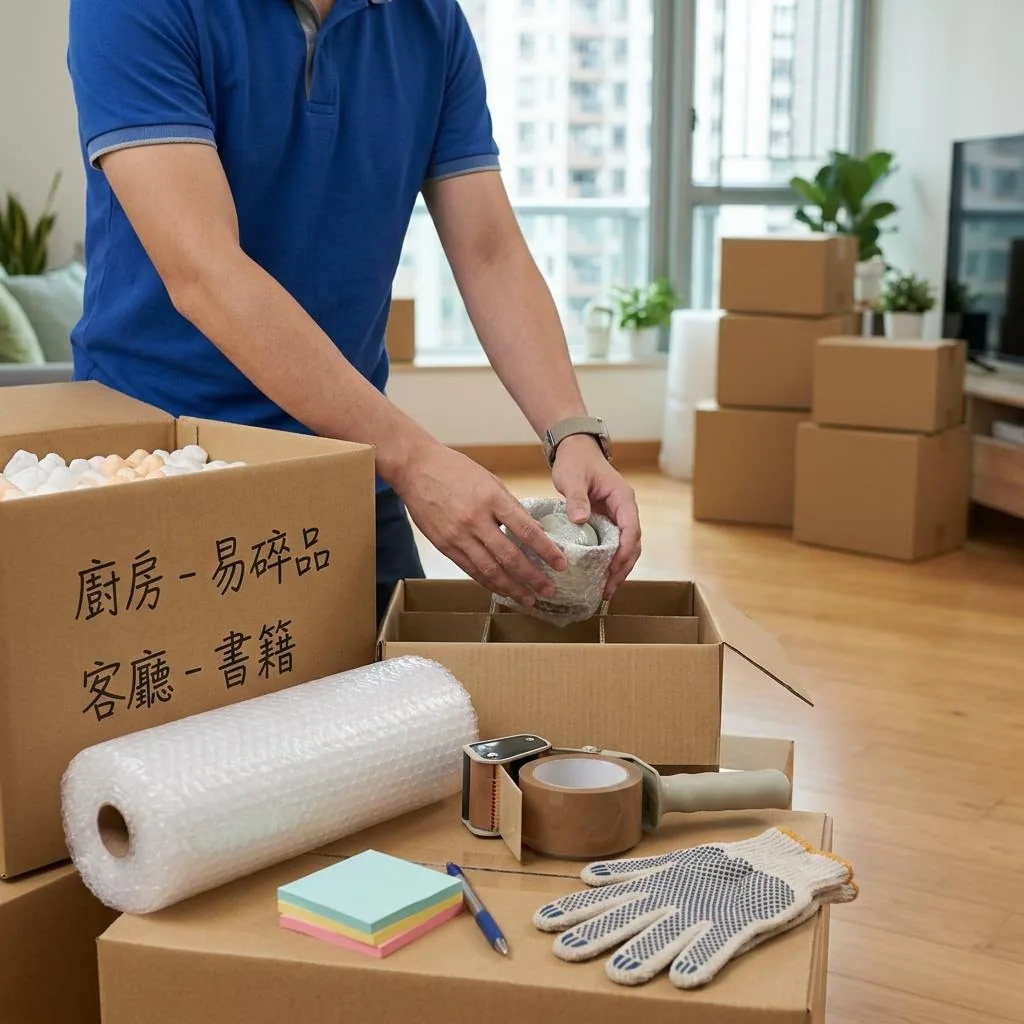
A box label should do more than name the room. Add a short contents note and an unpacking priority, such as kitchen, cups and bowls, unpack first. If similar items are split across several boxes, number them and keep a simple list so you do not waste time searching after arrival.
Taking photos of important or hard-to-identify items before sealing them can also help you check whether anything is missing later. If packing needs to pause, place sealed boxes in one fixed area and keep pathways clear so the home does not become messy again. On the night before the move, check again that your bedding, charger, documents, keys, and other essentials are packed separately.
Manage pace and rest so the final days do not become chaotic
The point of staged packing is not just speed, but better judgment. Working for hours without a break can lead to poor decisions, such as sealing daily essentials by mistake, mixing important papers into general boxes, or packing boxes too loosely or too tightly. It is better to pause, drink water, rest, and then review what you have finished.
If you also need to handle lease handover, cleaning, transport booking, and new-home arrangements, keep those tasks separate from packing and complete them one by one instead of putting everything on the same day. If stress becomes obvious, sleep is affected, or family members start arguing over packing, stop and reassign the work rather than forcing yourself through it.
When it makes sense to ask a moving team for help
If you have many items, very little time, narrow access, or large furniture to move out, tell the moving team about the site conditions early. You can ask whether the move will be arranged by room, by box count, or by furniture count, and request written confirmation of stairs, parking, lift access, moving route, and any special restrictions before agreeing to the plan.
Electrical reconnection, gas work, structural changes, medical items, and hazardous materials should be handled by qualified professionals and not improvised on moving day. To avoid misunderstandings, list which items are already packed, which are still pending, and which should not be stacked or turned over, and ask for written confirmation of the agreed handling notes.
Frequently Asked Questions
When should I start packing in stages before a move?
Starting two to four weeks before moving day is usually sensible. Begin with non-essentials and work toward daily-use items. If the home has many belongings, start earlier and use a checklist.
What items are best packed first?
Seasonal clothing, spare bedding, books, collectibles, and duplicate household items are often good early candidates because they are not needed every day.
How can I stop labels from becoming useless?
Write the room name, a brief contents note, and the unpacking priority. Keep box numbers consistent across similar items so you can match them easily after arrival.
What should I do if packing is making me too anxious to continue?
Pause, switch to a very small task such as one drawer or one box, and spread the work over more days. Do not try to force everything in one stretch.
When should I consider hiring a moving team?
If time is short, the home has many items, furniture is bulky, access is difficult, or family support is limited, it is reasonable to ask for help and request written confirmation of the move details.


