MOVING TIPS & ADVICE
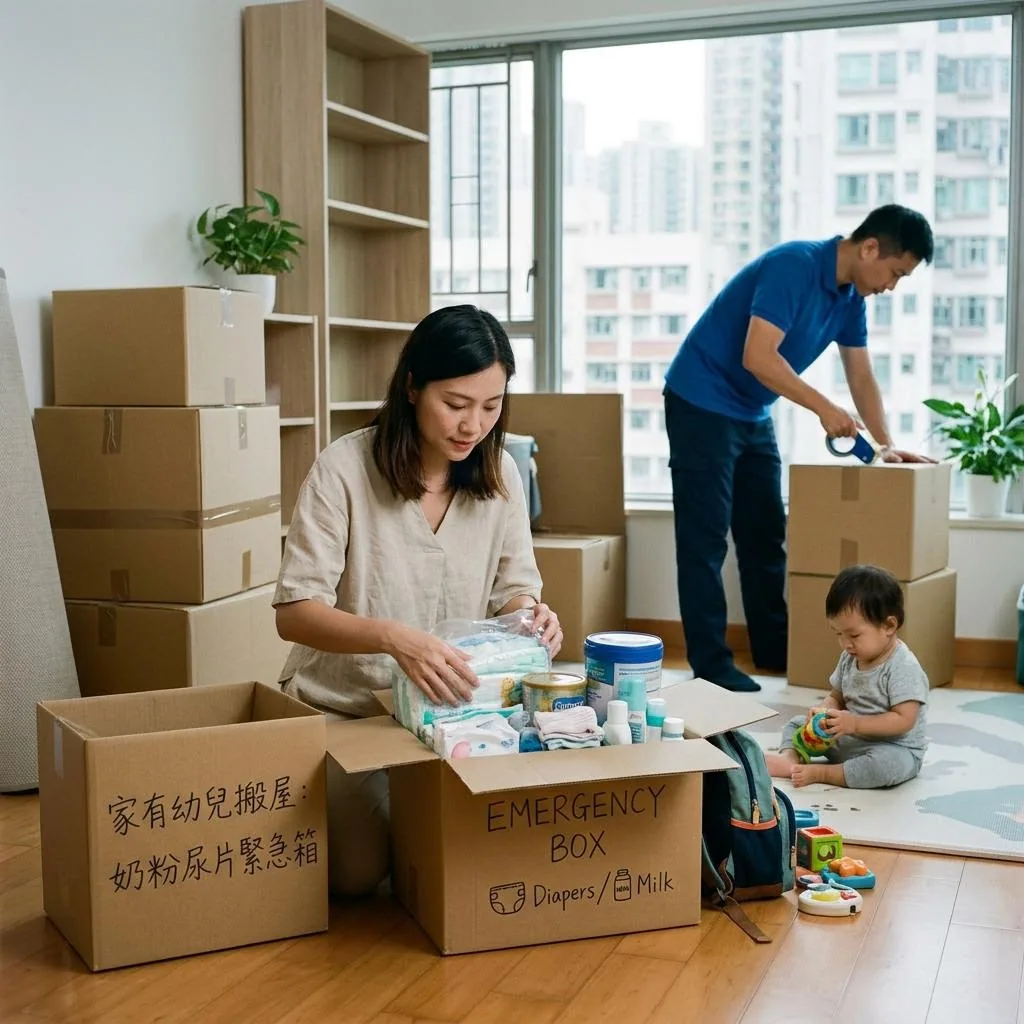
Moving with a Baby: How to Prepare an Emergency Milk and Diaper Bag
Key answers
When moving with an infant, prepare a separate emergency bag with formula, diapers, wipes, spare clothes, and comfort items so you can handle feeding, changes, and bedtime without rummaging through boxes.
Why an emergency bag matters
On moving day, the biggest problem is usually not the number of boxes, but the fact that the baby’s most urgent items are buried inside them. Feeding, diaper changes, naps, and sudden fussiness all need immediate attention; if formula, bottles, diapers, wipes, and comfort items are scattered across multiple cartons, parents will waste time searching at the worst possible moment.
In Hong Kong, a move often involves lifts, traffic, handovers, and waiting time, so the schedule can easily run longer than planned. Babies may also become more unsettled in a new environment, which makes preparation even more important. Keeping daily essentials separate is not extra work; it is one of the simplest ways to reduce moving-day stress.
What to put in the first-24-hours bag
The emergency bag should cover moving day plus the first night in the new home. It does not need to be bulky, but it should be enough for delays. A practical set usually includes one to two days’ worth of formula in portioned containers, clean bottles, enough diapers, wipes, diaper cream, towels, bibs, at least two changes of clothes, and one familiar comfort item such as a blanket, toy, or pacifier.
If your child has special feeding or skin-care needs, keep those items in a separate, clearly marked pouch. Items such as sterilisers or hot-water equipment should only be used after you have confirmed the new home is ready, clean, and suitable for use; do not rush to plug in or operate equipment before the space has been properly set up.
How to pack without missing things
The most effective approach is to keep a small bag or box as the “carry-with-you” set, and let the parents keep it with them rather than sending it with the main shipment. Inside, separate the contents by purpose: feeding, diapering, cleaning, comfort, and spare clothes. That way you can grab what you need quickly without opening every box.
To avoid confusion at the new home, label the bag clearly with what it contains and when it should be used, for example “baby items for tonight”, “diaper change first”, or “open this first”. If you need more than one box of baby supplies, keep the most frequently used one easiest to reach, while the rest can travel with the general household boxes, as long as the labels are clear.
What to do first after arrival
Once you arrive, do not start opening everything at once. First identify the three things the baby will need that night: a sleeping spot, a diaper-changing area, and a feeding area. Clear a small, clean space for the emergency bag first, then take out only what is needed. This is far more efficient than fighting through every carton immediately.
If the home is not fully arranged yet, set up one simple corner with familiar items to give your child a sense of stability. Keep boxes, plastic bags, cutters, and tape tools out of reach. If furniture or a cot needs assembly or disassembly, follow the original instructions or use a suitable professional instead of forcing a quick DIY solution.
Common mistakes parents make
A very common mistake is packing baby essentials like ordinary miscellaneous items, so parents have to search through several boxes after the move. Another is splitting formula, diapers, and feeding tools into different cartons, which makes the most urgent items the hardest to find.
Overestimating the efficiency of the moving day is another problem: people often pack only the exact amount they think they will need, but any delay can leave them short. Some also forget labels or mix fragile, clean items with other household goods, which can lead to leaks, pressure damage, or broken packaging. Leave enough buffer and keep the categories clear.
How to work with the movers
If you are using a moving team, tell them in advance which boxes are priority items and ask them to place those near the entrance or another easy-to-access area. Parents should still handle the baby’s actual feeding, cleaning, and daily care themselves; do not assume the movers will manage those details automatically.
Before the move, ask whether priority boxes can be unloaded first and whether a temporary clear area can be left at the new home entrance or living room. If the move involves electrical work, gas-related work, wall fixing, or other technical tasks, those should be handled by appropriate qualified professionals rather than done in a hurry.
Frequently Asked Questions
What are the minimum items for a baby emergency bag on moving day?
At minimum, bring formula or milk portions, bottles, diapers, wipes, a change of clothes, comfort items, and simple cleaning supplies. The key is not quantity, but making sure the most urgent items are immediately accessible.
Should the emergency bag go inside the main moving boxes?
No. It should stay with the parents or in a very easy-to-reach place such as a car or carry-on bag. Do not place it in a box that may arrive late or be stacked at the bottom.
How much formula and how many diapers should we prepare?
A practical starting point is enough for moving day plus the first night, with a small buffer for delay. If the trip is long or the schedule is uncertain, prepare a little extra, but there is no need to bring every item you own.
What if the move overlaps with the baby’s nap time?
If possible, arrange for a familiar caregiver to help temporarily, or prepare a quiet corner and keep comfort items within reach. If the baby must stay with you, keep feeding and diapering supplies in the most accessible place.
Can we disassemble the cot ourselves?
That depends on the design and on whether you are familiar with the assembly method. If it is a detachable piece of furniture, keep the screws, fittings, and instructions together and avoid forcing any part. If you are not sure, use a suitable professional or an experienced person.


