MOVING TIPS & ADVICE
Winter Clothing and Bedding Storage for Seasonal Moves: Vacuum Bags, Breathable Bags, and Packing Tips
Key answers
For seasonal storage, sort by material first. Light compression can suit synthetic quilts, while down, wool, and silk should stay in breathable bags. Always pack only after items are fully dry, and check for moisture, pressure, and clear labeling before moving day.
Start by separating items that should not be over-compressed
A common mistake during seasonal change is to vacuum every quilt and winter garment until it is flat. Synthetic quilts, fleece sweatshirts, and ordinary bedding can usually handle moderate compression, but natural down quilts, down jackets, wool coats, and silk quilts can lose loft and shape if they are kept under strong pressure for too long. After unpacking, they may look flattened, crease badly, and perform less well.
If you are moving home, avoid stacking heavy bags on top of delicate items, and do not use thin plastic bags for valuable garments. Leave some space inside each box so zips, hard edges, and loose items do not rub against the fabric. Thick bedding should be packed separately and kept away from shoes, cleaning products, and other items that may crush or stain it.
Vacuum bags and moisture-proof bags are not the same thing
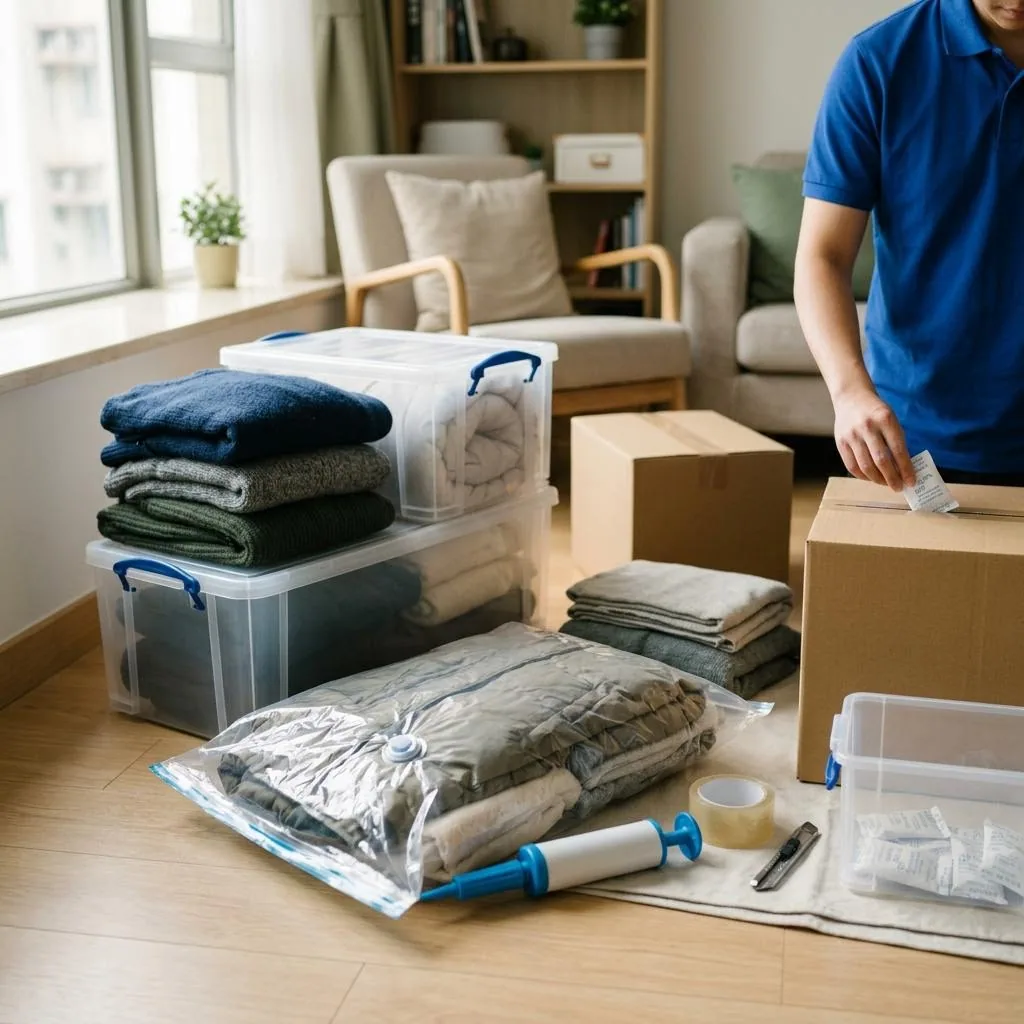
Vacuum bags are mainly for reducing volume, so they suit items that can tolerate compression and do not rely on loft to keep their shape. Moisture-proof storage bags are designed to remain more breathable, which helps reduce trapped dampness and musty odour. In Hong Kong's humid weather, if an item is not fully dry before packing, the moisture will be sealed inside with it and may later cause smell, yellowing, or mildew.
When choosing between the two, look at the material first and the storage period second. Short-term, compressible items may go into vacuum bags. Items that are delicate, loft-dependent, or likely to be stored for longer, such as down, wool, and silk, are better kept in breathable bags or cloth covers. If the items will sit in a moving van or temporary storage for a long time, consider extra moisture control based on the actual conditions.
A practical packing sequence for seasonal bedding and winter clothes
Before packing, sort everything by fabric type: cotton, synthetic fill, natural down, wool, and silk should be handled separately. Wash items first, let them dry completely, and then fold them according to how they will be stored. If an item still carries sweat, oil, or damp smells, clean it before packing; otherwise you are only sealing the problem inside the bag.
Do not overfill each bag, because the zip and seal area can split under pressure. You may add a small amount of desiccant, but keep it from touching the fabric directly. Label each bag clearly with the item type, season, and room name, such as winter quilt, down jacket, or wool coat, so you can find things quickly after the move.
What can be compressed, and what should keep some space
More compression-friendly items include synthetic quilts, regular cotton quilts, bed sheets, pillowcases, towels, jeans, and some fleece items. These can usually be compressed to save storage space, but even then they should not be squeezed to the limit, because over-compression causes deep wrinkles and may make the fabric harder to recover later.
Items that should keep more room include down quilts, down coats, wool coats, cashmere outerwear, silk quilts, and garments with a structured shape. These are better stored in breathable bags, garment bags, or their original covers, with no heavy items on top. If they must be moved over a longer distance, protect the corners and add padding to reduce friction and pressure.
Humidity, rain, and moving conditions in Hong Kong
Hong Kong humidity, the return of moisture in spring, and the rainy season all make packing mistakes more serious. Even if a bag is sealed, any item that was not fully dry may still trap moisture inside, and dampness can also enter during transport if rain, wet floors, or a stuffy vehicle are involved. Before moving day, keep fabrics away from exposed outdoor areas and protect them with clean plastic covers or dust covers first.
If items need to go down stairs, across districts, or stay for a while in a lobby, corridor, or car boot, check that every bag is sealed, that there are no tears in the outer layer, and that labels are easy to read. Valuable clothes and bedding should not be placed at the bottom under heavier items. For longer storage, inspect them periodically for smell, dampness, or packaging distortion.
What to ask a mover before you book packing help
If you have a large volume of items, narrow stairs, limited time, or many winter quilts and clothes to move together, it is worth asking a moving team for help. Before you enquire, clearly explain the item types, quantity, whether hanging transport is needed, whether any fabrics are delicate, and whether items should be boxed separately. That lets the mover plan the right packing approach for the job.
Before collection, check that the bags are intact, that there is no moisture inside the boxes, and that valuable items are not trapped under heavy layers. After arrival, open the boxes to air them out first, then inspect for odour, creases, or dampness. If you want to confirm the moving scope, packing arrangement, or related terms, check Online Quote and Service terms before booking.
Frequently Asked Questions
Can down quilts be stored in vacuum bags for a long time?
It is not recommended to keep them under strong vacuum for a long period. Down needs room to stay lofted, and heavy compression can reduce recovery and warmth. If you need space for a short time, use only light compression and avoid over-pumping.
Do moisture-proof bags always need desiccant?
Not always, but adding a small amount of desiccant can help in humid weather or for longer storage. The key is to pack only after the item is completely dry, because desiccant cannot fix trapped dampness.
Can wool coats be folded and packed in a box?
Yes, but fold them loosely rather than pressing them tightly. A breathable bag or garment cover is better for longer storage. Hanging is often the best way to reduce deep creases if you have the space.
How early should I start sorting winter clothes before a move?
It is best to start several days ahead, washing, drying, sorting, and packing in stages. If you have many items, begin one to two weeks in advance so you do not rush and seal in any moisture.
What is the most common packing mistake during a move?
The most common mistakes are packing items before they are fully dry, vacuuming everything the same way, placing heavy items on top of delicate clothing, and failing to label boxes clearly. These all increase the risk of dampness, deformation, and confusion after the move.


