MOVING TIPS & ADVICE
Village House Moving: What If the Truck Cannot Enter? A Practical Guide to Shuttle Access and Lane Transfers
Key answers
When a large moving truck cannot reach a village house, the key is to confirm access in advance, plan a shuttle point, and prepare bulky items for transfer. Clear photos, road details, and written confirmation help reduce delays and disputes.
Why village houses often have access problems
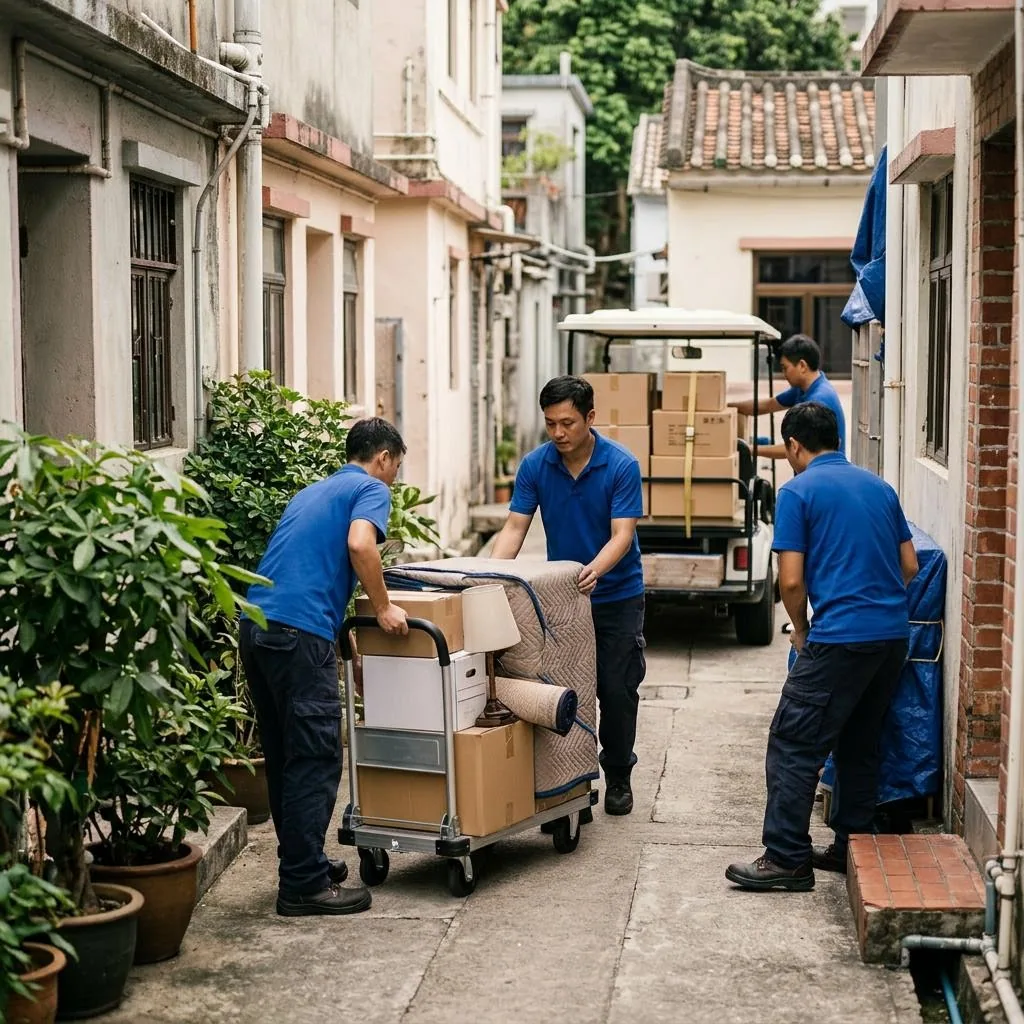
Many New Territories village houses in Hong Kong are served by narrow lanes, slopes, tight turns, or village roads that are simply not suitable for a full-size moving truck. Even when the village entrance looks drivable, stone posts, low gates, parked vehicles, or turning clearance may still block access.
If the move is planned as though it were a normal urban building move, the team may only discover the restriction on arrival. That can lengthen the carrying distance, delay the schedule, and create confusion over what was included in the original arrangement.
What access details to confirm before booking
Before moving day, provide actual photos of the lane, the village entrance, the parking point, any stairs, slopes, turns, and the path from the road to the front door. If larger items are involved, list their dimensions as well, so the plan reflects the real access limits.
It is also wise to recheck the route shortly before the move, especially if weather, road use, or parking conditions may change. The practical question is not only whether a truck can enter, but also where it can stop, how far items must be carried, and whether a shuttle vehicle is needed.
How shuttle transfer usually works
If a large truck cannot enter the village, a common solution is to unload at a nearby stopping point and transfer items by a smaller vehicle or hand truck in stages. This reduces the risk of forcing a large vehicle into a narrow lane and makes the route easier to manage.
A shuttle plan is only useful if the route is safe, workable, and has enough space for loading and unloading. For large furniture, some items may need to be dismantled first; otherwise, forcing them through tight corners can increase the chance of damage or injury.
Practical preparation before moving day
Clear the entrance, stairs, and nearby lane of loose items in advance, and if possible, ask neighbours to temporarily move cars, bicycles, or other obstructions. In a narrow village lane, even small obstacles can slow the transfer and create avoidable friction.
For bulky furniture, remove detachable parts ahead of time and keep screws, shelves, and fittings in labelled bags. Pack cartons evenly rather than overfilling them, because awkward weight distribution makes lane transfers harder. Fragile items should be wrapped separately and clearly marked.
Common mistakes to avoid
A frequent mistake is assuming the team can “figure it out on the day.” If the truck cannot enter and no backup plan exists, the move may be delayed and the workflow disrupted. Another common issue is underestimating the actual carrying distance when there are slopes, stairs, or sharp turns.
People also often fail to state the size of large items or the floor level accurately. That can lead to surprises when a sofa or wardrobe cannot pass a corner. If old furniture is also being removed, it should be arranged separately rather than mixed into the main move without prior notice.
What to check when the team arrives
Once the crew arrives, confirm that the parking point, route, and transfer point match what was previously discussed. Check for temporary road blocks, illegal parking, or any change in lane conditions. If the site is different from what was described, raise it immediately so the plan can be adjusted.
Before loading starts, confirm the item count, carton count, and the dimensions of larger pieces. At the new address, check for scratches, missing parts, or assembly issues right away, and raise any concerns on the spot rather than after everything has been unpacked.
Frequently Asked Questions
What is the usual way to handle a village house when a large truck cannot enter?
The usual approach is to use a nearby stopping point as a transfer hub, then move items in stages with a smaller vehicle or hand truck; bulky items may need dismantling first.
What information should I give when booking a village house move?
Provide photos of the lane, road width, slopes, stairs, turns, parking point, and the dimensions of large furniture so the access plan is realistic.
Will long carrying distance always mean an extra charge?
It depends on the agreed arrangement and actual site conditions. Ask for written confirmation in advance and check Moving house price list for the service basis and any relevant terms.
How can the owner help make the move easier?
Clear the entrance and lane, ask neighbours to move obstructing vehicles if possible, and dismantle or organise large furniture and cartons before moving day.
What should I do if the truck arrives and still cannot enter?
Confirm the nearest workable stopping point and transfer route immediately, then revise the plan based on the site. If the furniture is too large or the route is tighter than expected, ask for a written re-confirmation before proceeding.


