MOVING TIPS & ADVICE
How to Protect Wooden Floors When Moving Heavy Furniture in Hong Kong
Key answers
Before moving heavy furniture, clear dust and grit, prepare proper floor protection, and plan the route. For large sofas, wardrobes, or stairs, assess the weight and space first, then decide whether to bring in experienced movers.
Why Wooden Floors Are Easy to Damage
Hong Kong homes are often compact, so sofas, wardrobes, dining tables, and other bulky items usually need to be turned in tight corridors or moved across narrow doorways. Wooden floors may look smooth, but concentrated weight and tiny bits of grit can quickly leave scratches or dents.
The most common damage is not from one big drag but from repeated small friction points. If you do not clear the route and protect the furniture base before moving, repairs afterward are usually more difficult, and tenants may also face disputes when handing back a flat.
Does the Tennis Ball Trick Really Work?
Putting tennis balls on chair legs can help with light items such as small chairs or side tables, because it reduces direct contact with the floor and makes short moves easier. Still, it is only a low-load, short-distance solution, not a universal fix.
For heavy wardrobes, solid wood tables, thick sofas, or furniture with uneven load distribution, tennis balls can flatten under pressure and lose their protective effect. They may also leave rubber residue or lint behind. Check the item weight, leg shape, and moving distance before using this method.
What to Prepare Before Moving
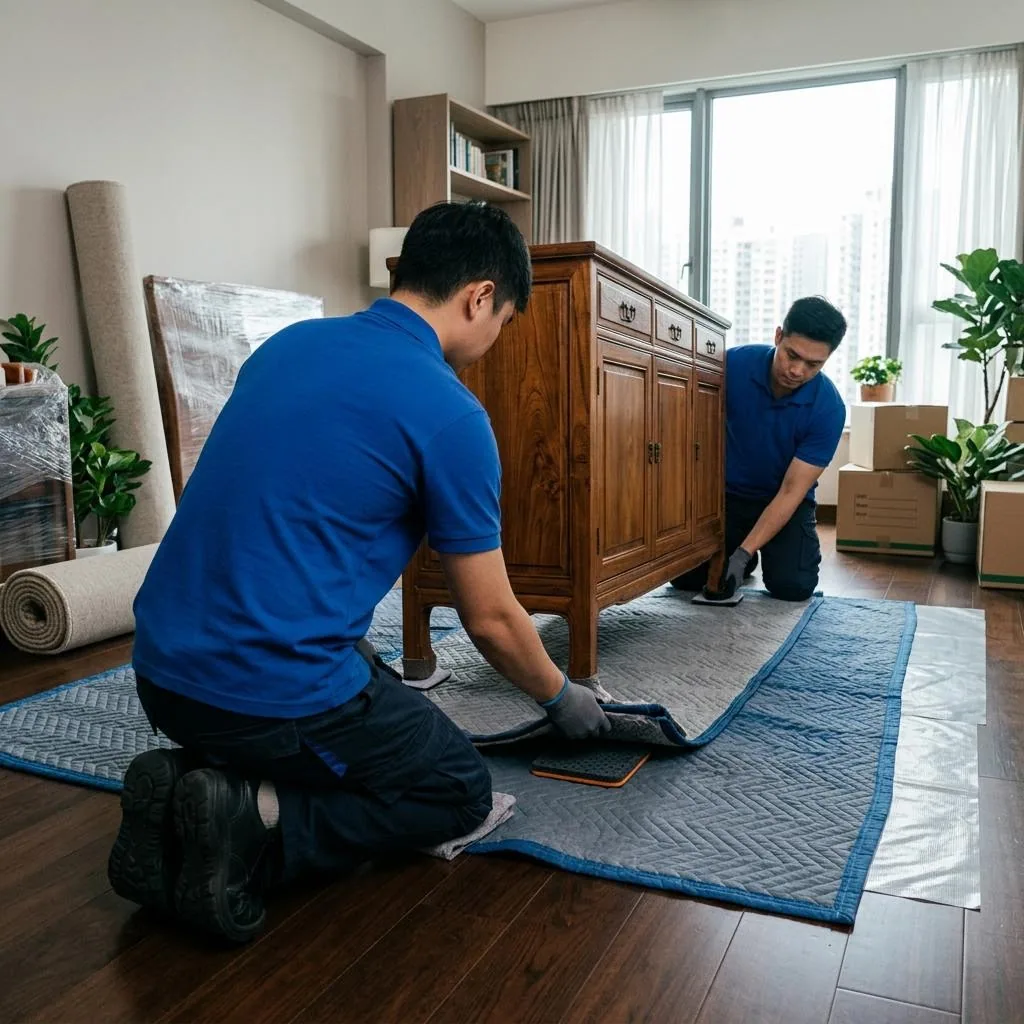
Before any move, clear the route and clean the floor thoroughly, especially near doorways, corners, thresholds, and skirting boards. Then choose protection according to the item: thick blankets, moving sliders, cardboard, or proper anti-scratch pads that support the base instead of letting it drag on the floor.
For short moves, have two or three people work together: one to watch the route, one to control the load, and one to steady the furniture. Measure door frames, corridors, and stair turns in advance. If a piece must be dismantled, carried through a narrow stairwell, or moved around a tight corner, do not force it. Ask experienced movers to assess first.
How to Choose the Right Protection Tools
The key is not using more tools, but matching the tool to the weight, material, and floor condition. Felt pads suit light to medium furniture; sliders are better for larger items that need repositioning; thick blankets can buffer short moves, but they must not slip; cardboard is only for brief use on flat surfaces and has limited support.
If the furniture has pointed feet, a high center of gravity, or an easily scratched finish, do a test push first to see whether the protection shifts, slides, or catches on thresholds. A pad that moves around is almost as risky as no pad at all. Replace any tool that is damp, deformed, or dusty.
Do Not Ignore Thresholds, Stairs, and Arrival Checks
The easiest places to damage a wooden floor are often not the middle of the room but the doorway, turning points, and stair edges. Before moving, check the door swing, threshold height, corridor width, and whether corners or cabinet edges might collide. Add corner guards or clear clutter if needed.
If the item feels too heavy, the angle is too sharp, or the route is too narrow, stop and reset the plan instead of pushing through. After arrival, check the floor immediately for fresh marks, dents, or debris. Clean up grit right away so it does not keep scratching the surface. If the floor structure may be damaged, consult an appropriate floor repair professional.
What to Ask a Mover Before Booking Help
Before booking movers or asking someone to carry heavy items, ask what floor protection they will use, whether they bring their own padding, how they handle stairs, whether walkways need to be cleared in advance, and what they will do if the route turns out to be too narrow on site. These questions help you judge whether they have enough experience to protect wooden floors.
Also provide the floor type, furniture size, estimated weight, and whether the item must pass thresholds or corners. Ask for written confirmation of the moving scope and any precautions. If the job involves electrical disconnection, gas, structural changes, or other specialist work, arrange a qualified professional separately rather than treating it as part of routine moving.
Frequently Asked Questions
Can tennis balls protect every type of wooden floor?
No. They are only suitable for lighter, smaller furniture. Heavy wardrobes, sofas, or high-centre-of-gravity items can flatten them and remove the protection.
What is the most important first step before moving?
Clean the route and the floor first, removing grit, dust, and debris before choosing the right pads and moving method.
What should I do if the furniture has to pass a threshold or stairs?
Measure the space first, check the turns and load points, and stop to change the plan if needed. Do not force the item through and risk damaging both the floor and the furniture.
Can small scratches be fixed at home?
Minor surface scratches can sometimes be handled with suitable repair products, but deeper damage, lifting boards, or wide marks should be assessed by a floor repair professional.
What should I ask movers before they arrive?
Ask whether they bring protective pads, how they handle stairs, whether walkways need to be cleared, what they will do if the route is too narrow, and whether the moving scope can be confirmed in writing.


