MOVING TIPS & ADVICE
A Practical Moving and Storage Plan: From Decluttering to Settling In
Key answers
Start by reducing what you own, measure the new home, then pack by room and label clearly. This guide explains practical moving and storage steps for Hong Kong homes, plus common mistakes to avoid on move-in day.
Sort first and reduce what needs to be moved
The easiest way to avoid moving clutter into a new home is to decide what stays before you start packing. Group items by type, such as clothes, books, kitchenware, files and miscellaneous items, then review each group for use, duplicates and condition.
Broken, expired or long-unused items should be dealt with before moving day. If anything can be donated, recycled or discarded separately, arrange that in advance so you do not end up sorting piles again after arrival.
Measure the new home before you plan storage
Do not rely on rough guesses when planning storage in a new Hong Kong flat, where alcoves, window ledges, narrow passages and irregular walls are common. Measure cupboards, bed spaces, walkways and usable height first, then decide which large pieces are worth keeping.
Assign functions according to daily habits, such as keeping frequently used items near the entrance, cleaning supplies in one place, and seasonal items higher up or deeper in storage. Leaving some spare capacity is more practical than filling every shelf from day one.
Pack by category and label everything clearly
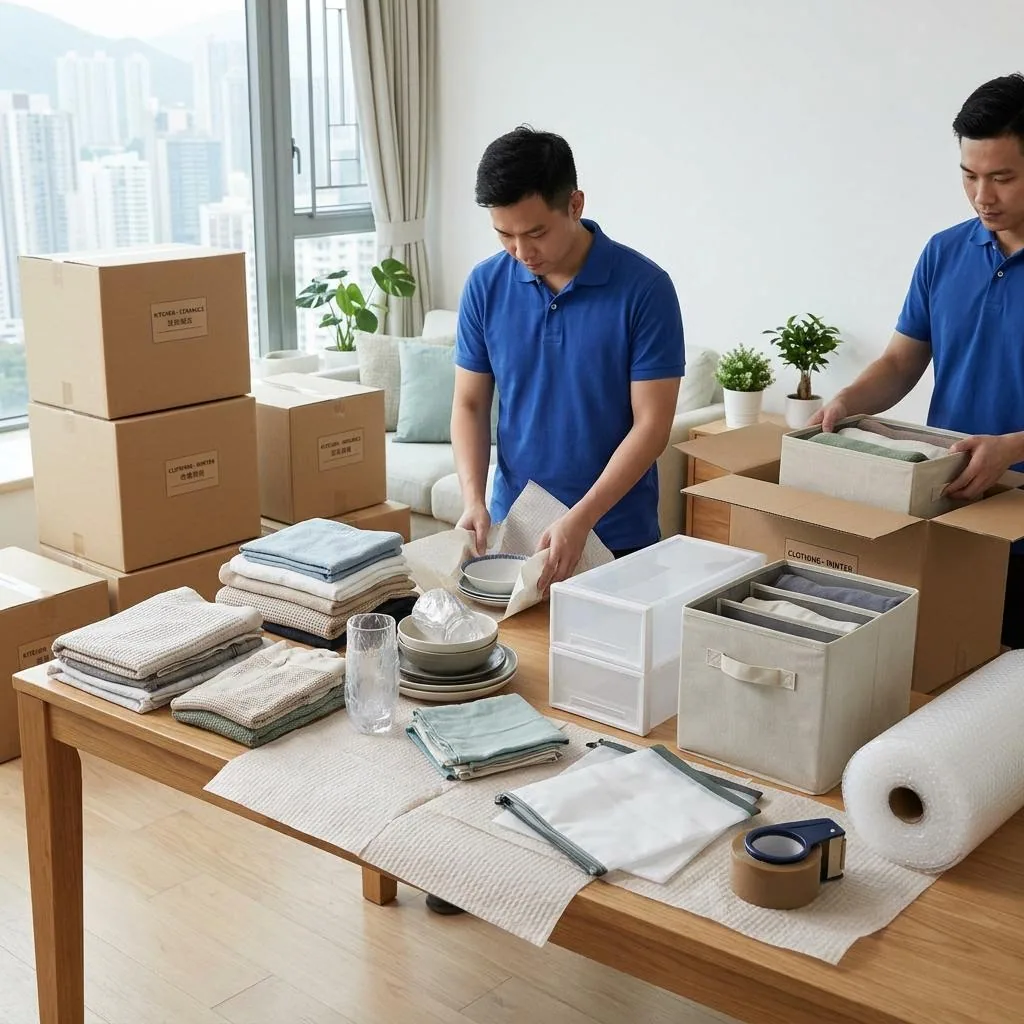
When packing, separate boxes by room and purpose, such as kitchen, bedroom, living room, documents and daily essentials. Fragile items should be wrapped on their own and gaps filled properly, while items needed on the first night should be kept easy to reach.
Label each box on the top and side with its contents, destination room, whether it is fragile, and the intended placement in the new home. If there are multiple boxes in the same category, add numbers and a simple list so unloading and unpacking stay organised.
Use vertical space, but keep safety and function first
In Hong Kong homes, vertical storage is often the best way to free up floor space. Shelves, hooks, under-bed storage, over-door organisers and tall cabinets can all help, but they should not block passageways, sockets, windows or doors.
If you need to install larger shelving or fixed fittings, confirm wall condition, load limits and installation method first, and use qualified professionals for electrical, gas, structural or other specialist work. Storage should be easy to reach, easy to return and easy to clean, otherwise it will only look tidy at first glance.
What to check on move-in day
After arriving, check that boxes and furniture are all there, then handle the basics first: bed, simple cookware, daily essentials and documents. Do not rush to unpack everything at once. Make sure the main path, sleeping area and basic living zones are usable first, then organise the rest step by step.
If you notice damage, missing parts, wrong labels or unsuitable placement, record it immediately and keep photos for follow-up. Any furniture assembly, appliance connection or plumbing issue should be handled by the relevant professionals rather than improvised in a hurry.
When to ask a moving team for help
A moving team is often worth considering when there are many items, narrow stairs, bulky furniture, or a tight deadline. Before booking, ask about the quotation method, stair access, service scope, dismantling needs, placement instructions and whether written confirmation is available.
If you also want help coordinating storage planning, prepare a simple floor plan, the dimensions of main furniture and the priority items that must go in first. For pricing, service scope and terms, please refer to Moving house price list and Service terms; for initial arrangements, you can request a quote or review the related service pages.
Frequently Asked Questions
What is the most useful storage preparation before moving?
Reduce first, then pack. Sort items by category, remove anything broken, expired or long unused, and then plan storage based on the space in the new home. That saves far more time than sorting after move-in.
How should boxes be labelled for easier unpacking?
Each box should show the room, contents, whether it is fragile, and where it should go in the new home. If there are many boxes of the same type, add numbers and a short list.
Should I aim for as much storage as possible in the new home?
Not necessarily. Overfilling storage makes it hard to use. Leave some spare capacity and keep everyday items easy to reach so the system stays workable over time.
What post-move tasks should not be done as DIY?
Do not attempt electrical, gas, structural, medical or other specialist technical work on your own. Those tasks should be handled by qualified professionals.
What should I ask a moving team before booking?
Ask about the quotation method, service scope, stair access, dismantling needs, placement instructions and whether written confirmation can be provided, so expectations are clear before moving day.


