MOVING TIPS & ADVICE
How to Move a Blind Box Figure Display Wall Without Scattering Pieces
Key answers
Before moving a figure display wall, take photos, inventory each piece, pack items one by one, and rebuild the setup in order to reduce scratches, breakage, and missing parts.
Inventory, photos, and numbering before the move
Take clear photos of the full display wall before moving, including the placement, direction, accessories, and base position of each figure. If the collection is large, make a simple list and note which items have fragile paint, thin parts, transparent pieces, or magnetic accessories so they are easier to repack and rebuild later.
Do not leave sorting until the moving day. Small figures are easy to misplace when time is tight. It helps to separate items into three groups: keep in original box, pack individually, and need extra protection. Label each box, bag, and shelf position clearly so you do not waste time searching after arrival.
Remove each figure and protect it individually
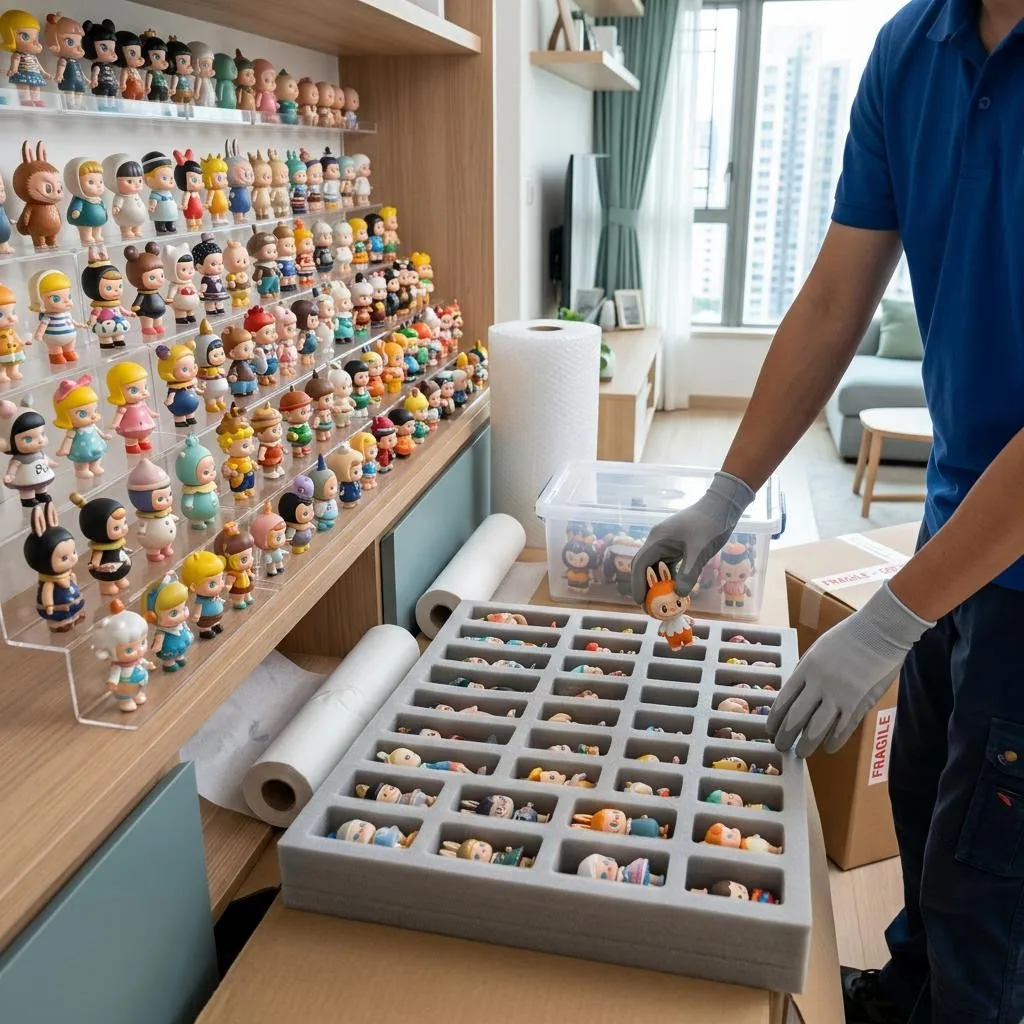
It is better to remove every figure from the cabinet one by one instead of moving the shelf and contents together. If a figure has removable parts, capes, headwear, or small accessories, separate them first and keep them matched with the main body by label. For unstable or delicate figures, use the original box or soft padding to keep them from shifting.
Use soft, non-flaking materials such as pearl cotton, thin bubble wrap, or clean paper for wrapping. Then secure the outer layer gently with a bag or film. The goal is to prevent rubbing, not to squeeze the item tightly. Do not mix figures of different sizes or materials in one bag, and do not put sticky tape directly on painted surfaces or clear parts.
Use divided cartons and fill all gaps
Choose cartons that are strong and close to the right size. Line the bottom with cushioning, then divide the space with cardboard inserts, hard card, or original separators. Stand figures upright where possible, place heavier or taller ones lower, and fill each gap with soft cloth, paper, or air cushions so the contents do not move during transport.
Mark the outside of each carton with its contents, fragile notice, this side up, and the destination room. If the collection is large, use more boxes rather than overpacking one. A box that is too full is harder to seal and more likely to deform when carried on stairs or loaded onto a truck, which can put pressure on the figures at the bottom.
Handle acrylic walls, cabinets, and shelves separately
The display cabinet or acrylic shelving should also be handled separately. First clear out all items, then remove movable shelves, doors, drawers, or clips and wrap them on their own. If the cabinet includes glass, thin panels, or custom structure, check whether it can be safely dismantled. If you are not sure, leave it to a suitable professional instead of forcing it apart.
Protect the outer edges with cardboard or blankets to reduce scratches. During loading, keep the cabinet in a stable position and avoid placing heavy items on top of it, stacking things over it, or leaving it near the edge of the vehicle. For long display walls, modular cabinets, or wall-fixed parts, note the screw and accessory positions before dismantling so they can be rebuilt correctly in the new home.
Rebuild in the new home and control the environment
After arriving, rebuild the display wall according to the photos and list, then return the figures in order, starting with larger items and then smaller details. If you find cracks, loosened parts, or deformation in the boxes, clear pieces, or bases, stop and inspect before forcing them back into place.
Choose a spot away from direct sunlight, air conditioner outlets, damp walls, and high-traffic areas. Wipe the cabinet inside and out before placing items back. In Hong Kong’s humid climate, keeping the collection too close to a wall or in a stuffy, warm corner can increase dust buildup, yellowing, and moisture-related damage.
When to call a mover, and what to ask first
If the collection is large, the display wall is complex, or you have many limited, fragile, or high-value figures, it is safer to explain the collection in advance and ask the moving company to confirm the service scope in writing. For glass, electrical parts, fixed wall structures, custom cabinets, and other specialist tasks, use a qualified professional rather than taking risks yourself.
Ask practical questions such as whether they can suggest divided packing for small collectibles, whether they can help dismantle cabinet parts, how they protect cartons on stairs, and whether you need to prepare photos and a count before they arrive. Keep your own checklist and inspect the count and condition immediately after delivery before deciding whether to buy more storage boxes, labels, or shelves.
Frequently Asked Questions
What is the most important first step when moving a blind box figure display wall?
Take photos, count everything, and number each item so you know where each figure, accessory, and fragile part belongs before packing starts.
Can figures be moved together with the display cabinet?
Usually no. It is safer to remove each figure first, then handle the cabinet, shelves, and panels separately to reduce impact and pressure damage.
What should I avoid when packing blind box figures?
Avoid mixing different items in one bag, avoid sticky tape directly on painted or clear surfaces, and avoid leaving too much empty space that allows the figures to rub against each other.
What should I check first after the display cabinet reaches the new home?
Check for cracks, loose parts, or bending before rebuilding. If it is a fixed wall frame or complex structure, arrange suitable professional help for installation.
When should I consider hiring a moving company?
When the collection is large, delicate, or difficult to carry, or the route is complicated, a mover with relevant experience is usually the safer choice. Ask for written confirmation of the service details first.


