MOVING TIPS & ADVICE
Decluttered Moving: Reduce, Sort, and Re-plan Your New Home First
Key answers
Decluttered moving is more than transporting everything as-is. It starts with reducing excess, sorting by use, labeling clearly, and planning where items will live in the new home so unpacking is faster and storage stays tidy.
Start by reducing what you bring into the new home
The most important step before a move is to review every item and decide whether it still has real use, repeats something you already own, or is kept only for sentiment. If something has not been used for a long time, is damaged, expired, or clearly has no place in the new home, it is better to deal with it before packing. Otherwise, you simply carry old clutter into a new address.
A practical way is to sort everything into four groups: keep, donate, recycle, and discard. Work room by room so the process stays manageable instead of becoming a last-minute decision. For large furniture, electronics, hazardous items, medicines, chemicals, or anything that cannot be casually thrown away, check the proper handling method first and, where needed, use the relevant professional or authorised disposal channel.
Plan packing around the layout and daily flow of the new home
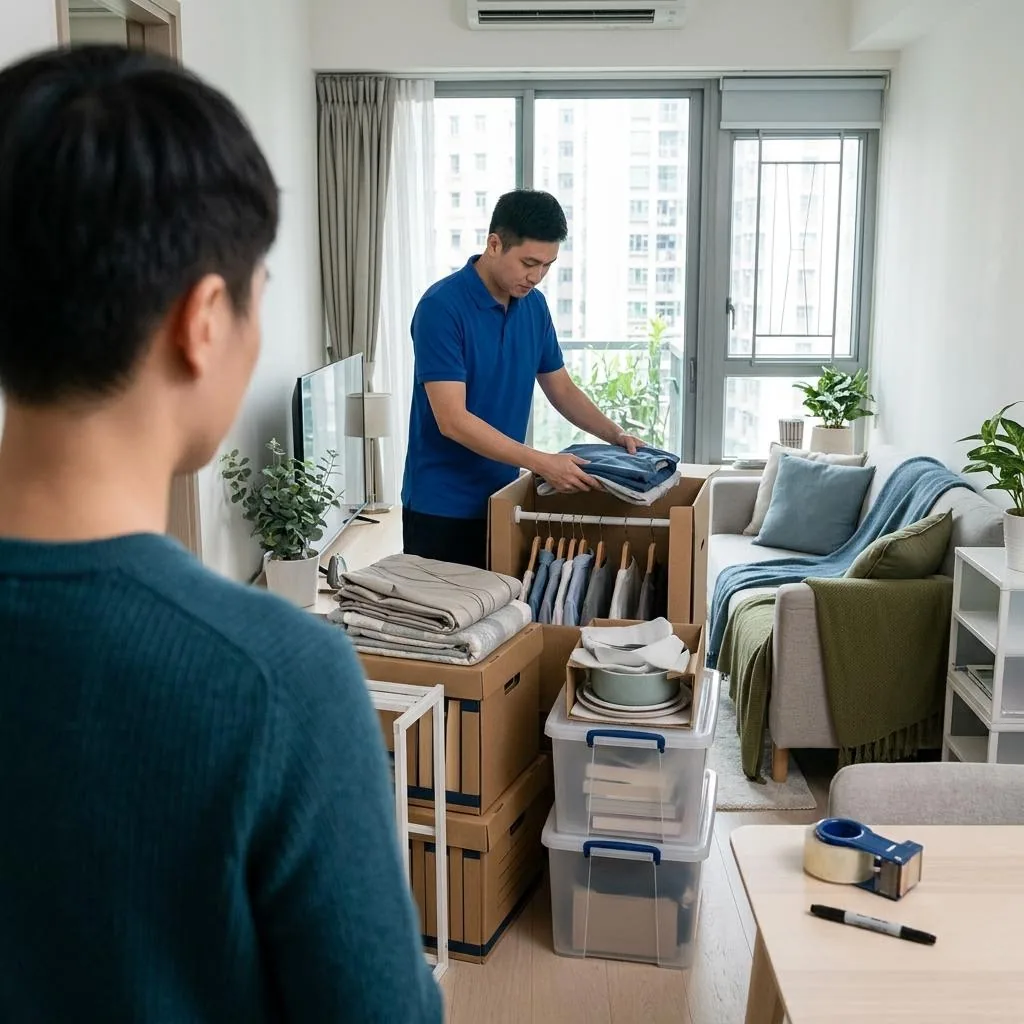
Decluttered moving is not just about packing by category; it is about packing for how the new home will actually be used. Frequently used daily items, cooking tools, cleaning supplies, and documents should be packed separately, with a clear idea of where each group will go after arrival. That reduces the need to reopen boxes repeatedly after moving day.
If the new home is compact, measure large furniture, door frames, corridors, and lift access in advance to see whether items need to be dismantled, repositioned, or delivered first and sorted later. When speaking with a mover, ask for written confirmation of what must be disassembled, what cannot be moved, and how much access or parking space is required, so there are no last-minute surprises on the day.
Use labels and lists so unpacking is faster
Every box should clearly show the room name, contents type, whether it is fragile, and whether it needs to be opened first. If you have many boxes, add numbers and a short contents note, such as "living room 01: books, chargers, remote controls", so you can prioritise the most urgent boxes after arrival.
Keep a separate bag or box for first-day essentials, including water, basic tableware, towels, common medicines, chargers, cleaning supplies, and important documents. These should not be buried inside large boxes, or you will waste time looking for them when you need them most. Labels are best written on both the side and the top of each box so they remain readable when stacked.
Leave space first, then build storage upward and downward
Before moving in, decide which areas must stay clear for circulation and which can become storage zones. In Hong Kong homes, if every corner is filled from the start, the space can feel crowded again very quickly. Leaving some empty space makes it easier to adjust later and prevents the home from feeling visually heavy.
For storage, place everyday items at easy-reach height and keep seasonal items higher up or lower down. If you plan to add shelving, hanging storage, or custom cabinets, confirm wall strength, socket positions, and door opening clearance first. Any electrical work, fixed installation, or wall modification should be handled by a qualified professional, not improvised on your own.
Good moving-day execution decides whether the storage plan works
Even with careful preparation, boxes can become disordered again if moving day has no clear sequence. A sensible order is to place large furniture first, then position beds, tables, and essential storage units, and only then handle smaller boxes. This keeps the living room from turning into a temporary storage room on day one.
On-site, count the boxes and furniture pieces, and check for any visible damage before the job is wrapped up. If anything is wrong, record it and raise it immediately while the handover is still happening. For buildings with lift limits, stairs, parking restrictions, or special access such as village houses or tong lau, confirm the arrangement before moving day. Decluttered moving depends on items being placed where agreed, not just unloaded at the door.
Finish with a one-week adjustment phase to prevent clutter from returning
Do not force everything into cabinets on the first day. Put away the most frequently used items first, then sort the less-used and seasonal items gradually. If any storage location feels hard to reach or awkward to use, adjust it early instead of letting it become a new clutter spot.
In the first week after moving, do a second round of sorting: recycle empty boxes, deal with packing materials, and review anything that has not been used. Confirm that every area has a clear purpose. If many items still have nowhere to go, that usually means the pre-move reduction was not enough or the storage plan does not match real life. In that case, revise the layout rather than stacking things indefinitely.
Frequently Asked Questions
What is the difference between decluttered moving and ordinary moving?
Ordinary moving focuses on transporting items to a new address. Decluttered moving also includes reducing excess, sorting, packing by use, and planning where things will live after arrival, so the new home becomes organised faster.
Do I have to throw away everything before moving?
No. The goal is selective reduction. Keep items with real use or value, and remove duplicates, damaged items, expired goods, or things you no longer need. Retain sentimental items only if you already know where they will fit in the new home.
How should I label boxes for practical unpacking?
Write the room, contents category, and whether the box is fragile. If there are many boxes, add a number and a short contents note. Place labels on the side and the top so they stay visible when stacked.
How should I plan storage for a very small home?
Measure furniture and access points first, then decide what must stay, what can be delayed, and what can be removed. Keep daily items within easy reach, store seasonal items higher or lower, and leave some open space for movement.
What should I check on moving day?
Check the box count, furniture count, any visible damage, and whether items are placed in the correct rooms. Also confirm that lift, stair, parking, and access arrangements are being followed as planned.


