MOVING TIPS & ADVICE
How to Move Large Furniture Safely: A Practical Guide for Heavy Household Items
Key answers
Before moving bulky furniture, check whether it can be disassembled, measure the route, protect corners and surfaces, and plan for tight turns. If an item is too heavy, too large, or structurally complex, assess the risks first and decide whether to use a suitable moving team.
Check whether the item can be disassembled
The first step with large furniture is to understand its structure. Many beds, modular cabinets, desks, dining tables, and sofa legs can be partially removed, which reduces both weight and bulk. Before moving day, take photos so you can rebuild it later, and keep screws, brackets, and fittings together by furniture item so they are not lost at the new place.
If doors, drawers, glass shelves, or moving parts cannot be removed, secure them so they do not shift during transport. Follow the maker's instructions where available, and do not force a part apart if you are unsure. Improper dismantling can damage particle board, strip screw holes, or make reassembly harder.
Protect corners and surfaces to reduce damage
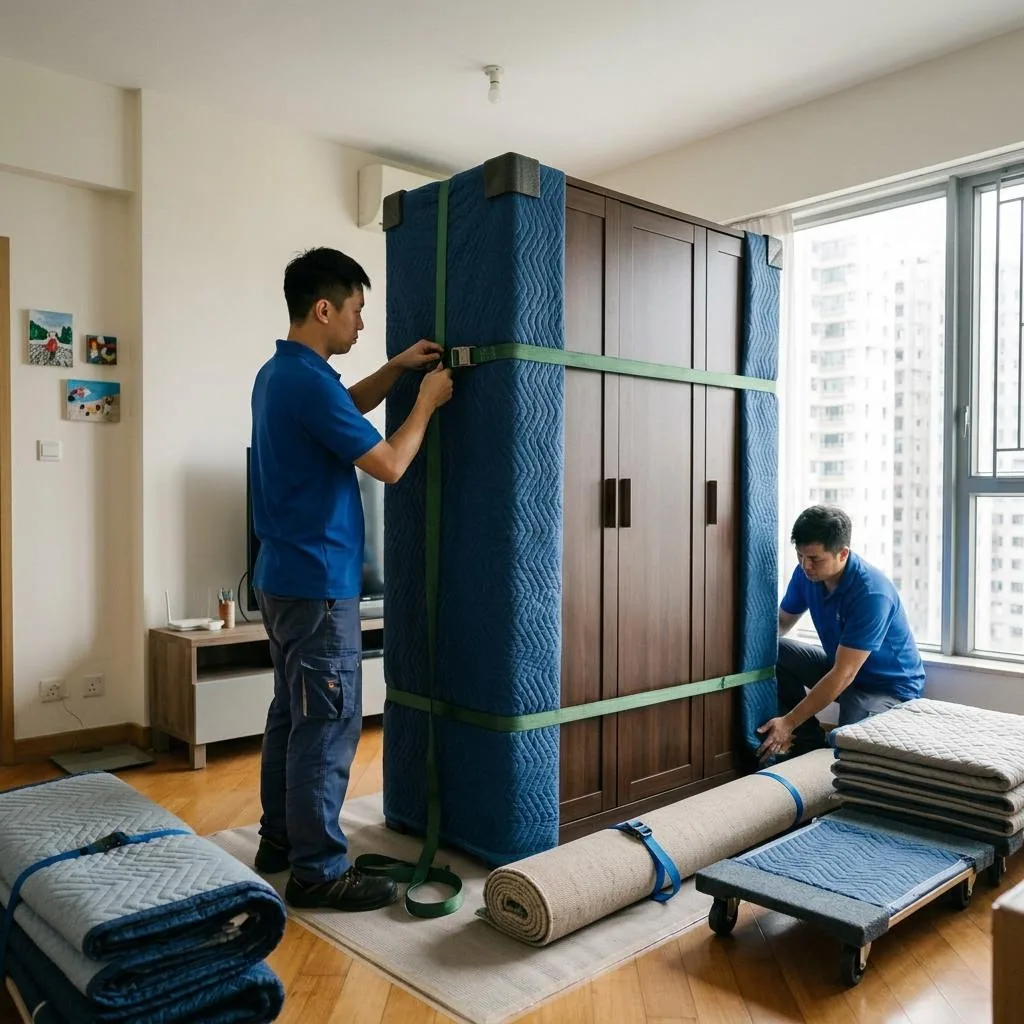
The most common damage during a move is often not a full breakage, but scratches on walls, door frames, floors, or chipped furniture edges. Wrap vulnerable areas with blankets, cardboard, foam, or stretch film, especially wooden corners, glass panels, mirrors, and leather surfaces, to add cushioning and reduce abrasion.
Packing should not be too loose or too tight. A loose wrap can slip, while an overly tight wrap can make handling awkward. A practical approach is to protect the high-impact areas first, then secure the outer layer so the grips, handles, and load points remain usable. If the furniture already has cracks, wobble, or loose panels, assess whether repair is needed before moving.
Measure the route before you start
Many large items get stuck not because they are too heavy, but because the route is too tight. Before moving, measure the furniture's length, width, and height, then compare those figures with the doorways, corridor width, stair turns, lift opening, and entrance space at both properties. This helps you confirm whether the item can be turned and carried through safely.
If the path is narrow, clear shoes, mats, decorations, loose objects, and anything that could trip someone or block a corner. Also check for slippery floors or door hinges that may catch on walls. On moving day, confirm access, loading arrangements, and any lift booking or building rules with the management office or landlord in advance to avoid last-minute changes.
Use the right posture and tools to share the load
Lifting heavy furniture by hand can strain the back, knees, and shoulders. A safer approach is to use a hand truck, furniture sliders, lifting straps, or a multi-person carry plan so the weight is shared more evenly. For long or awkward items, agree on simple commands before lifting, turning, and setting the item down, so everyone moves together.
When lifting, bend your knees, brace your core, and keep your back in a natural position rather than bending from the waist. If you cannot get a secure grip, your view is blocked, or your footing feels unstable, stop and reset. Any task involving electrical connection work, gas lines, fixed mounts, or wall installation should be handled by licensed professionals; do not try to improvise.
Protect both homes and inspect on arrival
Before moving furniture out, place protective pads or blankets on floors, wall corners, and door frames, especially on wood floors, stone surfaces, and recently renovated walls. After the move, inspect the item immediately for scratches, dents, loose fittings, or warped panels, and take photos at once so you have a record for reference.
At the new home, avoid rushing to reassemble everything all at once. Position the furniture in the right room first, then check whether the doors open fully, drawers slide smoothly, and the unit sits level. If the size does not fit as expected, adjust the placement first and only then consider a different assembly approach.
When it makes sense to use a moving team
If the item is a solid wood cabinet, an extra-long dining table, a large sofa, a walk-up building without a lift, or furniture that is already worn and fragile, the risks of moving it yourself can rise quickly. In that case, instead of forcing the move, compare the route, item size, and manpower needed before deciding whether to use a suitable moving team.
When speaking to a mover, ask whether they will assess the route in advance, how they handle dismantling and wrapping, what happens if the item gets stuck, whether you need to provide photos and measurements, and whether there are stair, parking, or time restrictions. Ask for written confirmation of the service scope and arrangement details. For current pricing and terms, please refer to Moving house price list and Service terms.
Frequently Asked Questions
What should I prepare first before moving large furniture?
Measure the furniture and the route first, confirm that doorways, corridors, stair turns, and the lift can fit the item, then decide whether it needs dismantling, wrapping, and a cleared path.
Should every large piece be taken apart before moving?
Not necessarily. Remove only the parts that can be safely detached. If dismantling risks damaging the structure, keep it intact and protect it instead. When in doubt, follow the original design or maker's instructions.
How can I avoid scratching walls and floors?
Wrap edges with blankets, cardboard, or foam, protect door frames and corners with pads, and move slowly through turns instead of forcing the item through.
What should I do if the furniture gets stuck in a doorway or corridor?
Stop forcing it, recheck the angle and available space, and consider dismantling or using another route. If it still cannot pass safely, bring in an experienced moving team.
When should a professional handle the item instead of me?
Anything involving electrical work, gas lines, fixed installations, wall drilling, structural damage, or extremely heavy items should be handled by qualified professionals, not by DIY methods.


