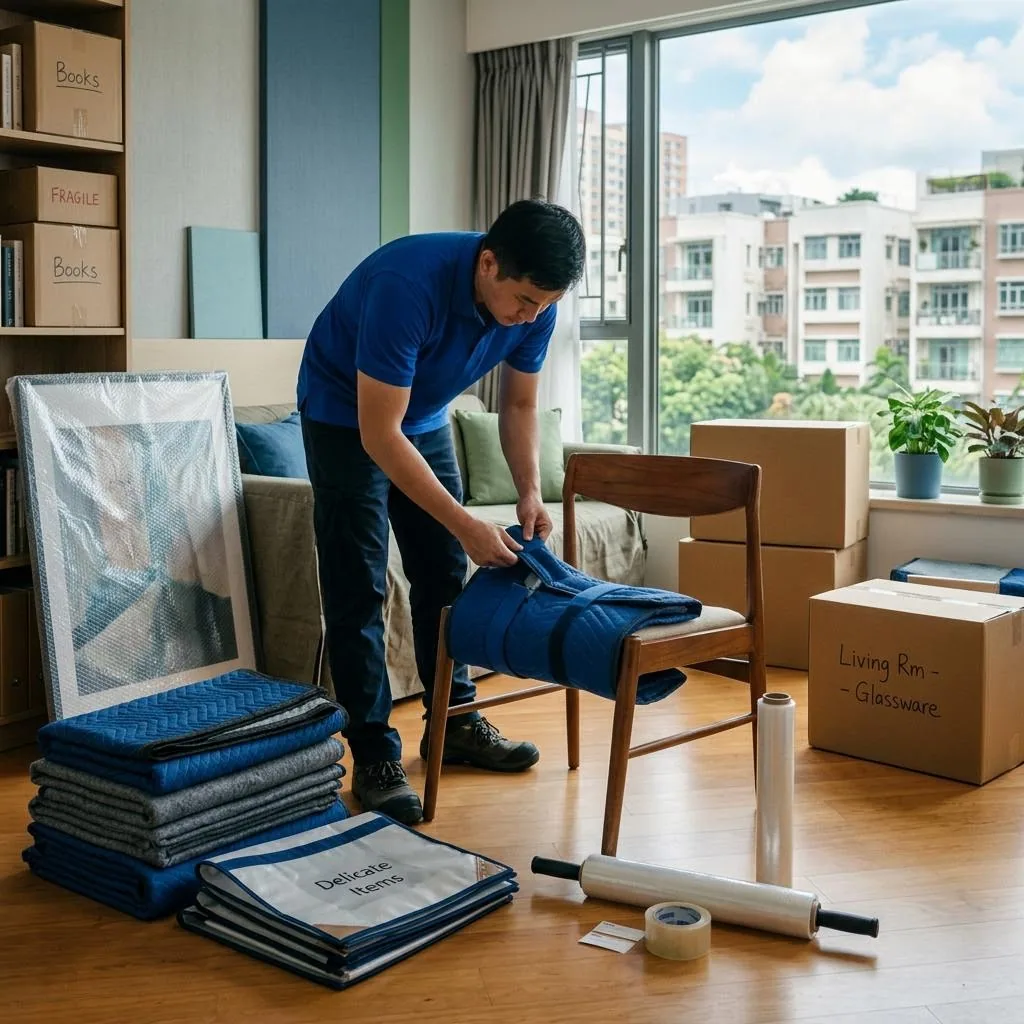
MOVING TIPS & ADVICE
How to Improve Moving Efficiency with a Professional Moving Service
Key answers
To move faster, focus on preparation: sort items, confirm building rules, pack by category, and coordinate access in advance. A professional mover helps with workflow, but you still need a clear inventory, proper timing, and written confirmation of key arrangements.
Clarify the scope before moving day
In Hong Kong, a move becomes efficient not because people rush, but because the plan is clear. First decide whether it is a home move, an office move, or a short local relocation, then separate items into three groups: take, discard, and store. If you have wardrobes, bed frames, glass tops, or large appliances, check the dimensions, lift size, stair turns, and door widths in advance to avoid delays on the day.
It is also important to understand building rules early, such as security check-in, lift booking, permitted moving hours, and whether night or holiday moves are restricted. For walk-up buildings, narrow stairs and limited loading space can slow everything down. Share the address, floor level, unit layout, parking access, and walking distance in one message, and ask for written confirmation of the key arrangements.
Use an inventory to speed up coordination
One of the biggest benefits of a professional mover is turning a scattered task into a managed workflow. Before the move, make a room-by-room list and mark fragile items, heavy items, daily-use items, and non-urgent items. Use the same labeling style on every box, such as "Bedroom - winter clothes" or "Kitchen - cups and plates", so loading, unloading, and unpacking become much easier to check.
The inventory also helps with priority planning. Pack documents, medicines, chargers, toiletries, and first-night essentials separately, and keep valuables, IDs, keys, and cash with you instead of mixing them into large boxes. If furniture needs dismantling, note where the screws and parts bag should be kept. If you are using your own cartons or padding, assign each material a clear purpose so nothing gets lost halfway through.
Good packing makes the move faster
Packing quality has a direct effect on moving efficiency. Fragile items should be divided into appropriately sized cartons, with empty space filled so they do not shift inside the box. Avoid overloading cartons with books or mixed heavy items, as that can cause the bottom to give way and may create a lifting risk. Liquids, cleaning products, sharp objects, and batteries should be packed separately to reduce leakage or impact damage.
Clothes, bedding, toys, and documents should be grouped by function instead of being scattered across many boxes. If you want to use a mover's packing service, ask in advance what packing materials are included, which items should not be handled as ordinary packed goods, and whether you need to sort items yourself first. Do not leave important documents, fragile collectibles, or highly valuable items entirely to last-minute packing; verify and keep a record yourself.
How to coordinate efficiently on moving day
The most common cause of delay on moving day is starting to search, clear space, or dismantle furniture only after the team arrives. A better approach is to clear the corridor, doorway, lift lobby, and parking area in advance, and leave enough space for cartons and furniture. If you live in a high-rise or walk-up building, notify management and neighbours early to avoid congestion.
When the team arrives, have one person handle all communication and confirm what should go first, what must stay, and what needs extra protection. Before loading, quickly count the cartons and large furniture pieces; after unloading, inspect for obvious damage, missing items, or incorrect placement. If there is any mismatch in route, floor level, or unit details, correct it immediately rather than waiting until the end.
How to choose the right moving team
When choosing a moving company, do not rely only on slogans. Check whether the service scope, moving arrangement, packing requirements, and extra charge conditions are clearly stated. Ask whether they handle home moves, office relocations, single-item transport, or buildings with lift restrictions, and request written replies about stair carries, waiting time, dismantling needs, and arrangements for distant areas.
Also pay attention to how specific the communication is. Do they ask about the unit layout, floor level, vehicle access, parking restrictions, and lift timing? Do they offer a pre-move checklist, and do they remind you which tasks should be handled by qualified professionals, such as electrical work, gas work, structural changes, data recovery, or medical equipment installation? These questions matter more than simply having more hands on site.
Check and organise after the move
A move is not finished once the truck leaves. Final checking is still important. Count boxes, furniture pieces, and key items room by room, inspect door frames, corners, floors, and lift paths for new scratches, and place first-day essentials where they are easy to reach. If furniture was dismantled, make sure the parts bag is complete so nothing goes missing later.
When unpacking, do not rush to open every box at once. Start with the kitchen, bathroom, and bedroom, since these are used daily. If some items still need to be moved, discarded, or stored, separate them early so the new place does not become cluttered again. The most practical way to make future moves faster is to keep the checklist, label system, and communication notes from this move for next time.
Frequently Asked Questions
What improves moving efficiency the most before moving day?
A clear inventory plus early confirmation of building rules, route access, floor level, and lift booking. The more complete the information, the fewer last-minute changes you face.
Why should first-night essentials be packed separately?
Because you may not unpack everything immediately after arrival. Keeping IDs, chargers, toiletries, and a basic change of clothes separate prevents unnecessary searching at the new home.
Will the moving company pack everything for me?
Not always. Ask what the packing service includes, what materials are provided, and which items you need to sort yourself. Valuable, fragile, or sensitive items should be checked and recorded by you first.
How can I avoid delays on moving day?
Clear corridors, book the lift, notify management and neighbours early, and assign one person to handle communication. That usually reduces confusion the most.
What should I check after the move?
Count boxes and furniture, check parts bags, inspect walls and corners for damage, and confirm that all important items have arrived. Report any issue immediately and ask for written confirmation.


