MOVING TIPS & ADVICE
How to Pack Household Items Well: A Practical Pre-Move Guide
Key answers
Sort first, pack by room, use the right boxes and labels, and keep an essentials box separate to reduce damage, confusion, and last-minute searching.
Set the packing plan before you start boxing
Before packing, list what you have and sort everything into keep, give away, discard, and store. This keeps unnecessary items out of the move and makes it easier to decide what must go with you now and what can wait. If your move date is tight or your items will be moved in stages, separate daily essentials from anything that can be packed later.
A good starting point is low-use items such as seasonal clothing, books, decor, and spare appliance parts. Packing these first reduces pressure and helps you notice which items need extra protection, and which should be handled separately by qualified professionals if they involve electrical, gas, medical, structural, or other specialist work.
Prepare the right materials, not random substitutes
Common packing supplies include boxes in different sizes, sealing tape, bubble wrap, clean packing paper, stretch wrap, scissors, a thick marker, and labels. Do not use oversized boxes for heavy loads, because they become hard to carry and more likely to split; small boxes are better for books, dishes, and dense items, while larger ones suit light clothing or bedding.
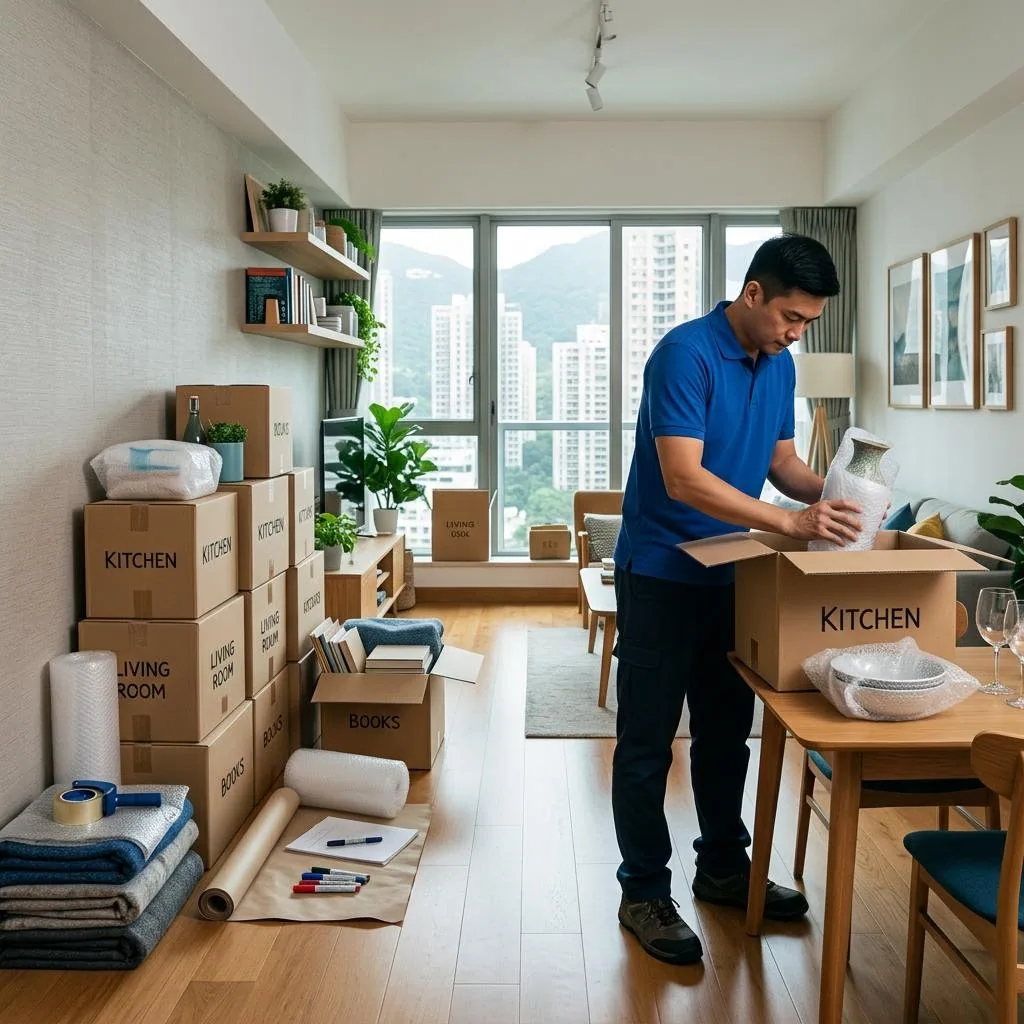
Fragile items should be wrapped individually, then cushioned so they do not move inside the box. Newspaper can be used as a temporary filler, but for white or easily marked items, place clean paper between surfaces to avoid ink transfer or debris. Glassware, ceramics, and framed items should be clearly marked on both the inside list and the outside of the box.
Pack by room and by item type
The most practical method is to pack room by room, such as kitchen, bedroom, living room, and study, and then group similar items inside each room. Keep one box for one type of item where possible, for example dishes, books, documents, or clothing. Mixing unrelated items makes unpacking slower and increases the chance of losing small things.
Put heavier items at the bottom and lighter items on top, then fill empty spaces with soft materials so contents do not shift. For small items, first sort them into bags or small containers before placing them in a larger box. If you still have original packaging for appliances or decor, keep it when practical, but only if the inner protection is still adequate.
Keep fragile, valuable, and special items separate
Wine glasses, bowls, mirrors, photo frames, and ceramics should be wrapped one by one and packed upright where possible. Mark these boxes as fragile and indicate which side should face up. Valuable documents, identity papers, jewelry, cash, and important data should not go into ordinary moving boxes; keep them with you or in a place you can access immediately.
If your move involves large appliances, gas-related items, fixed cabinets, wall-mounted fixtures, medical devices, or other specialist items, check with qualified technicians first and do not try to remove or reconnect them yourself. A mover may handle general packing and transport, but you should ask in advance what is included and request written confirmation for any item that may need special handling.
Label well and prepare one first-day box
Every box should show the room name, a short contents note, and a priority tag such as bedroom, bedding, or daily use. If a room has multiple boxes, add numbering like 1 of 4 and 2 of 4 so you can check quickly whether anything is missing after arrival. If some boxes will go into storage, add clear notes such as storage, immediate use, or pending sorting.
Prepare one essentials box or carry bag with phone chargers, a few clothes, medicines, cleaning items, a towel, basic tableware, and copies of key documents. Open this box first at the new home. It saves time, helps you settle faster, and keeps you from searching through every carton when you are already tired.
Check again before departure and after arrival
Before leaving, check each box for secure sealing, clear labels, proper cushioning, and weight that is spread out sensibly. After arrival, confirm the number of boxes roughly matches what was moved, place them by room, and unpack the essentials box first. Decorative items, books, and storage cartons can wait until the most urgent areas are set up.
If you want a mover to help with packing, ask in advance whether packing materials are included, what items are covered, whether stairs or narrow access affect the plan, and which items must be handled by you. Pricing, terms, and responsibility limits should be confirmed in writing before you book, so there is no dispute halfway through the move.
Frequently Asked Questions
What should I sort out first before packing for a move?
Start by separating everything into keep, give away, discard, and store, then pack low-use items first so the move stays organized and you avoid packing things you do not need.
How do I choose the right box sizes?
Use smaller boxes for heavy items like books or dishes, and larger boxes only for light items. Do not overfill boxes, because they become harder to carry and easier to damage.
What is the safest way to pack fragile items?
Wrap each item separately, cushion the gaps, and keep fragile pieces upright where possible. Mark the box clearly as fragile and note the correct side up.
Which items should not go into ordinary boxes?
Keep identity papers, cash, jewelry, important documents, and regularly needed chargers separate, either with you or in an easy-to-reach place.
What should I ask a mover before paying for packing help?
Ask what materials are included, what items they can and cannot handle, whether stairs or access limits apply, and request written confirmation of the scope before booking.


