MOVING TIPS & ADVICE
How to Understand Staircase Moving Charges
Key answers
Staircase moving charges usually depend on floor level, walking distance, item size and weight, and site restrictions. Check whether the quote explains the calculation, exceptions, and extra fees in writing before moving day to avoid disputes.
What staircase charges mean
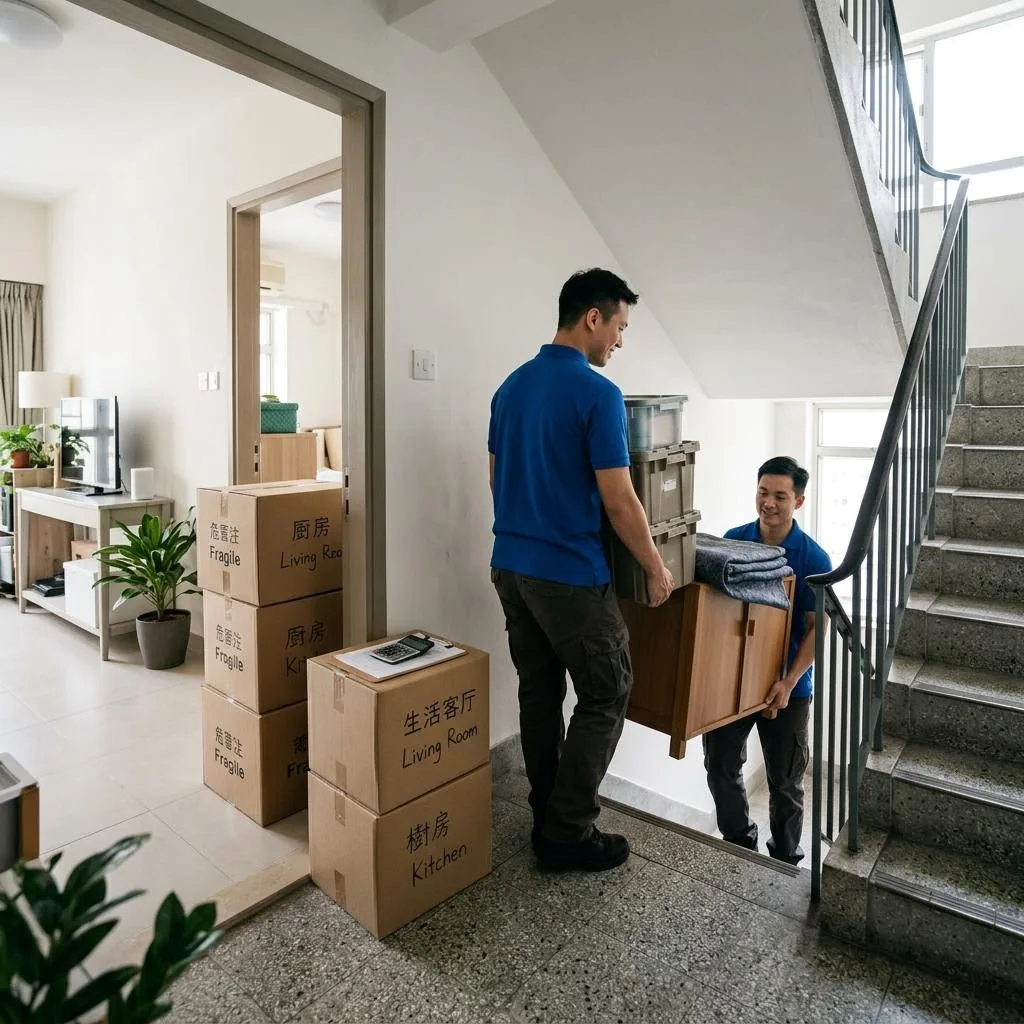
A staircase charge is an extra fee added when movers must carry items up or down stairs instead of using a lift. In Hong Kong, this often applies to tong lau, village houses, older buildings, or blocks where the lift is out of service. It is not a fee every move will necessarily include.
When you read this charge, do not focus only on the amount per floor. Ask which floor the count starts from, whether the charge is one-way or round-trip, whether half-floors or landings count, and how steps with platforms or turns are treated.
What affects the calculation
Common factors include the number of floors, the actual number of steps, narrow turns, tight corridors, platform transfers, and whether large furniture can turn safely. If the loading bay or parking spot is far from the building entrance, the extra walking distance may also increase the cost of labor.
Item size and weight matter as well. Large items such as refrigerators, sofas, wardrobes, mattresses, stone tables, and safes usually take more time and manpower than standard boxes. If dismantling or protective wrapping is needed, that should be discussed before the quote is confirmed.
Common ways movers quote it
Staircase charges are often written in one of three ways: a fixed add-on per floor, a charge based on a defined stair range, or an extra percentage listed alongside the main moving fee. The wording varies, but the key is that the terms must be specific and not left as vague phrases such as "to be arranged".
Ask the mover to state the starting point, the charging unit, whether up and down are billed separately, how extra work beyond the estimate is handled, and whether the mover will notify you before continuing if the actual site conditions differ from the quote.
How to prepare before moving day
Before requesting a quote, provide the floor level, lift availability, building type, moving route, parking distance, and a list of large items. Photos or a short video help the mover assess stair width, corners, door frames, and ceiling height, which reduces the chance of surprise charges or items that cannot be moved safely.
On moving day, clear the walkway, pack loose parts, remove fragile decorations, and label heavy or fragile boxes. If an item needs special handling, ask in advance whether you must dismantle it first or prepare extra wrapping yourself, and confirm which tasks are outside the mover's scope.
How to compare different quotes
Do not compare only the final total. Check whether the quote already includes staircase charges, walking distance, waiting time, evening or holiday arrangements, separate up-and-down billing, and any minimum charge. A single lump sum without detail makes later disputes much harder to settle.
The most practical approach is to request written confirmation of the known conditions, the situations that may trigger extra fees, and what the mover needs you to clarify in advance. If you are unsure about any item, ask for a written reply and keep the messages together with the quote.
What to check when the team arrives
When the team arrives, verify the unit, floor, route, and item count against the quote. Point out any changes immediately, such as a blocked road, a lift failure, or a longer stair route. If the mover wants to revise the fee, ask for the reason, the calculation method, and the exact part of the job affected before agreeing.
If there is a dispute about staircase charges, refer to the quote and your written messages first, and ask the mover to explain the calculation before work starts. Any electrical, gas, structural, lift, or other specialist technical issue should be handled by qualified professionals, not by forcing a move or dismantling something yourself.
Frequently Asked Questions
What is a staircase moving charge usually based on?
It is usually based on floor level, stair count, walking distance, item size and weight, and site difficulty. Some movers quote it as a per-floor add-on, while others bundle it into an extra charge. Check the written calculation first.
Will a staircase charge apply if there is a lift?
Usually only if the lift cannot be used, the item will not fit, or stairs are needed for part of the route. Whether it applies depends on the actual route and the written quote.
Do tong lau or village houses always have staircase charges?
Not always, but they are more likely to need one because they may have no lift, narrower stairs, or a longer carrying route. Provide the exact floor and route details before quoting so the mover can confirm in advance.
How can I avoid surprise charges on moving day?
Give accurate details in advance, including floor level, item list, photos, and parking distance, and ask for a written quote that states how staircase fees are calculated. If conditions change on site, get confirmation before proceeding.
What should I do if an extra fee is unclear?
Ask for a written explanation of the reason, the calculation method, and when it applies, and keep the quote and message record. If the issue involves technical or safety risks, do not force the move; use a qualified professional instead.


