MOVING GUIDE
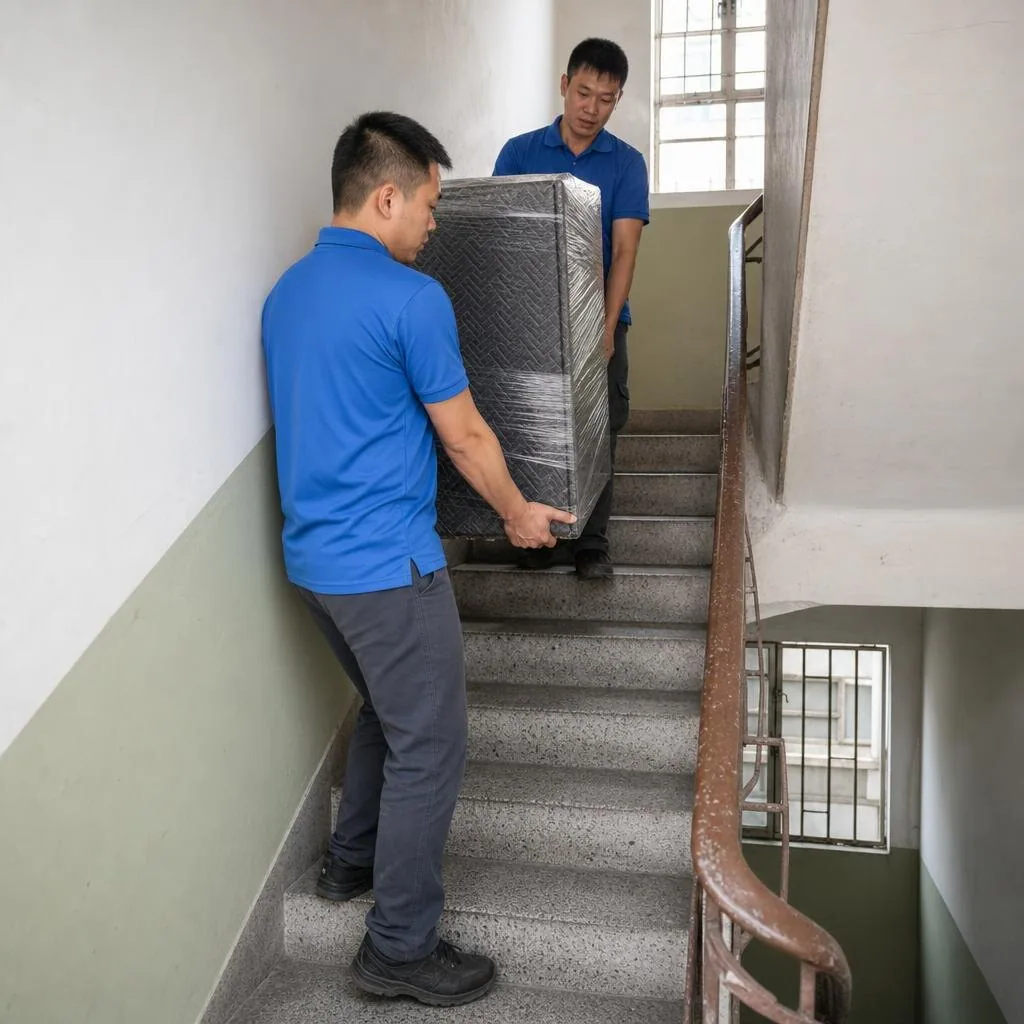
Six checks before Tong Lau removals: stairs, corners and large-item access
Key answers
For Tong Lau removals, we first check the actual staircase route, corners and item size before confirming dismantling, parking and charges; it cannot be judged by floor level alone.
1. Measure the narrowest point and corners
In addition to the stair width, please also measure the landing, ceiling height, door frames and corridor turns. Whether items can pass depends on the full route, not just the width of the main entrance; handrails, pipes and fixed items will also reduce the usable space.
List the length, width and height of the mattress, fridge, sofa and wardrobe clearly. Online size checks are only a preliminary filter and cannot simulate every turn, handling posture or structural load-bearing situation; larger or more complex items should be assessed separately.
2. Film the continuous route from the unloading point to the unit
Photos should include the street corner, parking space, main entrance, each staircase turning point and the flat entrance. Short videos can be added if needed. Avoid photographing only the widest section or using a wide-angle lens to make the space look larger, and do not block the main obstacle while taking photos.
Please indicate sizes, floors and landings that are not easy to judge from the image, and explain any access control or management restrictions first. When taking photos, please respect residents' privacy; there is no need to send any personal information other than the door number, or unrelated people.
3. Clearly state how many flights of stairs actually need to be carried
Some building entrances have half a flight of stairs first, or there are stairs inside the unit, so you cannot state only the floor number in the address. Explain each section, platform and whether a lift change is needed midway, so the team understands the actual moving process.
The calculation method for stairs and other extra items is subject to the written quotation. If the route changes after quotation, the details should be confirmed again; do not assume the original quotation includes all unstated stairs or transfers.
4. First confirm whether large items can be dismantled and how they will be protected
Provide the item structure, material and connection points so the team can assess whether dismantling is suitable. Old, nailed or glued furniture may not always be able to be dismantled and reassembled; glass, electrical parts and very heavy items must be stated separately.
If the normal route cannot be used, the company should assess a feasible solution rather than forcing the move on site. Hoisting or other special arrangements depend on site conditions and related requirements, and should not be assumed to be a guaranteed alternative.
5. Confirm parking and building access arrangements
Whether the vehicle can park near the entrance, how far items need to be carried after unloading, and whether there are slopes or ground obstacles all need to be provided together with the staircase details. Parking should be legal and meet site requirements, and must not be planned by occupying the pavement or blocking access.
If you need to notify building management or neighbours, please state the moving time in advance. Charges, parking and route details that are still uncertain should be listed as pending confirmation; do not assume that a vehicle can reach the street corner means it can go right to the flat door.
6. Clear the route and arrange a contact person before moving
Within the scope that can be handled lawfully and safely, first clear your own doorway and the passage inside the unit; items in common areas should be dealt with by the relevant persons. Do not move other people’s belongings or remove fixed installations yourself.
On the day, one person who knows the list and route should check with the team, so family members and pets can stay clear of the moving area. If rain, works or parking conditions change, notify the company early and confirm whether the arrangements need adjusting.
Frequently Asked Questions
Is quoting by floor level enough for Tong Lau removals?
Not enough. Also provide the clear width of stairs, turns, landings, ceiling height and the condition of the flat entrance, and state the route from parking to the entrance.
Does a wide entrance mean large furniture can definitely be moved through?
No. Stairs, corners, corridors and the carrying posture all affect whether an item can pass through. The size tool is only for an initial check; complex items need further assessment.
Do half-floor stairs need to be specified separately?
Yes. The half-floor at the entrance, the landings before and after, and the stairs inside the unit are all part of the actual route information, not just the floor level shown in the address.
If large items cannot go up the stairs, can they definitely be lifted by crane?
Cannot be guaranteed. Special solutions must be assessed according to the site, management and safety conditions; we do not assume they will definitely be available, and we will not alter building facilities ourselves.
How is the stair surcharge confirmed?
After the full floor information and route are provided, the company will assess and confirm the calculation method and scope in the written quotation; any undeclared changes should be checked again.