MOVING TIPS & ADVICE
How to Make Moving Home Easier
Key answers
A smoother move starts with a clear timeline, early decluttering, careful packing, and checking building access and loading rules before moving day.
Set a timeline and break the move into manageable steps
The biggest source of moving stress is trying to handle too many things at once. Start by fixing the moving date, then work backwards with a task list: notify the landlord or agent, book movers, update your address, and arrange handover for the old and new homes. In Hong Kong, weekend and month-end moves fill up quickly, so early planning helps you avoid last-minute shortages of labour or vehicles.
It is more practical to divide the work into stages. First, handle documents and notifications. Next, sort out what to keep, then pack, and leave cleaning and final checks to the end. Crossing off tasks one by one reduces anxiety and also makes it easier to confirm the move-day plan with the mover, such as which items go first, what needs extra care, and whether multiple trips are required.
Declutter first so you move less and spend less effort
One of the most useful pre-move jobs is to remove items you no longer need. Clothes, books, tableware, old appliances, and duplicate household items should all be reviewed one by one. Anything that can be donated or sold should be handled early, while damaged or unusable items should be disposed of according to local household waste rules. This reduces the load and prevents you from bringing clutter into the new home.
A simple method is to sort everything into three groups: keep, pass on, and discard. If you have not used something for over a year and it does not have a clear place in the new home, question whether it really needs to move with you. For large furniture and older appliances, measure the new doorway, corridor, lift, and stair turns in advance so you do not discover too late that an item cannot fit inside.
Pack in a system so labels do more than just close boxes
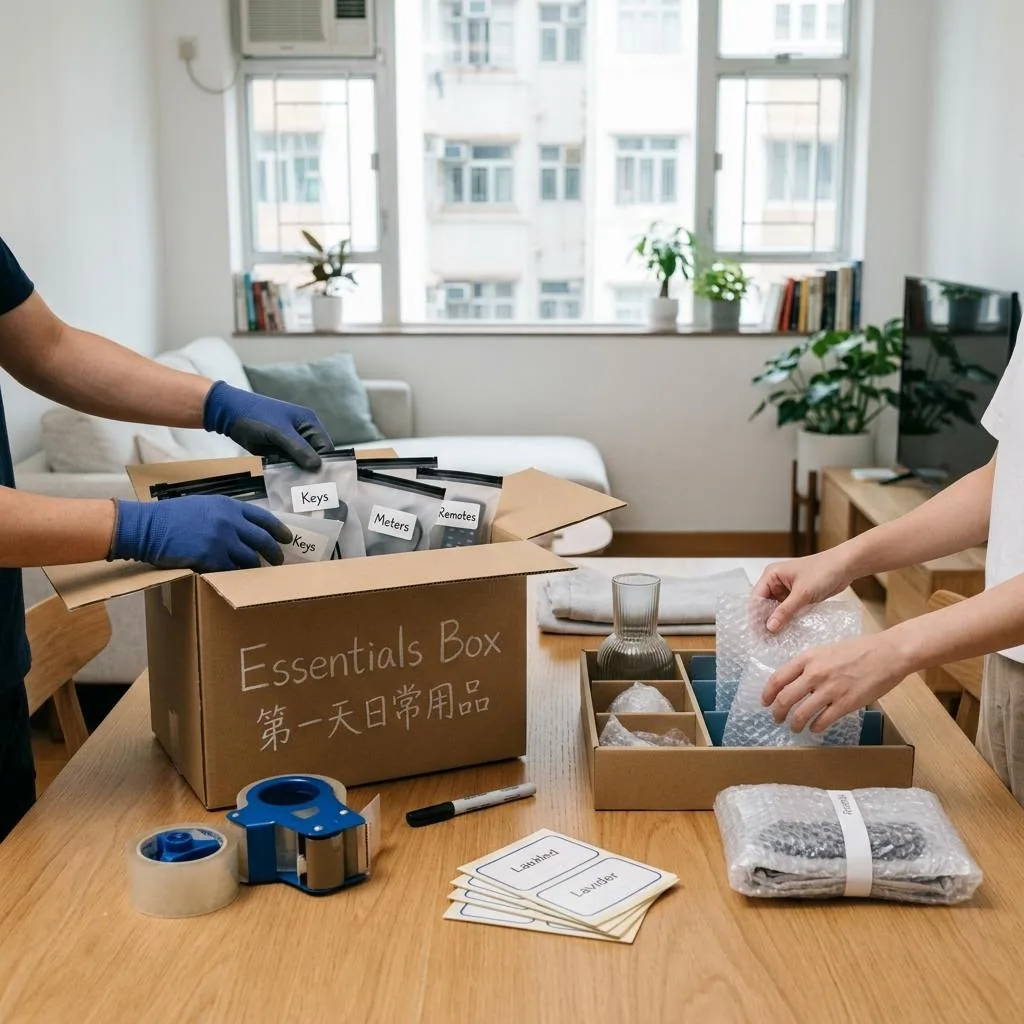
When packing, do not write only vague labels like 'miscellaneous' or 'kitchen'. Mark each box with its main contents and destination room, such as 'living room books', 'master bedroom bedding', or 'kitchen tableware'. Fragile items like glasses, bowls, and photo frames should be wrapped individually with cushioning material, then packed tightly so they do not shift during transport. Empty spaces can be filled with towels, paper, or clothing.
Do not overfill boxes, especially with books, files, or small heavy items, because that makes lifting harder and increases the chance of the box bottom giving way. Valuables, cash, jewellery, medicines, and anything needed on the moving day should be kept in a separate bag you carry yourself. If you have valuable or special items, ask the mover in advance whether they can handle them and what packing or declaration is required.
Check the building setup early to avoid last-minute surprises
In Hong Kong, many moving problems are caused not by the flat itself but by the building environment. Before moving, check lift size, whether a service lift must be booked, any moving-hour restrictions, whether door and wall protection is required, and whether temporary loading is allowed nearby. For walk-up buildings, village houses, or homes without lifts, pay close attention to stair width, turning corners, and threshold heights so large furniture does not need to be dismantled unexpectedly.
If the building requires a moving permit, loading bay booking, or visitor registration, prepare the necessary details and moving date in advance. Before the day, confirm the meeting point, parking plan, and route with the mover so there is less waiting at a busy entrance. If a typhoon, black rain signal, or building maintenance issue arises, contact the mover early to reschedule rather than forcing the move.
Use the right tools and divide the work clearly
Simple tools can save a lot of physical effort, such as a trolley, moving straps, stretch film, sealing tape, and a marker pen for labels. Heavy items should be moved by at least two people, and the path should be cleared before lifting anything. Do not drag or force furniture, as this can scratch floors or damage corners. For larger items, measure first and decide whether dismantling is necessary, but any work involving electrical appliances, gas, fixed pipes, or structural parts should be left to qualified professionals.
On moving day, one person should handle communication and inventory checks, one should keep valuables under control, and others should help with lifting and directions between the old and new homes. If you do not have enough hands, friends can help, but each person should know their role in advance so everyone is not doing the same thing. Clear division of labour prevents repeated waiting at doorways, lifts, or the truck.
Check first, then unpack steadily to avoid doing the same job twice
When you arrive at the new home, do not rush to open every box. First, check whether any furniture or boxes show visible damage, and inspect the doors and walls for scratches. Confirm that all important items have arrived. If you notice any issue, take photos promptly and speak with the moving team right away so you have a clear record. After the basic check, unpack room by room instead of tearing everything open at once.
When organising the new home, start with the bedroom, bathroom, and kitchen because they are used most often. Other storage can be handled step by step. Avoid stuffing box contents into cupboards just to finish quickly, because you may need to reorganise everything later. If you still need disposal or storage for large items after the move, review those arrangements separately and decide based on the actual space available.
Frequently Asked Questions
What should I prepare before moving day?
At minimum, fix the date, make a task list, sort out unnecessary items, pack non-essentials early, and confirm lift, parking, and access restrictions. Keep important documents, cash, and daily essentials with you.
What is the most common packing mistake?
Common mistakes are overpacked boxes, unclear labels, poor protection for fragile items, and mixing valuables with general clutter. These slow down the move and increase the risk of damage or loss.
Should I declutter before moving?
Yes. Decluttering first reduces the amount to move and stops you from bringing unwanted items into the new home. For large furniture and appliances, measure the new space first so you know they will fit.
What should I pay special attention to on moving day?
Keep track of box counts, protect valuables, confirm the moving route, and check both homes for scratches or damage. If the building rules or weather change suddenly, contact the mover as soon as possible.
When should I call in a qualified professional?
If the job involves electrical connections, gas, fixed plumbing, structural dismantling, medical equipment, or other specialist technical work, leave it to qualified professionals. A mover should only handle the scope they can properly take on, and that should be confirmed in writing.


