MOVING TIPS & ADVICE
Pet Moving Tips: A Safe, Calm Guide for Relocating With Dogs and Cats
Key answers
Pets struggle most with sudden change. Start early with familiar scents and a calm routine, keep them separated on moving day, then let them settle into one room before exploring the new home. Check escape risks, hazards, and contact details first.
Why pets get stressed during a move
Dogs and cats rely on scent, routine, and familiar territory. When boxes appear, furniture disappears, and strangers come and go, they may feel their space has been disrupted. Common signs include hiding, vocalising, reduced appetite, accidents, or trying to dash out the door; these are stress responses, not bad behaviour.
The same approach works for a local move or a longer relocation: stabilise the pet first, then handle the change of home. Rather than waiting until moving day, prepare familiar scents, a quiet resting spot, and a predictable care routine so your pet keeps a sense of safety throughout the process.
What to do one to two weeks before moving
Bring boxes, luggage, and packing tape into the home gradually so your pet can watch without feeling trapped. If they are comfortable, you can feed treats nearby, but do not force contact. Keep the litter tray, bed, food bowls, and favourite toys in their usual places until the last practical moment to reduce sudden change.
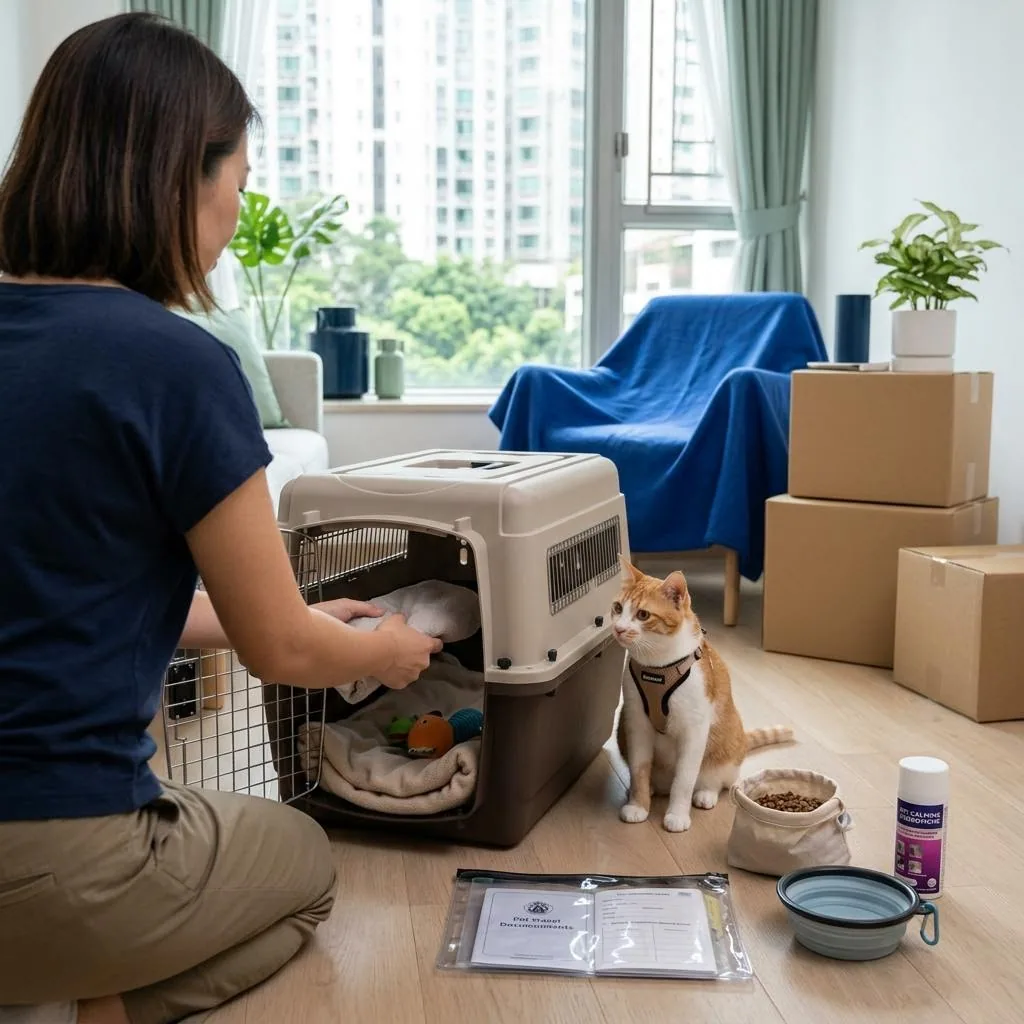
If you will use a carrier or travel crate, leave it open early so your pet can enter and exit on their own, with a familiar blanket or old clothing inside. If your pet takes regular medication, has a special diet, or is prone to travel sickness, speak to a vet about the moving plan; any sedation, travel restraint, or long-distance transport needs must be assessed by a qualified professional, not handled as a DIY task.
Move-day separation and final checks
On moving day, the main goal is to prevent escape. Place your pet in a quiet, cleared room with windows and doors shut, and put up a clear notice so movers do not open it by mistake. If the home will be busy, or your pet is very timid, temporary boarding with family or friends may be the calmer option.
Prepare a carry bag with food, water bowl, normal meal portions, litter or waste bags, medication, leash, towel, toys, and an item that smells like you. Before leaving, confirm the microchip record, tag number, and emergency contacts are current; if your phone number, address, or contact person changes after the move, update them as soon as possible.
Safety checks before letting pets explore
After arriving, do not let your pet roam the whole flat at once. Choose one quiet room as a settling area, place water, food, and familiar items there, and close the door so they can first adjust to their own scent. Once they are calmer, gradually open up other spaces rather than exposing them to the full home immediately.
Before any free roaming, check for risks such as open windows, balconies, stair gaps, loose wires, cleaning products, rodent bait, insecticide residue, and small items on the floor. If there are loose wall panels, exposed holes, faulty window screens, or door issues, have the right qualified person or building management handle them first so they do not become escape or injury hazards.
How to handle the first week after moving
Keep feeding times, walk times, and sleep routines as close to normal as possible during the first few days, and avoid changing food and routine at the same time. For cats, start with one room or a small area and expand slowly; for dogs, let them learn the indoor layout first, then take short walks outside so they are not overwhelmed by too many new stimuli at once.
If your pet refuses food for several days, keeps vomiting, has severe accidents, pants continuously, or stays hidden all the time, contact a vet promptly to rule out illness or excessive stress. Also watch whether doors and windows are frequently opened or workers are coming and going often; if needed, keep your pet in a safer room until the home is truly settled.
When to coordinate with a moving company
When you are moving with pets, your priority should be calming and supervising them, not lifting heavy items, dismantling furniture, and chasing the schedule at the same time. If you have many items, narrow stairs, or a tight moving window, arranging movers in advance can shorten the period of noise and confusion and help you keep your pet in a quieter space.
Before booking, ask what is included, how entry and exit will work, whether the move can be split into stages, how fragile or bulky furniture will be handled, and which room is best for your pet to stay in during loading. If the job involves appliance connection, gas, window screens, structural repairs, or other specialist work, hire the proper qualified tradesperson; for service scope, quotes, and terms, please refer to Online Quote, Moving house price list, and Service terms.
Frequently Asked Questions
How far in advance should I start preparing my pet for a move?
A good rule is at least one to two weeks ahead so your pet can get used to boxes, a carrier, and the changing routine. Sensitive, older, or unwell pets may need earlier planning with a vet.
Can my pet wander around freely on moving day?
It is not recommended. Moving day brings open doors, noise, and a high escape risk, so keep your pet in a closed, quiet room or arrange temporary care elsewhere if needed.
Should I let my pet explore the whole new home right away?
No. Start with one small, quiet area and expand gradually once your pet is calmer. That is usually much less stressful than giving access to the whole home at once.
Should I wash all of my pet's things before the move?
Not necessarily. Keeping some familiar scent, such as a bed, blanket, or toy, can help your pet feel safer in the new home.
What if my pet will not eat after the move?
First keep the routine calm and familiar. If the refusal lasts, or if there is vomiting, diarrhoea, or severe anxiety, contact a vet promptly and do not self-medicate.


