MOVING TIPS & ADVICE
How Hong Kong Lifting Service Works: Key Steps for Walk-up Flats, Village Houses, and Oversized Furniture
Key answers
Lifting service can help when stairs are narrow or large furniture cannot fit through a lift or staircase. Measure the route, confirm window access and site limits in advance, and ask for written confirmation on scope, responsibilities, and any constraints.
When lifting service is useful
In Hong Kong, many walk-up flats, village houses, and older buildings have narrow stairs, tight turns, or limited lift access. Large items such as sofas, bed frames, wardrobes, and dining tables may not fit through the normal route, so lifting service can provide an alternative way to move them through a window, balcony, platform, or other suitable opening.
That said, lifting is not suitable for every item or every building. You need to check the external wall position, sill width, obstructions, ground access, and any building management restrictions first. If the job involves structural changes, electrical work, gas lines, or other specialist tasks, those should be handled by qualified professionals.
What to measure before the move
Before booking, measure the furniture's length, width, height, and packed size, and note the weight if available. Also measure every tight point along the route, including door frames, corners, window openings, and any exterior clear space. If the item has glass, mirrors, or fragile finishes, confirm whether extra wrapping or securing is needed.
You should also explain site limits clearly, such as parking availability, temporary loading arrangements, sloping ground, and any weather exposure. Before the move day, ask the mover to confirm in writing the lifting point, workflow, items the customer must prepare, and what happens if the site turns out to be unsuitable.
How to prepare on moving day
Clear the corridor, entrance, window area, and staircase landing before the team arrives. Small items, plants, decorations, and breakables should be packed separately, while valuables such as documents, cash, keys, and personal items should be kept with you instead of mixed into the move.
Have one person who knows the flat well on site to coordinate and check the item list and placement instructions. If items need to be moved inside the unit, protect floors, wall corners, and door frames first. Keep children, pets, and neighbours clear of the lifting path to avoid contact or obstruction.
What the lifting process usually looks like
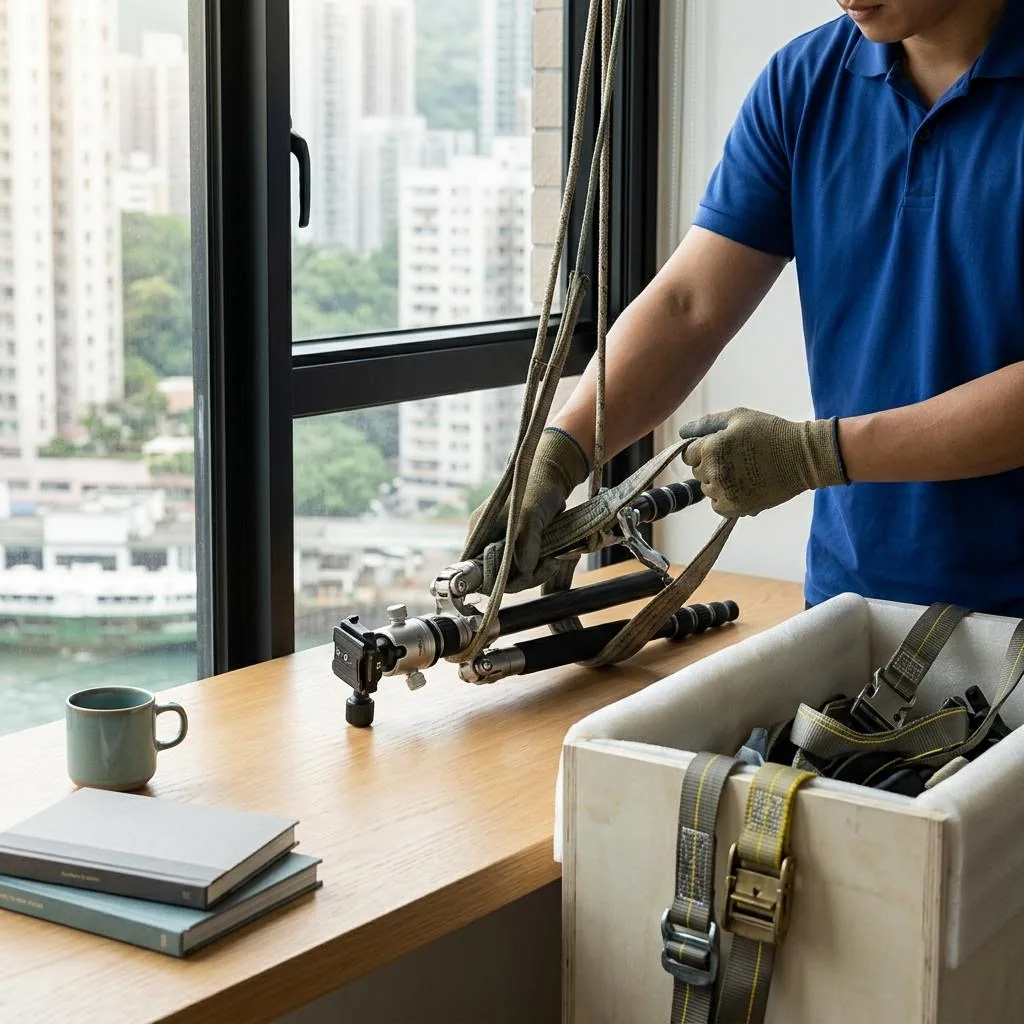
The usual process starts with an on-site check of dimensions and access, followed by confirmation of whether a window or other opening can be used. The team then prepares corner protection, straps, securing points, and the lifting order based on the item's shape and condition. If the height, wind, obstructions, or building layout differ from what was expected, the job should pause for reassessment instead of being forced through.
After the item is brought in, inspect the outer surfaces, corners, glass panels, handles, legs, and fittings on the spot. Also check that the number of pieces matches the list. If the furniture was dismantled, make sure screws, parts, and wrapping materials are all collected so nothing is missing when you unpack later.
How to choose the right mover
When asking which lifting service is better, do not look only at reputation. The key is whether the mover can explain the applicable conditions, limits, site check process, and what documents or approvals are needed. A reliable team will ask about the building type, floor level, corridor width, and item dimensions before saying whether the job is possible.
When comparing quotes, ask whether the price covers site inspection, basic protection, dismantling or repacking, waiting time, holiday scheduling, and cancellation terms, and request written confirmation. If the answers about risk, weather impact, or building requirements are vague, the communication is probably weak and disputes are more likely later.
Common mistakes to avoid
A common mistake is measuring only the item and not the route, window opening, or exterior clear space. Another frequent problem is discovering too late that the building will not allow the planned method, which can cause delays or force a reschedule. For walk-up flats or village houses, it is best to speak to the management office, owner, or nearby neighbours in advance to reduce last-minute barriers.
Also, do not treat lifting service as a universal solution. If an item is too heavy, too large, or the exterior location is unsafe, or if the job involves wires, gas lines, metal gates, or railings, get a qualified technical professional to assess first. Early preparation, clear communication, and written confirmation are usually more reliable than last-minute fixes.
Frequently Asked Questions
Is lifting service suitable for every large piece of furniture?
No. It depends on the item's weight, shape, packed size, and whether the window, exterior space, and ground conditions are suitable for the job.
What information should I prepare before booking?
Prepare item dimensions, photos, floor level, the access point, corridor conditions, and any building restrictions so the mover can assess the job first.
What if the weather is unstable on moving day?
Wind, rain, and visibility can affect lifting work, so confirm the postponement or rescheduling arrangement with the mover and ask for written confirmation.
How can I reduce the risk of damage?
Protect corners, secure the item properly, and wrap fragile surfaces separately. Confirm the lifting route and final placement in advance to reduce bumps and scratches.
What should I ask when comparing quotes?
Ask whether the quote includes site inspection, basic protection, dismantling, waiting time, extra restrictions, and cancellation terms, and get the details in writing.


