MOVING TIPS & ADVICE
Hong Kong Home Moving Packing Guide: Sorting, Boxing, Labeling, and Temporary Storage
Key answers
Sort items before you pack, then box by room, use, and priority. This guide explains practical steps for Hong Kong homes, including fragile-item protection, furniture hardware, temporary storage, and what to confirm with a mover before booking.
Clear out what you do not need before packing starts
The most common moving problem is not a lack of boxes, but having too many items and no sorting plan. If you pack everything at once, including things you have not used for years, you only increase the load and bring unnecessary clutter into the new home. A practical approach is to divide everything into keep, give away, discard, and undecided, then work room by room so items are not moved back and forth.
For Hong Kong households, clothes, books, kitchenware, and toys often build up the fastest. Start with a small area such as a wardrobe or storage cabinet, check each item one by one, and decide where it should go. Put documents, receipts, and sentimental items aside for a final review so you do not throw away something important in a hurry.
Pack by room, use, and urgency, with labels that are easy to read
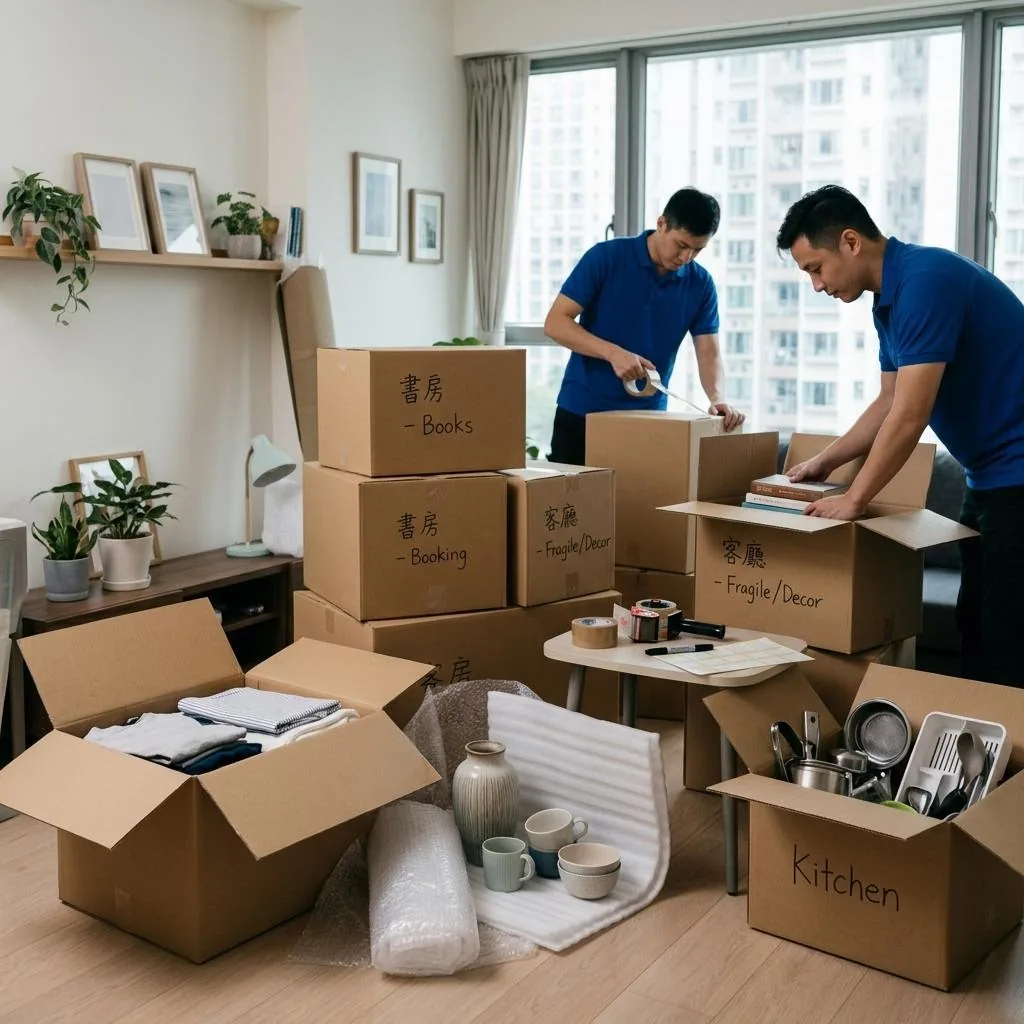
When packing begins, use the room as the basic unit, then add purpose and priority. For example, keep bedroom items, kitchen items, and bathroom items in separate boxes, and avoid mixing unrelated objects whenever possible. Write the room name, main contents, and whether the box should be opened first on the outside of each carton, using large and clear lettering so it is easy to identify at the curb and after arrival.
If there are children or elderly family members at home, prepare a separate first-day essentials box with medication, chargers, toiletries, simple tableware, towels, and one set of spare clothes. Keep this box with you rather than inside the general moving load. These are the things you are most likely to need immediately after arrival, so separating them helps reduce confusion on moving day.
Protect fragile items and heavy items in the right way
Fragile items are most at risk when there is too much empty space or the weight inside the box is uneven. Wrap plates, glassware, frames, and small ornaments individually, then use towels, clothing, or paper to fill the gaps so the contents do not knock against each other during transport. After sealing the box, give it a gentle shake; if the contents still move noticeably, add more padding before closing it.
For weight, avoid packing a full box of books or overloading the bottom until the carton loses shape. Books, tools, and other dense items should be packed into smaller boxes and reinforced with extra tape. Lighter items such as clothing, bedding, and toys can go into larger cartons. Heavy boxes are harder to carry and are more likely to break at the bottom on stairs or around corners, so always estimate the weight before choosing the box size.
Keep hardware bags and loose accessories with the furniture they belong to
If your home includes a bed frame, bookcase, modular cabinet, or dining table that must be dismantled, take photos of the original structure first, then place screws, hex keys, brackets, and small parts into a clearly labeled zip bag. Each bag should belong to one piece of furniture only; do not mix hardware from different items, or you may struggle during reassembly at the new home.
Cables, chargers, remote controls, router accessories, and small electronic add-ons should be stored together in a separate container and clearly labeled by purpose. Any work involving electrical connections, gas, fixed appliances, or wall-mounted installation should be handled by a qualified professional, not as a DIY task. What you can do before the move is record the original connections, plug positions, and accessories with photos so they can be referenced later.
Plan for temporary storage if there is a gap in your moving dates
A common Hong Kong moving issue is that handover, lease end, and move-in dates do not line up perfectly. If your new home cannot take everything at once, separate non-urgent items first and keep only a small set of essentials with you. This reduces the pressure of stuffing everything into a friend's place or a corridor at the last minute. Before arranging temporary storage, confirm the space size, access times, and retrieval process so you do not need to move items repeatedly.
If some items need to be stored temporarily, decide in advance what is essential and what can wait, then number the boxes according to your list and labels. Items sensitive to humidity, such as paper goods, fabric, documents, and some electronic accessories, should be protected from moisture first. For valuables, fragile items, or goods that need special care, ask the service provider about limits and storage requirements and request written confirmation.
When to ask a moving team for help, and what to confirm first
If there are many items, many stairs, narrow access, or a very tight schedule, it is hard to keep packing both fast and orderly on your own. In that case, ask a moving company to assess the number of boxes, the furniture size, access conditions, and the timing, then decide whether you should prepare part of the packing yourself or let the mover handle more of it.
Before choosing a mover, ask clear questions: can packing materials be provided, can dismantled furniture be moved, how are homes without lifts or with narrow stairways handled, and what should the customer prepare before arrival. If you have special items such as a grand piano, a safe, village-house access limits, or furniture requiring special handling, ask separately about those services. Please confirm pricing, limits, and service terms in writing, and refer to Moving house price list and Service terms.
Frequently Asked Questions
What should I do first before packing for a move?
Start with sorting and decluttering before you box anything. Divide items into keep, give away, discard, and undecided, so you reduce the load and avoid bringing unnecessary clutter into the new home.
How should I categorize boxes for easier unpacking?
Use rooms as the main system, then mark purpose and priority. Keep bedroom, kitchen, and bathroom items separate, and write the contents and whether the box should be opened first on the outside.
Can fragile items be packed together with clothing?
Yes, as long as each fragile item is wrapped first and the empty spaces are filled so nothing shifts during transport. If the box still moves when shaken gently, add more padding before sealing it.
What is the biggest problem after dismantling furniture?
The most common issue is losing screws, brackets, or other small parts. Keep each furniture item's hardware in its own labeled bag and take photos of the original structure for easier reassembly later.
When should I consider hiring a moving company?
If you have many items, narrow access, stairs, limited time, or large furniture to move, professional help is often more practical. Before booking, confirm the setup, restrictions, and written terms.


