MOVING TIPS & ADVICE
Moving With Cats and Dogs: Practical Ways to Reduce Stress in a New Home
Key answers
Cats and dogs can become stressed by new smells, noise, and space changes. Keep familiar items, use a small safe room first, and manage moving-day traffic to lower anxiety, loss, and upset routines.
Why Pets React So Strongly to a Move
Cats and dogs are sensitive to changes in sound, smell, and movement. A new flat may feel overwhelming because of echoes, renovation odours, stacked boxes, and strangers walking in and out. These changes can lead to hiding, barking, scratching, or refusing food.
It helps to treat this as a normal adjustment period rather than bad behaviour. The goal before and after the move is to reduce sudden changes and keep familiar routines, objects, and resting spots as stable as possible.
Keep Familiar Smells Before You Move
In the week or two before moving, keep your pet's usual bed, blanket, toys, and bowls instead of washing or replacing everything at once. Familiar smell is one of the fastest ways to help pets feel safe in a new place, especially for cats.
If you need to clean items, do it gradually rather than all at once. Try to keep the placement of the litter tray, feeding area, and bed similar to the old home so your pet does not have to relearn everything in one day.
Start With One Quiet Room
When your pet arrives, do not let them roam the entire flat immediately. A better first step is to prepare one quiet room with water, food, and a litter tray or bedding, so they can settle into a smaller and less stressful space first.
This is not about limiting freedom; it is about lowering pressure. Once your pet is eating, drinking, resting, and using the toilet normally, you can open up more space gradually. If stress signs get worse, contact a vet rather than waiting it out.
Move-Day Risks to Plan For
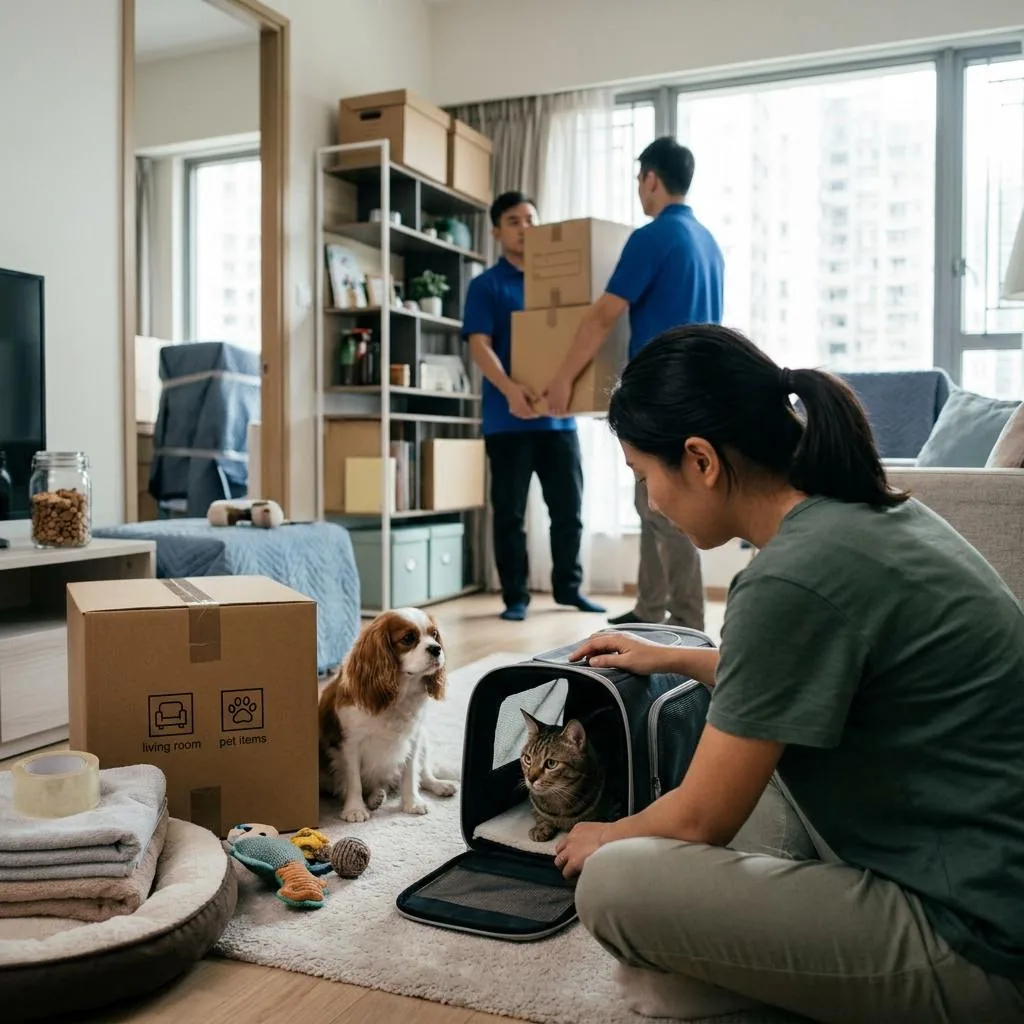
The biggest moving-day risks are an open door, frequent comings and goings, blocked corridors, and a pet slipping out during the rush. Prepare a carrier, leash, or closed room in advance, and make sure family members know not to let pets wander freely during loading.
If needed, it may be easier to keep your pet with a trusted friend or family member during the busiest period and bring them back after the main furniture items are in place. The priority is to prevent panic, escape, or accidental ingestion of packing materials.
What to Watch in the First Few Days
In the first few days, watch appetite, toilet habits, sleep, and alertness. Some pets will eat less, sniff constantly, or stay in corners for a while; that can be a normal adjustment. But if the signs become stronger or last too long, a veterinary check is the safer choice.
Keep feeding and walking times as close to the old routine as possible. For dogs, start with short familiar walks around the neighbourhood. For cats, open only the safe room and main living area first, instead of exposing them to the whole flat at once.
When to Ask a Moving Team for Help
If you have heavy furniture, stairs, or a split move-in schedule, it can be hard to supervise your pet and manage the moving flow at the same time. Letting a moving team handle the heavy lifting can reduce door-open time, corridor clutter, and general chaos.
When choosing a mover, ask about the loading sequence, room-by-room access, and whether they can work around your pet setup. Confirm service scope, timing, and any special handling in writing. For pricing and terms, please refer to Moving house price list and Service terms.
Frequently Asked Questions
Should I wash all my pet's old items before moving?
Not necessarily. Keeping some familiar-smelling bedding, blankets, or toys often helps pets feel safer. Clean items gradually instead of replacing everything at once.
How can I help my pet settle into a new home faster?
Start with one quiet room, keep food, water, and toilet items in place, and then open up more space step by step. Smaller changes usually work better than giving full access immediately.
Is it better to leave my pet at the old flat on moving day?
If the home will be busy, noisy, and full of open doors, it is usually safer to keep your pet elsewhere during the main moving period and bring them back later.
What if my pet does not want to eat after the move?
Keep a regular feeding schedule and watch for other stress signs. If refusal to eat, vomiting, hiding, or unusual toilet behaviour continues, speak to a vet promptly.
How should I coordinate with the mover to reduce pet stress?
Tell them which room should stay closed, when pet items should be brought in, and how you want the entry sequence managed. Important arrangements should be confirmed in writing.


