MOVING TIPS & ADVICE
What to Check Before Moving Large Furniture into a Village House or an Old Tenement Building
Key answers
Village houses and older tenement buildings often have narrow stairs, tight landings, and uneven outdoor access. Measure the furniture and route first, check whether disassembly is needed, and confirm door frames, corners, and any exterior access before moving day.
Measure first, then decide whether it can go upstairs
The main problem in a village house or an old tenement building is often not the furniture itself, but the route. Before moving day, measure the length, width, height, and diagonal of each large item, then measure stair width, landing space, ceiling height, door frames, and corridor clearance. Do not forget handrails and light fixtures.
Sofas, wardrobes, bed frames, dining tables, and large bookcases are easy to misjudge by eye. Keep the item dimensions and the site measurements together, then decide whether disassembly is needed, whether an angled carry is possible, or whether another staircase, balcony, or window-side route should be used.
Watch the stair geometry and turning space
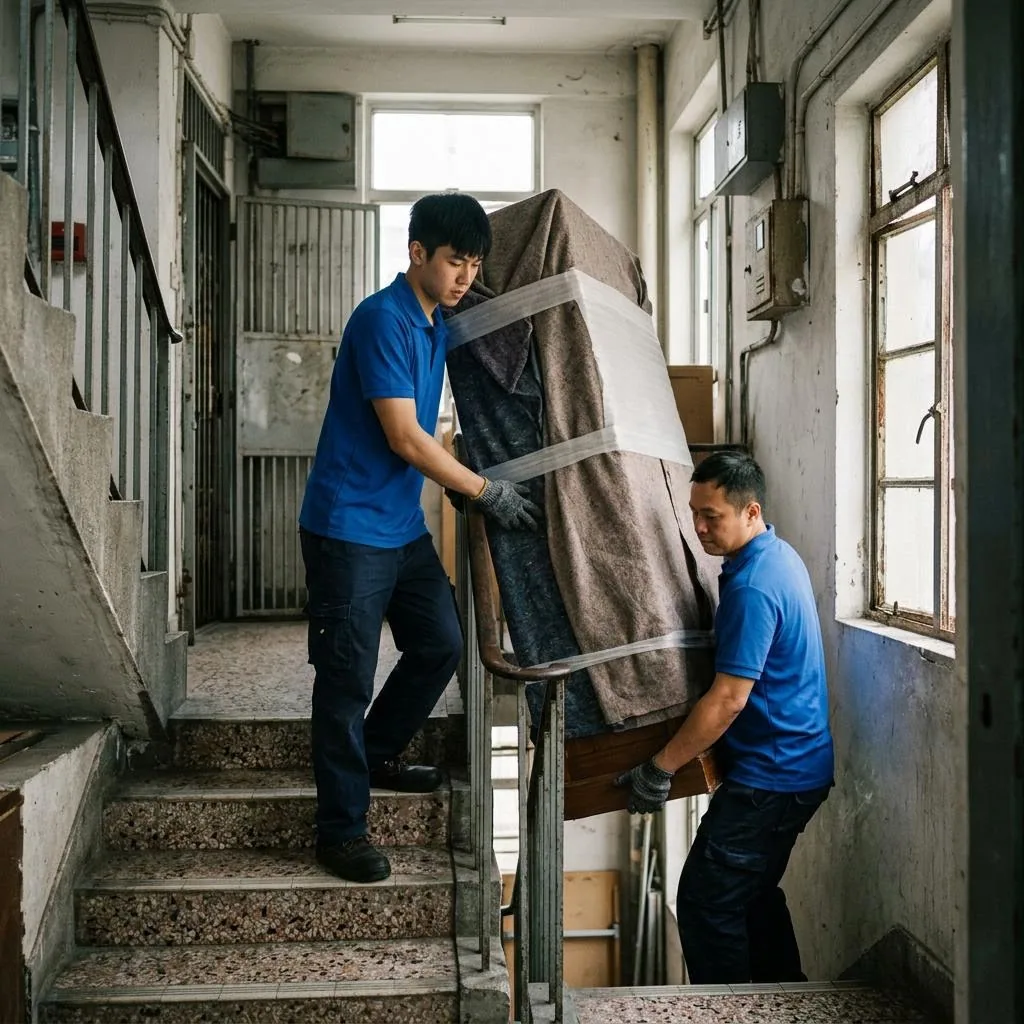
Older tenement stairs are often narrow, with sharp turns and limited landing space. The issue is not only whether the item fits, but whether there is enough room to rotate it without hitting the wall, ceiling, or handrail. If the item is too long, movers may need to twist it too much, which increases the risk of scratches and structural stress.
In these cases, check whether the item can be disassembled first, such as bed headboards, cabinet doors, shelves, legs, and handles. If the furniture is already aged, has loose screw holes, or shows swelling from moisture, forcing it through the stairs can cause breakage. Tell the movers clearly and ask for written confirmation of the handling plan.
Do not ignore outdoor access in a village house
For village houses, the challenge is not only the indoor staircase. Outdoor stone steps, slopes, muddy ground, narrow lanes, and tight village entrances can all affect the move. Rain, wet surfaces, poor lighting, or clutter on the route can raise the risk of slips and collisions, especially when heavy items are being carried.
If the item needs to pass through a balcony, window-side opening, or exterior route, first check the clearance, and look for overhead cables, drying racks, canopies, or other obstacles. These routes need a much more careful site check. Do not rely on guesswork, because the structure and access conditions vary widely from one building to another.
Disassembly, packing, and protection should be done properly
Before moving large furniture upstairs, remove loose parts where possible. Empty drawers, secure cabinet doors, remove glass panels, take out shelves, and wrap vulnerable edges with thick cloth, bubble wrap, corner guards, or film. This reduces stress on the corners and helps avoid damage to walls, handrails, and flooring during turns.
If disassembly is required, keep screws, fittings, and small parts in labelled bags. For furniture that has been moved many times, or that is already loose or unstable, do not force a quick on-site repair. In some cases, it is more practical to repair, rebuild, or replace the item before deciding on the move.
Coordinate the move and check the site on arrival
On moving day, clear hallway clutter, mats, shoe racks, and fragile items in advance so movers have room to turn. If public areas or neighbouring doorways are involved, check building or village access arrangements first to avoid blocking traffic or delaying the job. Please also consider neighbours' access.
When the team arrives, confirm the item dimensions, direction of travel, and final placement point again. Check whether the door frames, corners, floors, or ceilings already have old marks, and take photos if needed. If the route turns out to be tighter than expected, or the furniture shows cracks, looseness, or deformation, stop and reassess instead of forcing it through.
When it makes sense to hire a moving team
If the furniture is bulky, the stairs are many, the turns are sharp, or the route includes slopes, upper floors, landings, and narrow doors, moving it by hand may not be the best option. A team with relevant experience is useful not only for speed, but because they can explain the route, disassembly scope, protection method, and site limits in advance, so you know what needs to be prepared.
When speaking to a mover, ask about the site assessment process, whether disassembly is needed, which items should not be forced through narrow stairs, how they handle tight corners, and whether you should empty the contents yourself first. Electrical, gas, structural, glass, or other specialist work should be handled by qualified professionals. For terms, charges, or responsibility split, request written confirmation.
Frequently Asked Questions
What should I measure first in a village house or old tenement move?
Measure the furniture size and diagonal first, then measure stair width, landings, door frames, corridors, ceiling height, and handrail positions to see whether the item can go upstairs directly.
What should I do if large furniture gets stuck at a stair turn?
Do not force it or twist it hard. Stop, reassess the angle, and see whether disassembly, a different carrying angle, or another route is possible. Protect walls and edges first.
Is old furniture still worth moving into a village house?
If the item is loose, damp, warped, or weakened by repeated disassembly, forcing the move may cost more than replacing it. Check repair, disassembly, and overall cost first.
Should a village house move always be postponed in rainy weather?
Not always, but wet ground, steep slopes, and poor lighting increase risk. Decide based on the actual site conditions and confirm the arrangement with the movers first.
What practical questions should I ask a moving company before booking?
Ask whether disassembly is needed, how they protect stairs and walls, which routes are not suitable, how they handle a tight fit, and whether terms and charges can be confirmed in writing.


