MOVING TIPS & ADVICE
Too Many Empty Boxes After Moving? How to Pace Unpacking and Decluttering in Your New Home
Key answers
The fastest way to unpack is not to open every box at once. Start with first-night essentials, then the kitchen and bathroom, and sort out unwanted items as you go. Break the job into zones so your new home becomes usable, tidy, and easy to live in sooner.
Set an unpacking order first, so the process does not spiral
After moving in, the goal is not to unpack everything immediately. Start by finding the items you need for the first night: a change of clothes, toiletries, chargers, commonly used medicine, ID documents, tissues, and basic cleaning supplies. Once these are in place, you can rest without rummaging through every box.
Next, focus on the bathroom and kitchen, because they affect daily living most directly. Put towels, toothbrushes, bathing items, tableware, cups, and simple cooking tools back in place first, so washing up and basic meals can resume before you tackle everything else.
Unpack by room, not all at once across the flat
Many people start opening boxes everywhere at the same time, only to end up with a half-finished mess in every room. A better approach is to choose one manageable zone, such as the bedroom or kitchen, complete that area, and then move on. Finishing one space at a time gives clearer progress and keeps pathways usable.
If several family members are helping, divide the jobs rather than opening the same boxes twice. One person can sort, another can put items away, and another can separate things to donate or recycle. New homes often have tighter circulation than old ones, so keeping walkways clear should come before making everything look perfect.
Use unpacking as the best time to thin out excess items
Moving is a rare chance to reassess what you actually need. As you unpack, set aside anything you have not used for months, anything duplicated, anything damaged, and anything that clearly no longer fits your new space. Sort items into keep, donate, and recycle instead of automatically bringing every old habit into the new home.
Before disposing of anything, check what it is. Ordinary household items, clothes, books, and cookware can usually be sorted at home, but electrical items, batteries, medicines, chemicals, sharp objects, and other special items should be handled according to building or local disposal rules. If something needs specialist handling, ask the appropriate professional instead of improvising.
Clear empty boxes and packing material immediately
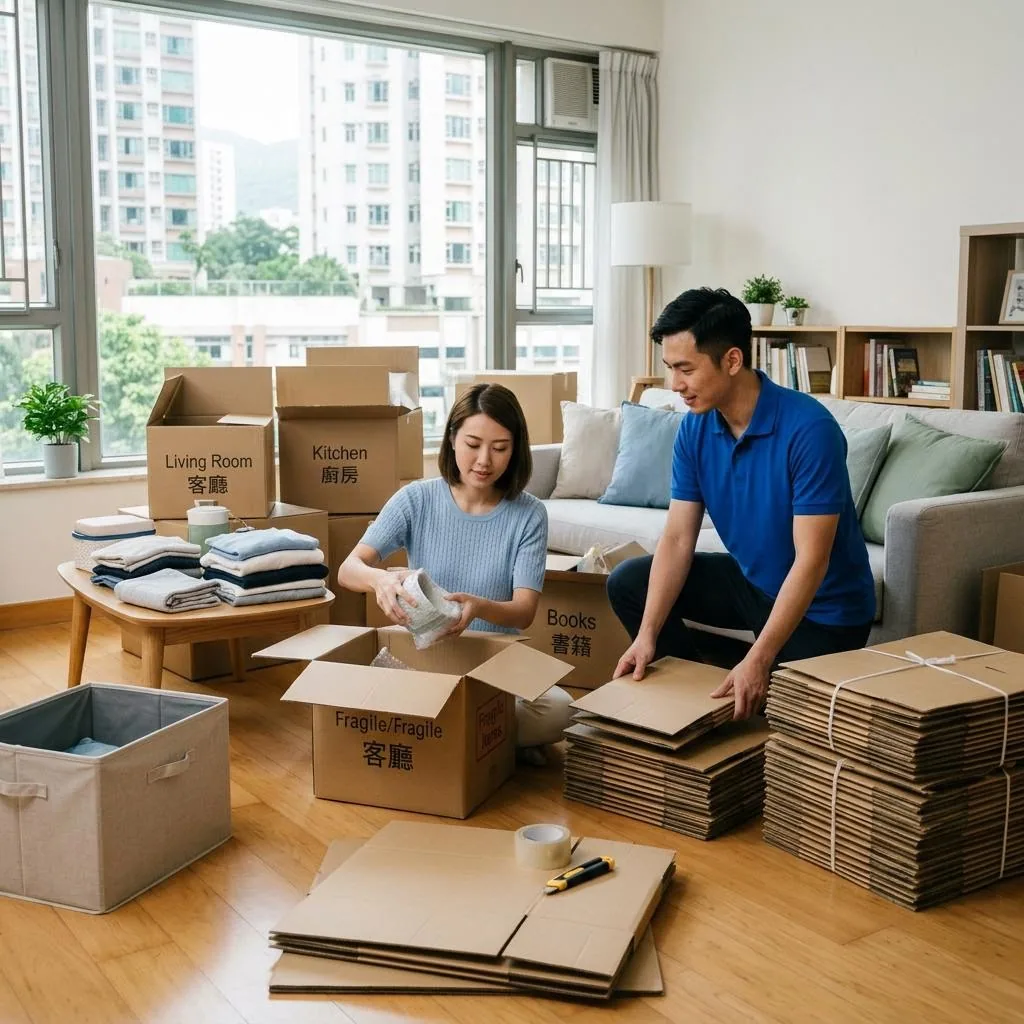
Cardboard boxes, bubble wrap, foam sheets, and plastic bags can quickly take over the very space you just freed up. After every few boxes, flatten the cardboard, bundle it neatly, and move it out of the way. The sooner you clear packing waste, the easier it is to keep your unpacking rhythm.
If the boxes are still clean and usable, you may pass them on to neighbours, local community groups, or keep them for short-term storage. If they are damp, torn, or dirty, recycle them promptly. A common mistake is leaving empty boxes in a corner “for later”; in practice, they often stay there for weeks and make the home feel unfinished.
Use small daily goals to reduce fatigue and stress
A new home does not need to be perfect on day one. Moving is physically and mentally draining, and trying to finish the entire flat in one burst usually leads to more confusion, not less. A more realistic plan is to complete one area each day: wardrobe today, kitchen cabinet tomorrow, desk area the day after.
Before stopping for the night, gather tools, bags, labels, and pending items into one place and keep a clear walkway. That way, you can continue the next day without re-starting from zero. This kind of pacing is easier to sustain and helps avoid the stress of living for too long among scattered boxes.
If you need extra help, ask exactly what can be arranged
If you still have many boxes, furniture repositioning, short-term staging, or post-move tidying to handle, ask the moving team in advance what they can help with. Confirm the scope clearly, such as repositioning by instruction, furniture dismantling or reassembly, temporary placement, or removal of packing material, and request written confirmation where needed.
Also be clear about what should not be treated as a normal moving task. Electrical, gas, structural, medical, and other specialist technical work should be handled by qualified professionals. A mover can support the transport and setup process, but it does not replace specialist work; separating these responsibilities makes the move safer and smoother.
Frequently Asked Questions
Which boxes should I open first in a new home?
Start with the first-night essentials box, such as clothes, toiletries, chargers, ID documents, and basic medicine. Then move on to the kitchen and bathroom before unpacking the rest of the home.
Why is it better not to unpack every room at the same time?
Because it creates clutter in every area, blocks walkways, and makes progress harder to track. Completing one zone at a time is more practical and less stressful.
How should I deal with items I no longer want to keep?
Sort them into keep, donate, and recycle. Special items such as batteries, medicine, or chemicals should follow the relevant disposal rules instead of being thrown away casually.
Can I leave the empty boxes aside for later?
It is better not to. Flatten and bundle them as you go, otherwise they quickly take over the living space and make the new home feel unfinished.
What if I am too tired to finish unpacking after the move?
Break the work into small daily tasks and start with the rooms that affect daily life most. If you need moving or post-move support, ask the mover in advance what can be arranged.


